PProvenance
Enter
Kerala Appam (Fermented Rice Hoppers — Fermentation Timing)
Indian · Kerala, India

Kerala Appam (Fermented Rice Hoppers — Fermentation Timing)

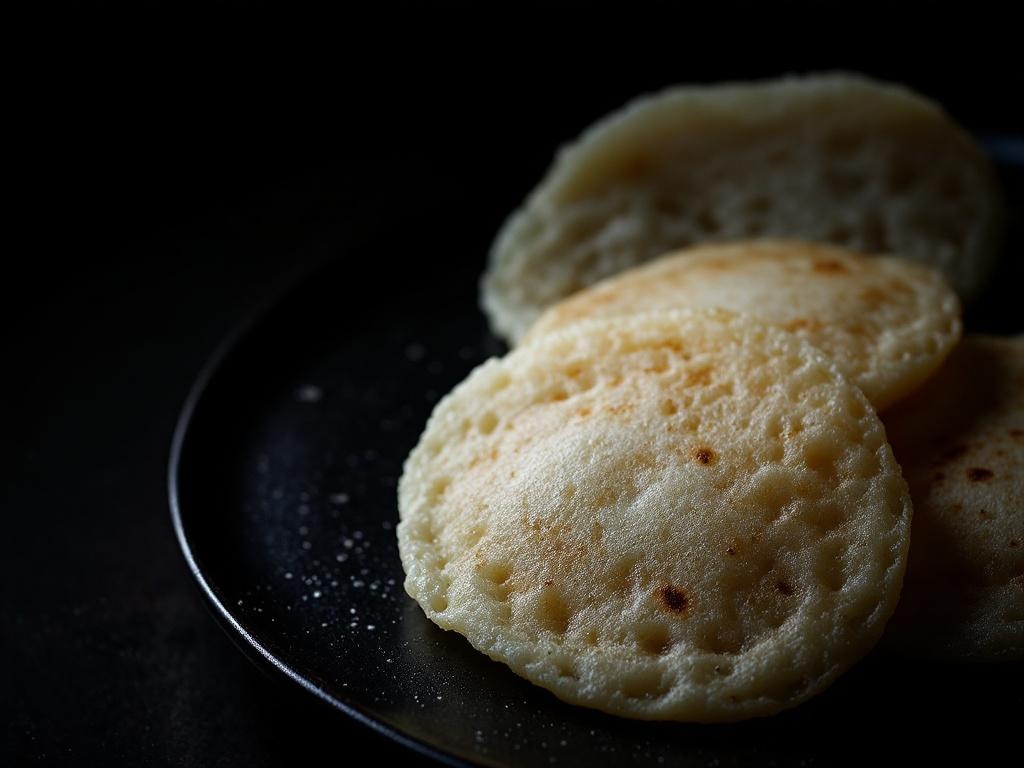
Appam is a fermented rice hopper that is simultaneously a technical achievement and an act of hospitality — a paper-thin, lace-edged pancake with a soft, slightly domed centre, cooked in a small rounded pan (appachatti or appam pan) that gives it its characteristic shape. The dish is central to Kerala Christian and Syrian Christian hospitality, served at breakfast and dinner with fish molee, coconut milk stew, or egg curry — its slight sour tang from fermentation providing the essential counterpoint to rich coconut dishes. The fermentation of appam batter is a science that Kerala cooks develop intuition for over years. Raw rice is soaked, ground to a smooth paste, and combined with cooked rice (which provides the starch that helps the batter ferment and gives the appam its characteristic soft centre), grated coconut, and a small amount of toddy (fermented palm sap) or commercial yeast as the fermentation agent. The toddy is the traditional leavening and provides a complex sour-yeasty flavour that commercial yeast cannot fully replicate. Fermentation time depends on ambient temperature: in Kerala's tropical heat, 6–8 hours may be sufficient; in a temperate climate, 12–16 hours may be required. The batter must rise and develop bubbles across its surface — visual evidence of active fermentation. Under-fermented batter produces a flat, dense appam without the characteristic lacey edge; over-fermented batter becomes too sour and the gluten network breaks down, producing a fragile, tearing appam. The cooking technique is quick and precise: a ladleful of batter is poured into the hot, lightly oiled appachatti, which is then swirled rapidly so the batter climbs the sides in a thin layer while pooling in the centre. The pan is then covered for 2–3 minutes — the steam cooks the thick centre while the thin edges crispen into translucent lace. The finished appam should have a golden-crisp edge and a soft, slightly translucent centre that gives with gentle pressure.

‹Swipe for the next dish›
Serves4 (yields 8 appams)
Total490 min
Sourced0of 7 in BC
Cook
I

The Market List

The benchmark for each ingredient, and who stocks it near you. Tap a stockist to go straight to the product.

200 g
rice
short-grain, soaked 1 hour
Not yet stocked in British Columbia
40 g
grated coconut
fresh
Origin · Sri LankaNot yet stocked in British Columbia
10 g
active dry yeast or 30 g fresh toddy/arrack
Not yet stocked in British Columbia
120 ml
water
warm
Your own market
1 teaspoon
salt
Your own market
1 teaspoon
sugar
Your own market
2 tablespoons
coconut oil for pan
Not yet stocked in British Columbia
II

The Method

1
Drain soaked rice and grind in wet grinder with grated coconut and 60 ml water until batter reaches thick pouring consistency (10 minutes grinding).
2
Combine yeast with warm water and sugar; allow to proof for 5 minutes until foamy, then mix into batter along with salt.
3
Cover batter with damp cloth and place in warm location (26-28°C) to ferment for 8-12 hours until batter rises by 40% and develops sour aroma.
4
Stir fermented batter gently without deflating; consistency should be thinner than finished soufflé but thicker than pancake batter.
5
Heat appam pan (concave iron mold on handle) over medium-high heat; coat inside surface with coconut oil and allow to heat for 2 minutes until just smoking.
6
Pour 80 ml batter into center of pan in one motion; immediately rotate and tilt pan in circular motion for 8 seconds to distribute batter up sides.
7
Place pan back on heat and cook for 3 minutes without touching until edges crisp and brown, then flip briefly for 15 seconds.
8
Transfer to plate; appam should have crispy lacy edges and soft spongy center. Serve warm with coconut milk curry or stew.
IV

Sensory Tests

◇Sight. Watch the batter surface for active bubbling across the entire mass and a volume that has visibly doubled — this signals fermentation readiness, not the clock.
◇Where it lives or dies. The fermentation window closes when the starch network breaks down; over-fermented batter tears during the swirl, under-fermented batter stays flat and dense.
VI

What to Pour

Pouring for British Columbia ·

The pairing
El Silencio Espadin Mezcal
El Silencio Mezcal · Oaxaca — Mezcal
Not yet stocked in British Columbia
Agave spirit
From British Columbia
SOV Wheated Rye Whisky
Sons of Vancouver Distillery · Metro Vancouver
Sons of Vancouver Distillery · North Vancouver →
Whisky
Without alcohol

No pour without alcohol holds against this yet.

Each tap is counted, so the stockist sees the demand Provenance sends them.

Why each one works is part of membership — Enter · from $49 a year →

The whole pairing
Pillar VII
Origin and lineage are part of membership.
Where the dish comes from and how it came to be — on every recipe.
Enter · from $49 a year