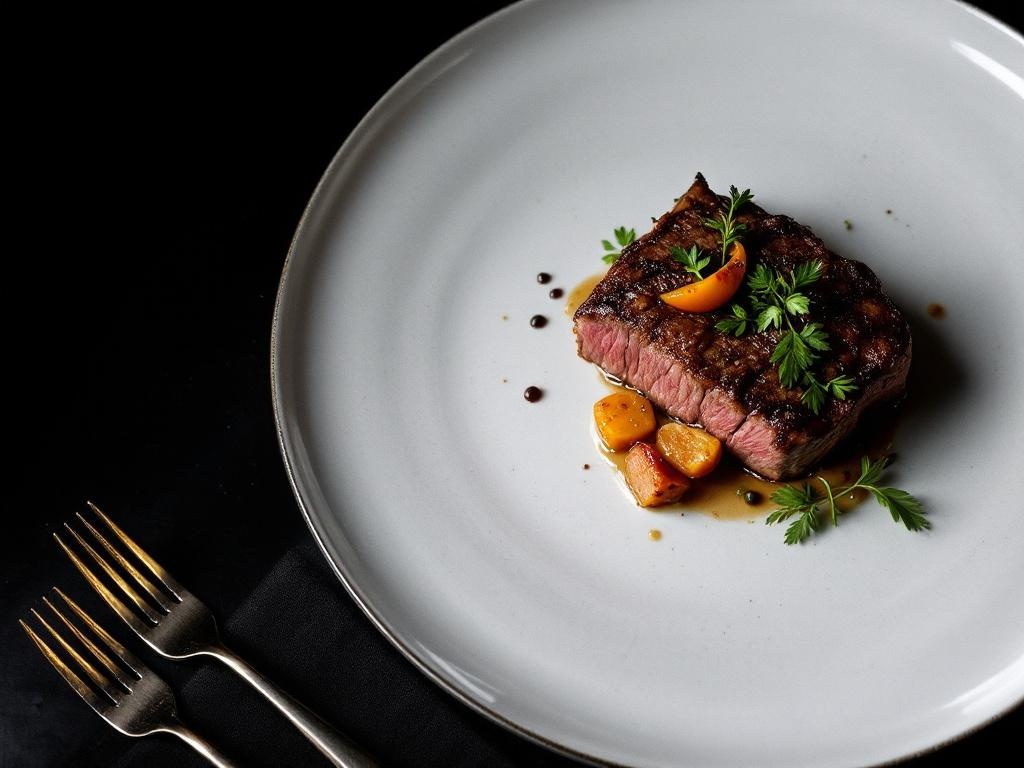
Meat Resting — Carryover Cooking and Juice Redistribution
Resting cooked meat after removing it from heat is one of the most frequently cited and least frequently understood techniques in professional kitchens. It involves two distinct but related phenomena: carryover cooking and moisture redistribution — both of which require time to resolve, and both of which affect the final quality of the cooked meat significantly. Carryover cooking occurs because the outer layers of meat accumulate heat during cooking that continues to conduct inward even after the heat source is removed. The rate of carryover depends on the mass of the meat and the gradient between its exterior and interior temperatures. A 1kg roast beef removed from a 220°C oven at 52°C internal temperature may reach 57°C or higher during a 15-minute rest as heat conducts inward. Thin cuts (steak, fish fillet) have negligible carryover; large roasts and whole birds have significant carryover of 5–10°C. Accounting for carryover requires removing meat from heat 3–8°C below the final target temperature. Moisture redistribution is the mechanism behind the observation that rested meat 'holds its juices' better when sliced. During cooking, proteins contract and squeeze free water and dissolved proteins toward the cooler centre of the meat, creating a moisture gradient (centre wetter than exterior). During resting, this gradient relaxes as osmotic and capillary forces partially re-equilibrate water distribution throughout the meat. This does not mean that resting 'reabsorbs' the juices — it means that the moisture gradient normalises, reducing the pressure gradient that causes the central pool to gush out when cut. Resting time scales with the size of the cut: steaks need 5–10 minutes; a whole chicken 15–20 minutes; a large roast 20–30 minutes; a whole turkey up to 45 minutes. Tenting loosely with foil slows heat loss without causing condensation to form and soften the crust — though even tenting is unnecessary for short rests on small cuts.
The Market List
The benchmark for each ingredient, and who stocks it near you. Tap a stockist to go straight to the product.
The Method
Sensory Tests
What to Pour
Resting does not change flavour directly but dramatically affects perceived juiciness — an unrested steak loses two to three times more liquid on the plate than a properly rested one
The whole pairing