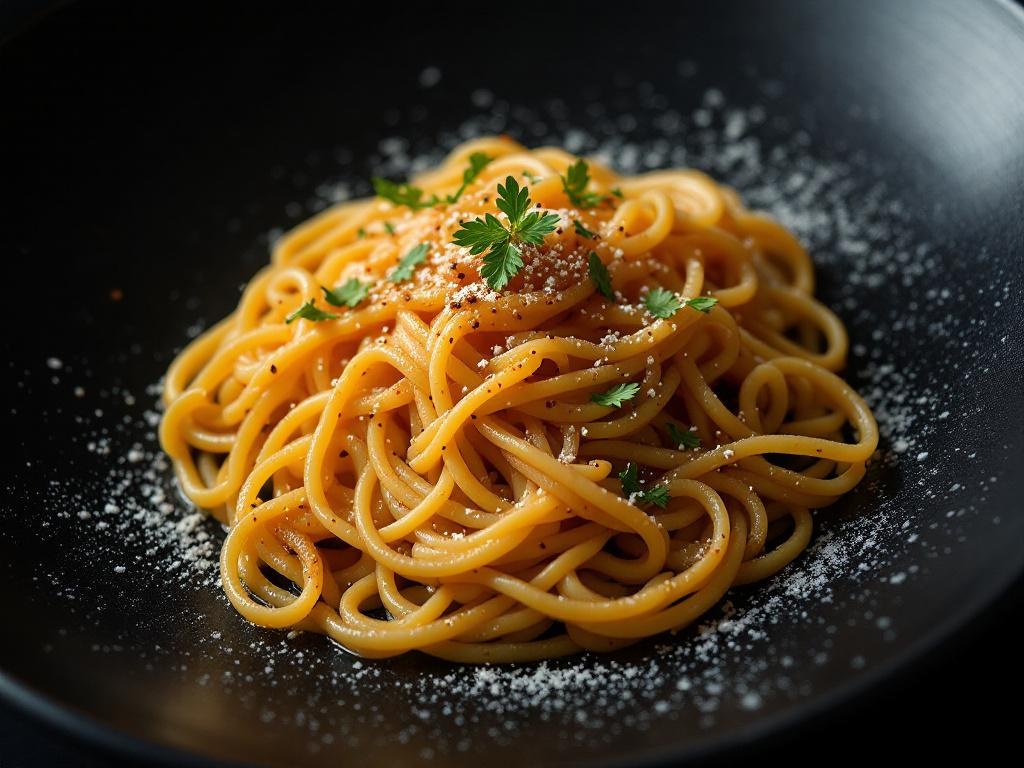
Mentaiko pasta is one of Japan's most successful Yoshoku (Western-influenced Japanese) dishes — spaghetti tossed with raw spiced pollock roe (mentaiko), butter, and a small amount of cream or cooking sake, finished with nori and shiso. Its origin is commonly traced to the jazz café culture of Tokyo's Roppongi district in the 1960s, but the soul of the dish is Fukuoka, where mentaiko (called karashi mentaiko — spiced with red pepper) was first commercialised and remains the city's defining export food.
The technique is a cold sauce method, which distinguishes it from most pasta preparations. The mentaiko is mixed with softened butter and sake (or a small amount of cream) in a bowl before the pasta arrives — never cooked, never heated, as heat destroys the delicate salinity and changes the colour from vivid orange-pink to grey and unappetising. Hot pasta is drained and immediately tossed into the bowl, using the residual heat of the noodles to melt the butter and warm the roe just enough to become a coating sauce without cooking it.
Mentaiko itself requires explanation. It is the spiced, marinated egg sac of Alaskan pollock (walleye pollock), packed in red chilli and salt, with origins in Korean myeongnan-jeot that came to Fukuoka via Korean immigrants in the post-WWII period. The Hakata (Fukuoka) version is distinguished by its relatively mild spicing compared to some Korean antecedents, and its use as a condiment across a wide range of Japanese applications — on onigiri, over white rice, as topping for chazuke, and in this pasta.
Properly made mentaiko pasta has a creamy but not heavy texture, vivid orange colour, and a clean, oceanic salinity from the roe balanced by the butter's richness.
‹Swipe for the next dish›
IThe Market List
The benchmark for each ingredient, and who stocks it near you. Tap a stockist to go straight to the product.
200 g
mentaiko
Fukuoka-style spiced cod roe, chilled
Not yet stocked in British Columbia
45 ml
soy sauce
hon-mirin style (shoyu)
15 ml
mirin
hon-mirin
Not yet stocked in British Columbia
30 ml
dashi
bonito and kombu, cold
Not yet stocked in British Columbia
1
egg yolk
room temperature
Your own market
30 ml
neutral oil
vegetable, cold-pressed
Not yet stocked in British Columbia
200 g
spaghetti or bukatsutamen
dried pasta
Not yet stocked in British Columbia
30 g
nori
toasted seaweed sheet, cut into thin strips
Not yet stocked in British Columbia
15 g
scallions
thinly sliced on the bias
Not yet stocked in British Columbia
5 g
shichimi togarashi
or Aleppo pepper for less heat
Not yet stocked in British Columbia
1
lemon
cut into wedges
Your own market
Each tap is counted, so the stockist sees the demand Provenance sends them.
II
The Method
1
Bring a large pot of salted water to a rolling boil; add spaghetti and cook according to package directions until al dente; drain and rinse under cold running water until completely cooled.
2
Combine mentaiko, soy sauce, mirin, and cold dashi in a large mixing bowl; stir gently with a wooden spoon to break up the roe slightly and distribute evenly — the mixture should remain loose and glossy.
3
Add the chilled egg yolk to the mentaiko sauce and fold gently to incorporate, being careful not to break the yolk completely — small threads of yolk create a rich, silky emulsion.
4
Drizzle in cold neutral oil while folding slowly with a rubber spatula until the sauce becomes pale, glossy, and creamy.
5
Add cooled spaghetti to the mentaiko sauce and toss gently but thoroughly, coating each strand evenly; divide between two chilled bowls.
6
Garnish each bowl with nori strips, scattered scallions, and a small pinch of shichimi togarashi.
7
Place a lemon wedge on the rim of each bowl and serve immediately, or chill for up to 2 hours before serving cold.
8
Toss at the table with lemon juice to taste just before eating.
IV
Sensory Tests
◇Sight. Mentaiko stays bright orange-red and granular; heat turns it grey and grainy.
◇Where it lives or dies. Never cook the roe directly — heat destroys salinity and texture. Hot pasta goes into cold mentaiko-butter bowl, never the reverse.
VI · What to Pour
Oceanic, mildly spicy pollock roe melted into butter over hot pasta — vivid orange sauce with shiso-nori brightness
VII · Origin & Lineage
Fukuoka, Japan (mentaiko origin); Tokyo (pasta application, 1960s jazz café culture); a Yoshoku dish rooted in Hakata's Korean-influenced preserved seafood tradition
Pillars V — VII
The full recipe pages are part of membership.
Cross-cuisine parallels, what to pour, and the dish's origin and lineage — on every recipe.
Enter · from $49 a year