PProvenance
Enter
Polenta (Naturally Gluten-Free)
Italian · Northern Italy

Polenta (Naturally Gluten-Free)

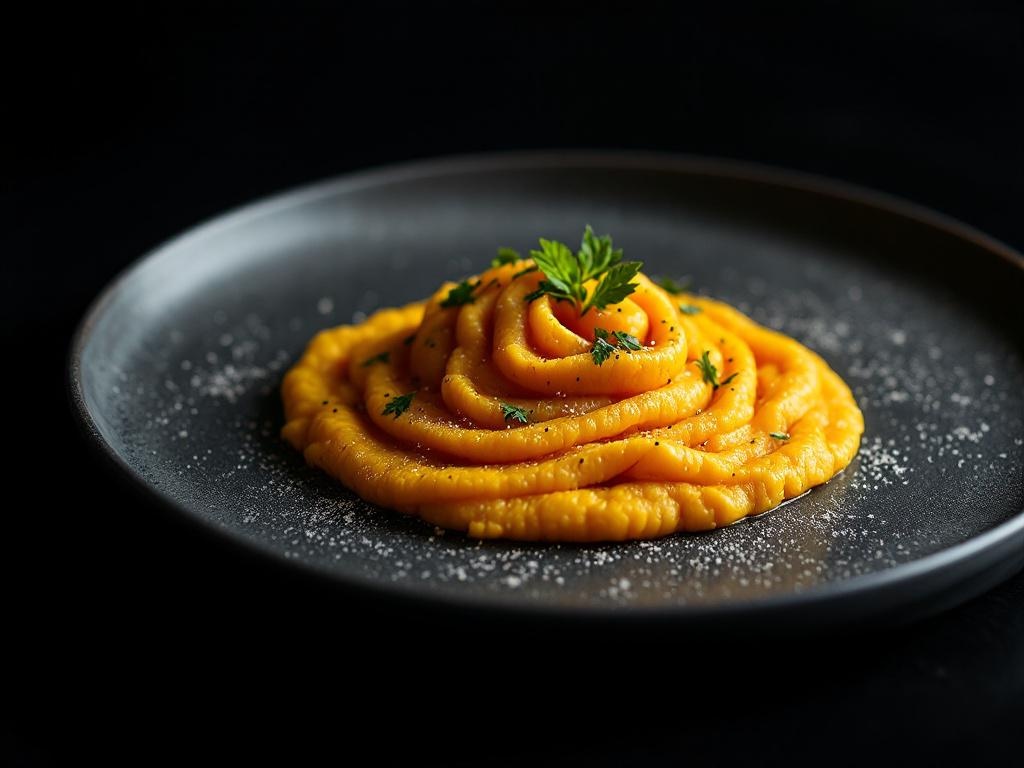
Polenta — coarse ground corn cooked slowly in water or stock — is the great gluten-free staple of Northern Italy, predating wheat pasta as a dietary foundation in Lombardy, Veneto, and Friuli. It is naturally, completely gluten-free, requiring no adaptation or substitute. Its versatility is extraordinary: served soft and pourable as a base for braises and stews, poured into a pan, chilled, and sliced for grilling or frying, or baked into forms that rival bread for satisfaction. The preparation's key variable is time — true polenta requires 40–60 minutes of stirring over low heat, during which the corn starch swells and the grassy, slightly bitter cornmeal sweetness develops into a rounded, complex flavour. Instant polenta is a compromise that works in some contexts but never achieves the character of the slow-cooked version. Understanding polenta means understanding that the cooking time is not a burden — it is what produces the result.

‹Swipe for the next dish›
Serves4
Total35 min
Sourced0of 8 in BC
Cook
I

The Market List

The benchmark for each ingredient, and who stocks it near you. Tap a stockist to go straight to the product.

250 ml
whole milk or unsweetened plant-based milk
Your own market
750 ml
vegetable or chicken stock
Your own market
100 g
polenta (cornmeal
not instant)
Your own market
50 g
unsalted butter or vegan butter
Your own market
75 g
Parmigiano Reggiano DOP
finely grated
Not yet stocked in British Columbia
1 g
fine sea salt
Your own market
0.5 g
Tellicherry black pepper
Your own market
30 ml
extra virgin olive oil (for finishing)
Your own market
II

The Method

1
Bring stock and milk to a boil in a heavy-bottomed pot over medium-high heat; whisk constantly.
2
Slowly pour polenta into the liquid in a thin stream, whisking continuously to prevent lumps from forming.
3
Reduce heat to low and stir constantly with a wooden spoon for 25 minutes, scraping the bottom and sides, until polenta pulls away from the pot sides and is very thick.
4
Remove from heat; stir in butter and Parmigiano Reggiano until fully incorporated.
5
Season with salt and pepper to taste.
6
Pour onto a wooden board or into a shallow dish to set, or serve immediately as creamy polenta in bowls drizzled with olive oil.
IV

Sensory Tests

◇Sight. Polenta pulls away from pan sides during first 10 minutes of stirring; then stir every 2–3 minutes to prevent scorching at the base.
◇Where it lives or dies. Polenta that sits unstirred scorches at the bottom; scrape constantly, especially at the base.
VI

What to Pour

The pairing
Antinori Tignanello
Marchesi Antinori · Brunello di Montalcino DOCG
Cut — the tannin ('cedar') scrubs the cream and salt between bites; the palate arrives clean at every pass.
Not yet stocked in British Columbia
Wine
From British Columbia
Fort Berens Riesling
Fort Berens Estate Winery · Lillooet
Cut — the acidity ('lime zest') scrubs the cream and salt between bites; the palate arrives clean at every pass.
Not yet stocked in British Columbia
Wine
Without alcohol
GT's Synergy Organic Kombucha — Gingerade
Cut — the bead ('effervescent') scrubs the cream and salt between bites; the palate arrives clean at every pass.
Not yet stocked in British Columbia
Non-alcoholic
The whole pairing
VII

Origin & Lineage

Northern Italy (Lombardy, Veneto, Friuli-Venezia Giulia); corn arrived from the Americas c. 16th century; polenta replaced millet and spelt porridges as the primary grain dish of the Italian poor.