PProvenance
Enter
Rajasthani Ker Sangri (Wild Berry and Bean Desert Curry)
Indian · Thar Desert, Rajasthan

Rajasthani Ker Sangri (Wild Berry and Bean Desert Curry)

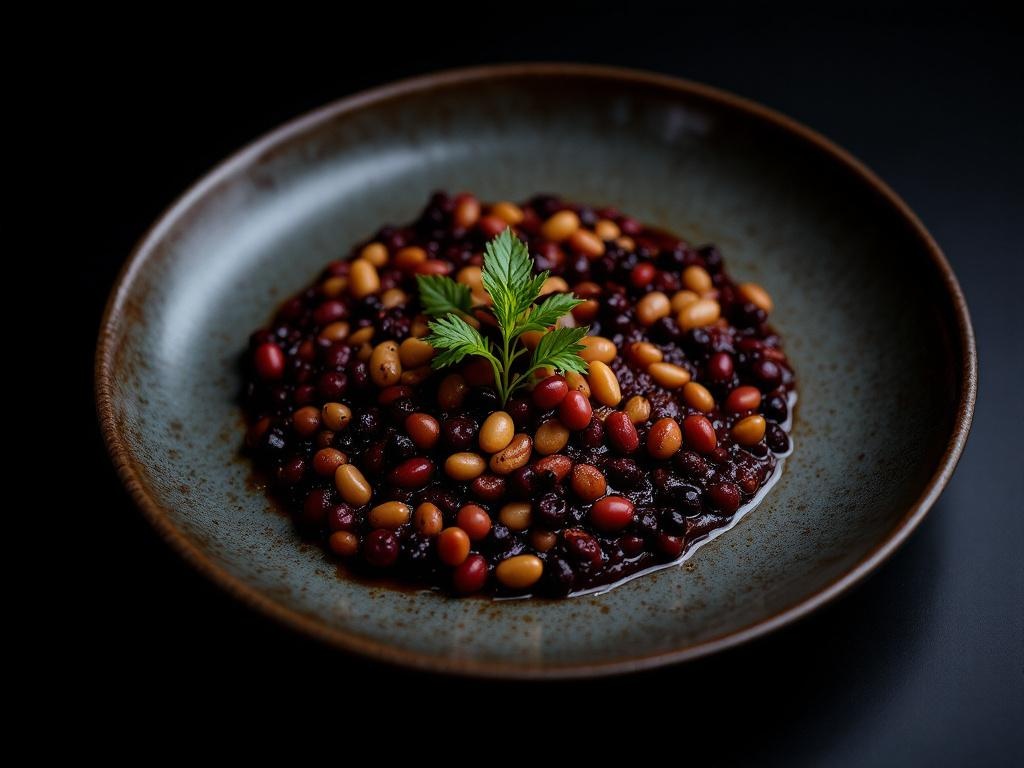
Ker sangri is a uniquely Rajasthani preparation built entirely from the desert's indigenous plant life — ker (the berry of the capparis decidua tree, a wild caper-like fruit) and sangri (the dried pods of the khejri tree, the sacred tree of the Thar Desert). Both ingredients grow naturally in the harsh Rajasthani scrubland and are sun-dried for preservation, making this a dish that requires no refrigeration and no fresh market access — a true product of desert subsistence intelligence. The preparation begins with rehydrating both ker and sangri overnight in water with a small amount of salt to remove bitterness — ker in particular has a natural tartness and mild bitterness that is integral to its flavour but must be managed. The rehydrated ingredients are then cooked in mustard oil with a bold Rajasthani tempering: dried red chillies, cumin, coriander, hing, and turmeric. The cooking technique is one of the few Indian vegetable preparations that is intentionally nearly dry — ker sangri is cooked down until almost all moisture evaporates, with occasional additions of buttermilk to provide acidity. The result is a preparation that is intensely flavoured, slightly chewy from the reconstituted dried pods, and distinctly sour-spicy from the combination of ker's natural acidity, dried chilli heat, and amchur or dried mango powder added at the finish. Dried whole red chillies are used generously — this is a dish of the desert, where bold preserved flavours are the norm. Ker sangri represents the Rajasthani culinary philosophy of maximum flavour from preserved and dried ingredients — a cuisine shaped by the Thar Desert's limitations into something genuinely distinctive. It is served at room temperature or warm with dal baati and is considered a marker of authentic Rajasthani hospitality.

‹Swipe for the next dish›
Serves4
Total60 min
Sourced2of 18 in BC
Cook
I

The Market List

The benchmark for each ingredient, and who stocks it near you. Tap a stockist to go straight to the product.

150g
ker (wild berry)
dried and picked
Not yet stocked in British Columbia
150g
sangri (desert bean)
dried and picked
Not yet stocked in British Columbia
2
potatoes
250g, cut into 2cm cubes
Origin · FranceLekker · Vancouver →
1
onion
150g, diced
Your own market
40ml
mustard oil
Not yet stocked in British Columbia
2 cloves
garlic
minced
Your own market
10g
fresh ginger
minced
2
green chillies
minced
Not yet stocked in British Columbia
1
dried red chilli
deseeded
Not yet stocked in British Columbia
4g
ground coriander
Not yet stocked in British Columbia
3g
ground cumin
Your own market
2g
amchur (dried mango powder)
Not yet stocked in British Columbia
2g
garam masala
Not yet stocked in British Columbia
1g
asafoetida (hing)
Not yet stocked in British Columbia
300ml
water
Your own market
6g
salt
Your own market
3g
jaggery (gur)
grated
Origin · IndiaNot yet stocked in British Columbia
10ml
fresh lemon juice
Not yet stocked in British Columbia

Each tap is counted, so the stockist sees the demand Provenance sends them.

II

The Method

1
Soak dried ker berries and sangri beans separately in cold water for 20 minutes; drain and rinse thoroughly to remove dust and bitterness.
2
Heat mustard oil in heavy-bottomed pan over medium heat — let it smoke gently for 30 seconds (this releases pungent compounds); add minced green chillies, garlic, and ginger, sauté 2 minutes until fragrant.
3
Add diced onion, cook 4 minutes until translucent; add dried red chilli, cook 1 minute further.
4
Stir in ground coriander, cumin, amchur, garam masala, and asafoetida; cook 1 minute to bloom spices; add drained ker berries and sangri beans, stir well to coat with oil.
From the canon — Garam masala is the crown jewel of the Indian spice pantry — a blend whose name translates simply as 'warm spice mix,' understating completely what it does t… Garam Masala (Fresh-Ground — Indian Spice Pantry) →
5
Add cubed potatoes, 300ml water, and salt; bring to boil, then reduce to gentle simmer, partially covered, for 35 minutes until potatoes are tender and beans are cooked through — liquid should reduce to 100ml.
6
Stir in grated jaggery, cook 2 minutes until dissolved; season with lemon juice, adjust salt if needed.
7
Simmer uncovered for final 3 minutes to reduce sauce slightly and concentrate flavours; consistency should be thick and clingy rather than soupy.
8
Serve hot as side dish with bajra bread, pearl millet flatbread, or rice; garnish with chopped fresh coriander and sliced green chillies if desired.
IV

Sensory Tests

◇Sound. Listen for the spices to crackle and smell the mustard oil turning nutty and dark — ker and sangri should be visibly coated, not swimming; the dish is done when you hear the oil hiss against the dry ingredients.
◇Where it lives or dies. Soak ker and sangri separately overnight with water changes until bitterness drops to pleasant tartness, not aggressive bite — one combined soak produces uneven texture and unpredictable cook time.
VI

What to Pour

The pairing
Caol Ila 12 Year Old Single Malt
Caol Ila Distillery · Islay
Not yet stocked in British Columbia
Whisky
From British Columbia
Fort Berens Riesling
Fort Berens Estate Winery · Lillooet
Not yet stocked in British Columbia
Wine
Without alcohol
GT's Synergy Organic Kombucha — Gingerade
Not yet stocked in British Columbia
Non-alcoholic

Why each one works is part of membership — Enter · from $49 a year →

The whole pairing
Pillar VII
Origin and lineage are part of membership.
Where the dish comes from and how it came to be — on every recipe.
Enter · from $49 a year