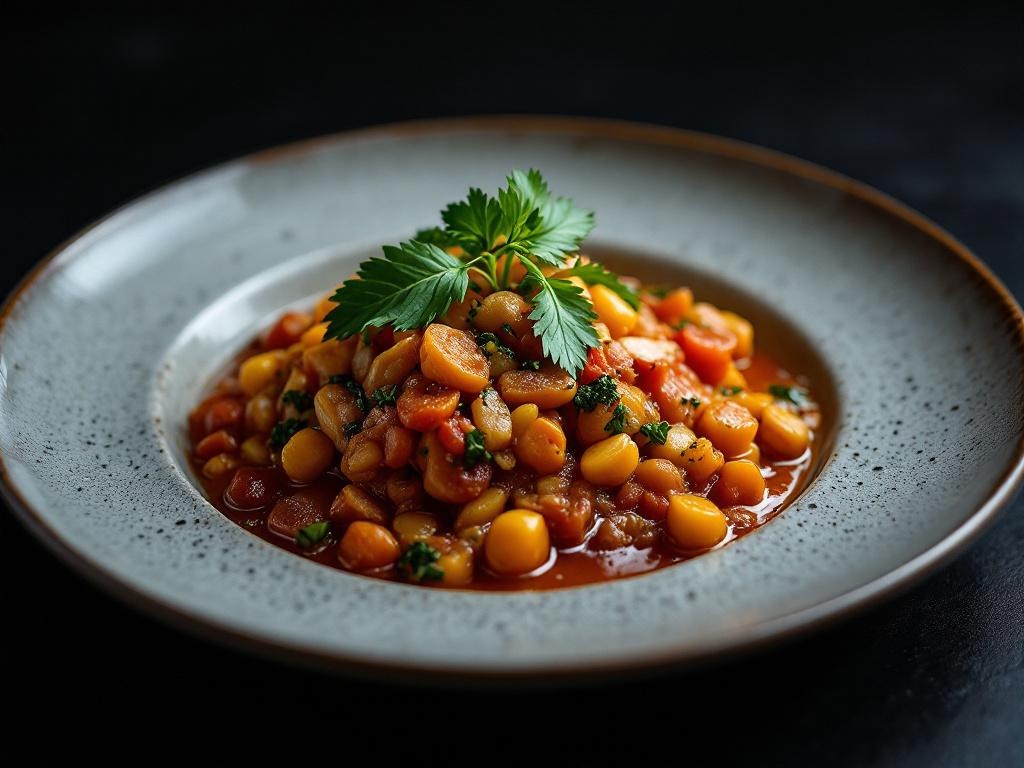
Sofrito
Sofrito is the foundational flavour base of Spanish and Latin American cooking — a slowly cooked paste or sauce of tomatoes, onions, garlic, and peppers that forms the aromatic backbone of countless dishes. It is the Latin equivalent of French mirepoix or Italian soffritto, but while those are starting bases that are usually subsumed into a dish, Spanish-style sofrito is often cooked to a deep, jammy concentrate that can be stored and used as a flavour shortcut. The technique is deceptively simple: aromatics are finely chopped or blended, then fried slowly in olive oil until they lose all their raw character and collapse into a sweet, concentrated paste. The Maillard reaction and caramelisation do the work over 30–45 minutes of patient cooking. A rushed sofrito tastes of fried onions; a properly cooked sofrito tastes of something much deeper — almost meaty in its savouriness. Caribbean sofrito (recaíto or recado) adds recao (culantro), ají dulce, and sometimes annatto oil, making it a more verdant, herbal preparation. Cuban sofrito emphasises cumin and sazón. Puerto Rican sofrito is green-herb forward. Spanish sofrito is tomato-red and Mediterranean in character. Sofrito is the first thing cooked in a paella, the base of Spanish bean stews, the foundation of Puerto Rican rice and beans. Understanding sofrito is understanding the flavour logic of the entire Latin food tradition.
The Market List
The benchmark for each ingredient, and who stocks it near you. Tap a stockist to go straight to the product.
The Method
Sensory Tests
What to Pour
Origin & Lineage
Spain and Latin America — derived from medieval Arabic cooking traditions via Catalonia; spread through the Spanish colonial world