PProvenance
Enter
Sofrito
Latin American · Spain

Sofrito

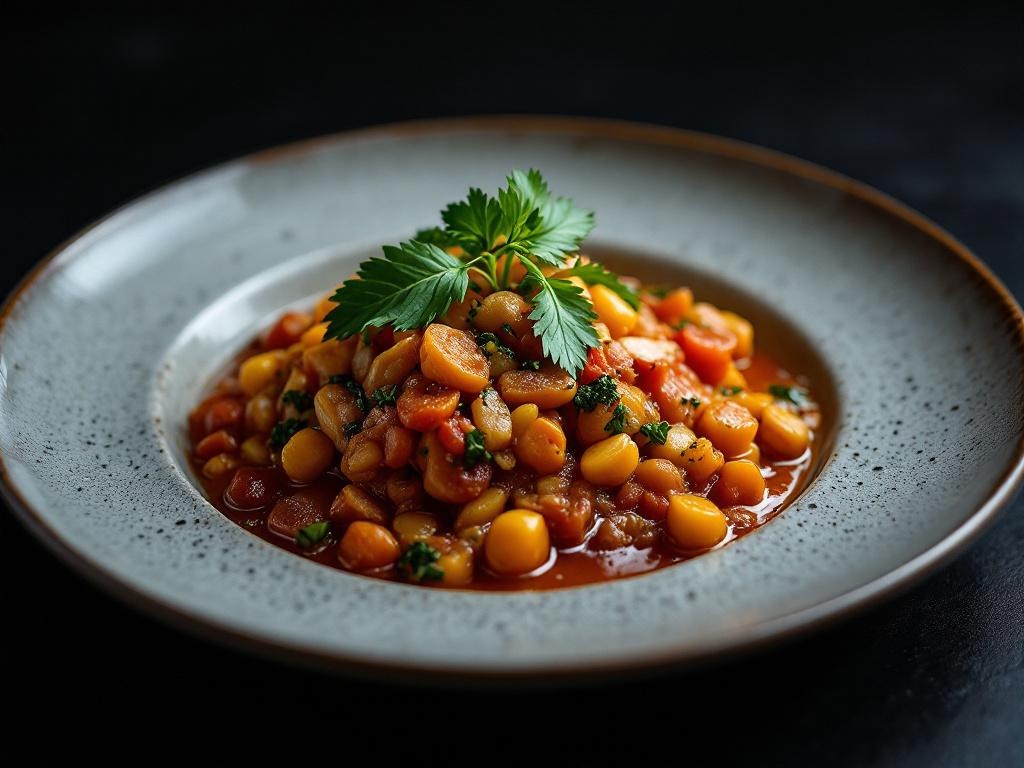
Sofrito is the foundational flavour base of Spanish and Latin American cooking — a slowly cooked paste or sauce of tomatoes, onions, garlic, and peppers that forms the aromatic backbone of countless dishes. It is the Latin equivalent of French mirepoix or Italian soffritto, but while those are starting bases that are usually subsumed into a dish, Spanish-style sofrito is often cooked to a deep, jammy concentrate that can be stored and used as a flavour shortcut. The technique is deceptively simple: aromatics are finely chopped or blended, then fried slowly in olive oil until they lose all their raw character and collapse into a sweet, concentrated paste. The Maillard reaction and caramelisation do the work over 30–45 minutes of patient cooking. A rushed sofrito tastes of fried onions; a properly cooked sofrito tastes of something much deeper — almost meaty in its savouriness. Caribbean sofrito (recaíto or recado) adds recao (culantro), ají dulce, and sometimes annatto oil, making it a more verdant, herbal preparation. Cuban sofrito emphasises cumin and sazón. Puerto Rican sofrito is green-herb forward. Spanish sofrito is tomato-red and Mediterranean in character. Sofrito is the first thing cooked in a paella, the base of Spanish bean stews, the foundation of Puerto Rican rice and beans. Understanding sofrito is understanding the flavour logic of the entire Latin food tradition.

‹Swipe for the next dish›
Serves500 ml
Total45 min
Sourced0of 8 in BC
Cook
I

The Market List

The benchmark for each ingredient, and who stocks it near you. Tap a stockist to go straight to the product.

150 g
yellow onion
finely diced
Your own market
100 g
red bell pepper
finely diced
Your own market
75 g
garlic
minced
Your own market
60 ml
extra virgin olive oil
Your own market
30 g
tomato paste
Your own market
5 g
Aleppo pepper
Not yet stocked in British Columbia
3 g
fine sea salt
Your own market
1 g
black pepper
freshly ground
Your own market
II

The Method

1
Heat olive oil in a heavy-bottomed saucepan over medium heat until shimmering.
2
Add diced onion and red pepper; sauté for 8–10 minutes, stirring occasionally, until softened and beginning to caramelize.
3
Stir in minced garlic and cook for 1 minute until fragrant.
4
Add tomato paste and cook, stirring constantly, for 2 minutes to deepen colour and remove raw flavour.
5
Season with Aleppo pepper, sea salt, and black pepper; stir to combine.
6
Reduce heat to low and simmer for 20 minutes, stirring occasionally, until deeply concentrated and oil separates slightly from solids.
7
Cool to room temperature before transferring to a sterilised glass jar; refrigerate up to 2 weeks.
IV

Sensory Tests

◇Smell. Smell transforms beyond its ingredients — raw tomato and onion vanish into deep, unified aroma after 30–45 minutes on medium-low heat.
◇Where it lives or dies. Smell transforms beyond its ingredients — raw tomato and onion vanish into deep, unified aroma after 30–45 minutes on medium-low heat.
VI

What to Pour

The pairing
El Silencio Espadin Mezcal
El Silencio Mezcal · Oaxaca — Mezcal
Bridge — the dish's smoke meets 'smoke' in the pour; smoke speaking to smoke.
Not yet stocked in British Columbia
Agave spirit
From British Columbia
Fort Berens Riesling
Fort Berens Estate Winery · Lillooet
Cut — the acidity ('lime zest') scrubs the cream and salt between bites; the palate arrives clean at every pass.
Not yet stocked in British Columbia
Wine
Without alcohol
GT's Synergy Organic Kombucha — Gingerade
Cut — the bead ('effervescent') scrubs the cream and salt between bites; the palate arrives clean at every pass.
Not yet stocked in British Columbia
Non-alcoholic
The whole pairing
VII

Origin & Lineage

Spain and Latin America — derived from medieval Arabic cooking traditions via Catalonia; spread through the Spanish colonial world