PProvenance
Springerle (Advent — German Anise Cookies)
American · Germany

Springerle (Advent — German Anise Cookies)

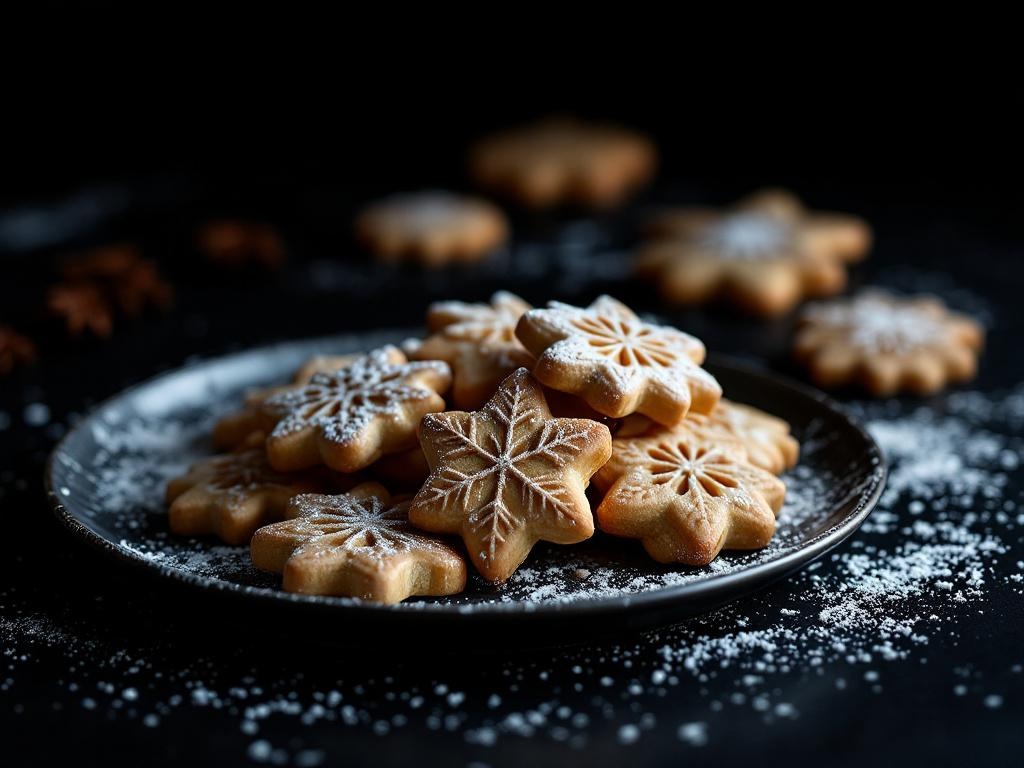
Springerle — the embossed anise cookies of the German Advent tradition — are among the oldest surviving European Christmas baked goods, with recipes documented from the 14th century. They are made with a stiff egg-and-flour dough flavoured with anise seed, which is rolled and pressed with special carved wooden or ceramic moulds to create raised bas-relief images (originally religious scenes, animals, and symbols now extended to include almost anything). The cookies are then dried at room temperature for 24 hours before baking — the drying allows the embossed surface to set hard, preserving the image perfectly during baking. Springerle have a firm, dry texture (quite different from most cookies) and a strong anise flavour that is an acquired taste but deeply traditional. They are better after several weeks of storage — the texture mellows and the anise integrates.

‹Swipe for the next dish›
Serves4 (makes 24 cookies)
Total240 min (includes drying time)
Sourced0of 8 in BC
Cook
I

The Market List

The benchmark for each ingredient, and who stocks it near you. Tap a stockist to go straight to the product.

200g
unsalted butter
softened
Your own market
150g
caster sugar
Your own market
2
large eggs
room temperature
Your own market
5g
whole anise seeds
star anise preferred, lightly crushed
Not yet stocked in British Columbia
300g
plain flour
Not yet stocked in British Columbia
2g
baking powder
Your own market
1g
sea salt
Your own market
5ml
milk
Your own market
II

The Method

1
Cream softened butter with caster sugar in stand mixer on medium speed for 5 minutes until pale and fluffy; beat in eggs one at a time, fully incorporating between additions.
2
Fold in crushed anise seeds; sift flour, baking powder, and salt together; fold gently into creamed mixture in three additions, using minimal mixing; add milk and fold just until cohesive dough forms (do not overmix).
3
Knead dough gently by hand on floured surface 2-3 times until smooth; wrap in cling film and chill at least 1 hour until firm enough to press.
4
Preheat oven to 160°C; roll chilled dough between parchment paper to 5mm thickness; remove top layer of parchment.
5
Press traditional carved wooden Springerle mould firmly onto dough, then lift away slowly to reveal imprint; cut out individual cookies along mould lines using sharp knife or small cutter; transfer to parchment-lined baking sheets.
6
Rest pressed cookies uncovered at room temperature for 8-24 hours (this allows surface to dry and helps produce characteristic cracked finish and slight rise during baking).
7
Bake at 160°C for 12 minutes until bottoms are pale golden but tops remain white/pale with visible cracks; cool on baking sheets for 5 minutes, then transfer to racks to cool completely.
8
Store in airtight container with slice of bread or apple for 2-3 weeks to soften; traditionally prepared during Advent season in Swabia and served at Christmas markets.
IV

Sensory Tests

◇Sight. Press the mould firmly into dough — hesitant pressure produces indistinct, barely visible embossed images that blur further during the mandatory 24-hour room-temperature dry.
◇Where it lives or dies. Press the mould firmly into dough — hesitant pressure produces indistinct, barely visible embossed images that blur further during the mandatory 24-hour room-temperature dry.
VII

Origin & Lineage

Germany (Württemberg and Baden); springerle documented from the 14th century; one of Europe's oldest surviving cookie recipes; the tradition of embossed New Year and Christmas cookies predates Christianity in Germanic culture.