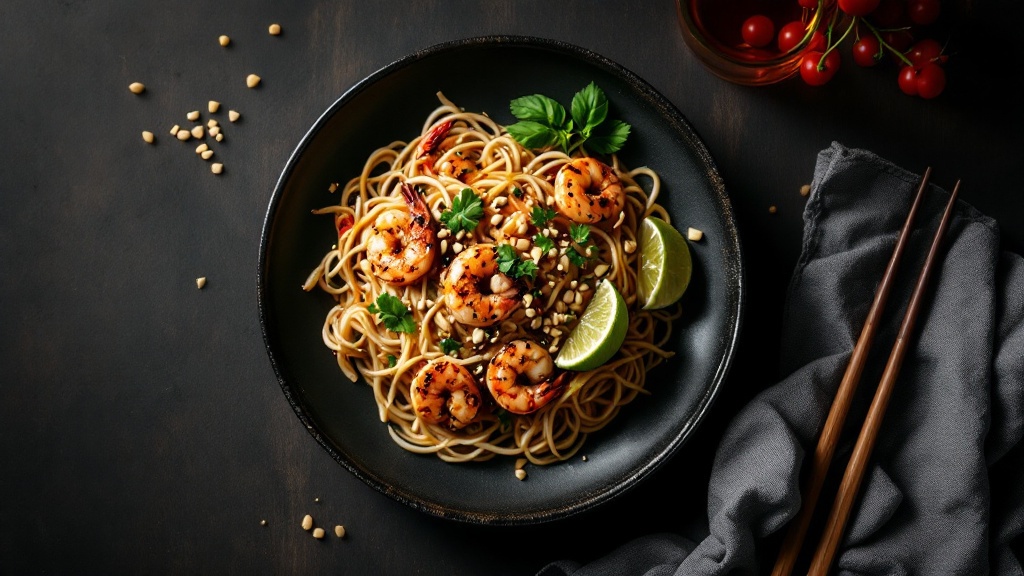
Bangkok, 1930s-40s. Prime Minister Plaek Phibunsongkhram's nationalist campaign to standardise Thai identity included food. Government-distributed recipes promoted this noodle dish as a symbol of Thai modernity and frugality during rice shortage. Street vendors were licensed to sell it at set prices. The result is a 'traditional' dish that was deliberately invented — which makes its global ubiquity either ironic or perfect.
-
200 g
flat rice noodles 3–5mm wide, soaked in room temperature water 30 minutes — not boiling
-
3 tbsp
tamarind paste (from block) made from fresh tamarind block, not concentrate
-
3 tbsp
fish sauce Tiparos or Megachef
-
2 tbsp
palm sugar or light muscovado — not white sugar
-
150 g
firm tofu pressed, cut into 1cm cubes
-
8
large prawns shell-off, deveined — or replace with more tofu
-
2
eggs
-
150 g
bean sprouts fresh, not canned
-
40 g
garlic chives or spring onions, cut into 4cm lengths
-
2 tbsp
dried shrimp essential for umami depth
-
4
shallots thinly sliced
-
3 tbsp
lard or neutral oil lard gives the traditional char
-
50 g
roasted peanuts roughly crushed
-
1
lime cut into wedges
-
to taste
dried chilli flakes
-
1
Make the sauce: dissolve palm sugar in tamarind paste, add fish sauce. The balance should be sour-first, savoury-second, sweet-third. Taste and adjust.
-
2
Heat wok to screaming hot. Add lard. Fry tofu cubes until golden on all sides, remove and reserve.
-
3
Add shallots and dried shrimp to the wok, stir fry 30 seconds. Add soaked, drained noodles. Pour sauce over and toss quickly — the noodles will stick briefly. This is normal.
-
4
When noodles begin to colour and sauce is absorbed, push to one side. Crack eggs into the empty side, scramble briefly, then fold noodles over before eggs fully set.
-
5
Add prawns, bean sprouts, garlic chives, and fried tofu. Toss over the highest heat for 30–60 seconds. The wok must smoke — this is the wok hei.
-
6
Serve immediately with crushed peanuts, lime wedges, and extra chilli. In Thailand, fish sauce, sugar, vinegar, and chilli are always provided at the table.
Wok hei — the breath of the wok. The Maillard reaction on flat rice noodles in a 300°C+ carbon-steel wok produces a surface caramelisation that no home hob can fully replicate. The technique requires a seasoned wok, a burner capable of generating sustained extreme heat, and the discipline to hold still for 45 seconds while the noodles char. Move too soon and the wok drops temperature and the dish steams.
- 1. Tamarind paste made from a block — commercial tamarind sauce is sweetened, diluted, and imprecise.
- 2. Fish sauce: Tiparos or Megachef — the fermentation quality is the foundation of the dish's umami.
- 3. Rice noodles soaked in cold water, not boiled — they finish cooking in the wok.
- 4. Dried shrimp for the base umami layer — there is no vegan substitute that achieves the same result.
- 5. Tofu pressed for a minimum of 30 minutes — wet tofu releases water that drops the wok temperature and prevents caramelisation.
The first 45 seconds after the noodles hit the wok. Nothing moves. The char develops at the contact surface. Then the scramble. Everything before this moment is preparation. This moment is the cooking.
- The noodles should show pale gold caramelisation on their underside — visible char without burning.
- The dish should smell of smoke and tamarind, not of oil.
- Bean sprouts added in the final 10 seconds must retain audible crunch.
- Singapore char kway teow — flat rice noodles, wok hei, lard, dried shrimp. The closest structural parallel.
- Vietnamese bún bò Huế — rice noodles, fermented shrimp paste, tamarind-adjacent sourness from lemongrass.
- Japanese yakisoba — wheat noodles fried with Worcestershire-style sauce, same wok caramelisation technique.