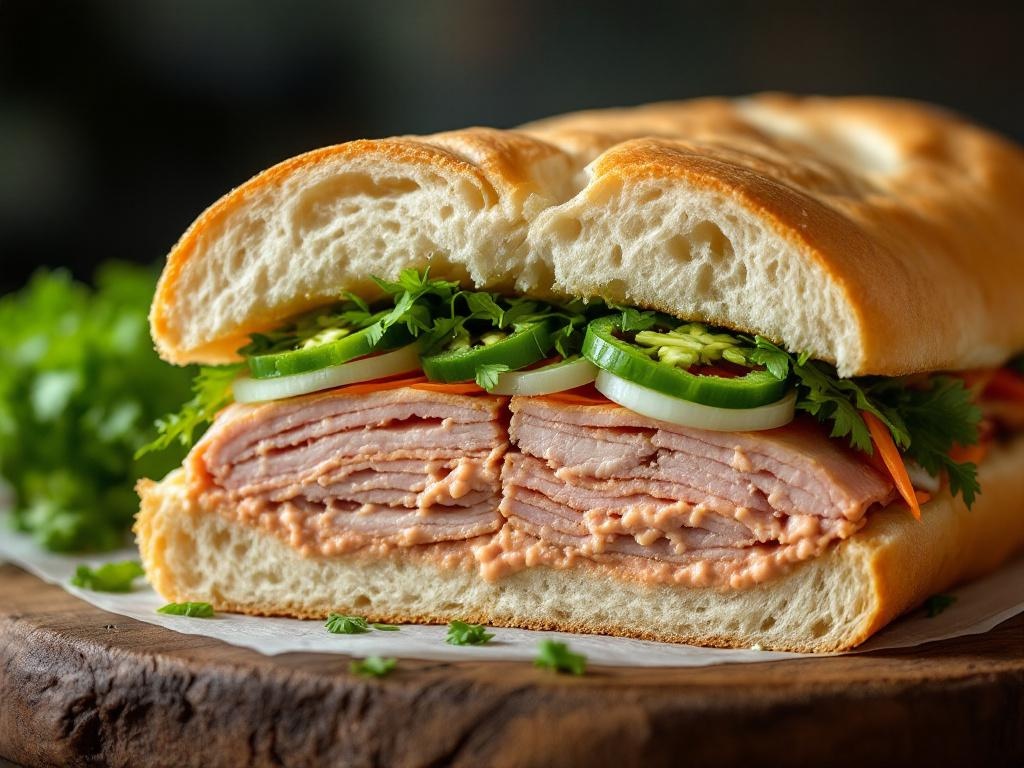
Banh Mi
Vietnam, colonial French period. Bánh mì translates literally as 'bread' — the French baguette was introduced during French colonial rule (1858-1954) and the Vietnamese adapted it by lightening the dough with rice flour. The sandwich construction incorporating local meats, herbs, and pickles was a Vietnamese invention that produced one of the great sandwich traditions of the world.
Bánh mì is the perfect sandwich — a Vietnamese baguette (lighter and crispier than French, with a more open crumb and thinner, shatteringly crisp crust) filled with pâté, mayonnaise, various pork preparations (char siu, chả lụa, grilled pork), pickled daikon and carrot, cucumber, coriander, and sliced jalapeño. The balance of the sandwich is the architecture: rich pâté and meat against sharp pickles, creamy mayonnaise against fresh herbs, crispy bread against soft fillings.
Vietnamese iced coffee (cà phê sữa đá) — dark Vietnamese drip coffee over condensed milk and ice. The sweet, bitter, cold coffee alongside the rich, bright sandwich is the Vietnamese street food pairing. Or a cold Tiger lager.
The bread: Vietnamese baguette — made with a blend of wheat flour and rice flour (for the lighter crumb and crispier crust). A French baguette is too chewy and dense; the Vietnamese version should shatter Pâté: a spreadable liver pâté applied to the inside of the bread before anything else — the fat of the pâté seals the bread against the wet fillings Mayonnaise: Kewpie (Japanese mayo) is the standard — richer and more eggy than American mayo The pickles (đồ chua): daikon and carrot julienned and pickled in rice vinegar, sugar, and salt for minimum 2 hours. The crunch and acidity are structural The meat: char siu pork, grilled lemongrass pork, or chả lụa (Vietnamese pork sausage) are the classic proteins Assembly order: pâté, mayonnaise, meat, pickles, cucumber, coriander, chilli — this order ensures the wet components are separated by fat
RECIPE: Serves: 4 | Prep: 25 min | Total: 45 min --- 2 baguettes — Vietnamese, split lengthwise 60ml mayonnaise 30g pâté 40g Vietnamese cold cuts — head cheese, liver pâté, cured pork 200g pickled daikon — julienned 100g pickled carrot — julienned 30g fresh cilantro — leaves 2 Thai bird chilies — sliced thin 40g cucumber — julienned 60ml sriracha Mayo or Vietnamese chili sauce --- 1. Toast baguette halves cut-side down in dry skillet over medium heat until golden and crisp, 4 minutes. 2. Spread mayonnaise on bottom half and pâté on top half; layer cold cuts across bottom half. 3. Arrange pickled daikon and carrot in even layer; scatter cilantro leaves and chili slices. 4. Top with cucumber; drizzle sriracha mayo across cilantro and vegetables. 5. Close sandwich; slice diagonally and serve immediately. The moment where bánh mì lives or dies is the bread — it must be fresh (within 4 hours of baking) and warmed briefly in the oven or toaster before assembly. A stale or unwarmed Vietnamese baguette becomes leathery within minutes of being filled. Fresh, warm bread shatters on first bite and holds the moisture from the filling without becoming soggy for approximately 15 minutes — the optimal window for eating bánh mì.
Using a French baguette: too dense, too chewy — the Vietnamese baguette's light, crispy structure is the entire vehicle Skipping the pâté: the liver pâté is not optional — it is the foundation flavour Under-pickling the daikon and carrot: rushed pickles (under 1 hour) are still raw-tasting and lack the acidity that balances the rich filling
Common Questions
Why does Banh Mi taste the way it does?
Vietnamese iced coffee (cà phê sữa đá) — dark Vietnamese drip coffee over condensed milk and ice. The sweet, bitter, cold coffee alongside the rich, bright sandwich is the Vietnamese street food pairing. Or a cold Tiger lager.
What are common mistakes when making Banh Mi?
Using a French baguette: too dense, too chewy — the Vietnamese baguette's light, crispy structure is the entire vehicle Skipping the pâté: the liver pâté is not optional — it is the foundation flavour Under-pickling the daikon and carrot: rushed pickles (under 1 hour) are still raw-tasting and lack the acidity that balances the rich filling
What dishes are similar to Banh Mi?
French jambon beurre (ham and butter on baguette — the French ancestor); Cuban medianoche (pressed sandwich on soft roll — the Cuban-American sandwich parallel); Indonesian martabak (filled and griddled flatbread — the Southeast Asian filled bread tradition).