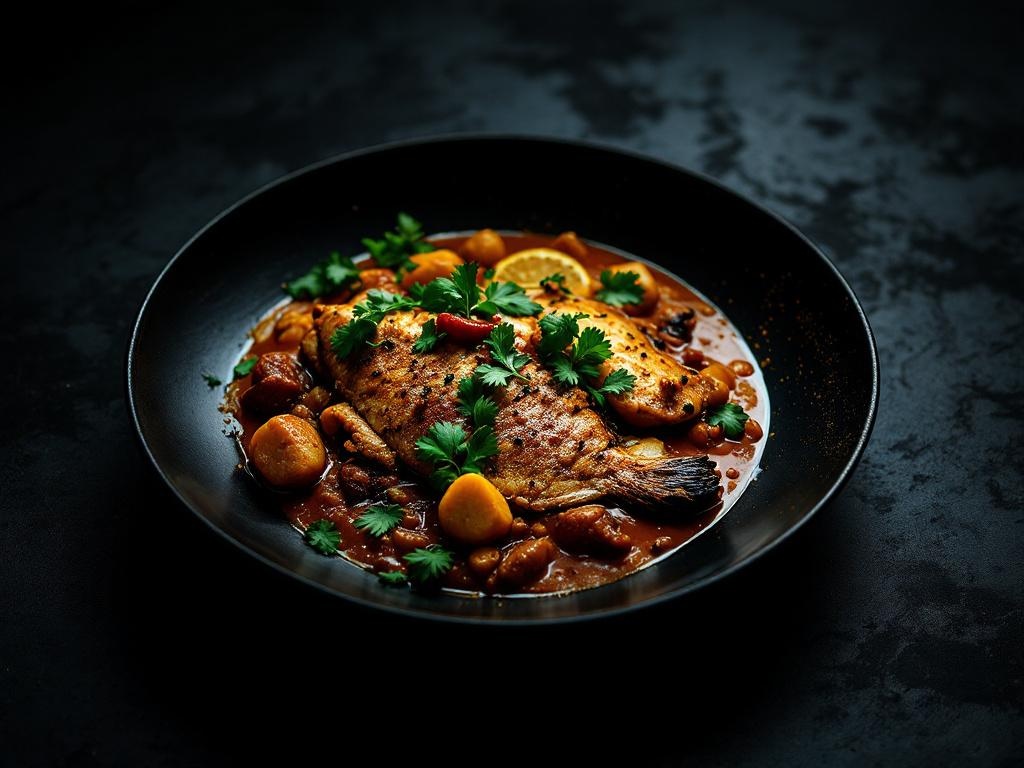
Goan Fish Curry (Kokum and Coconut — Coastal Technique)
One of 60 entries · Provenance 1000 — Indian
Goa, India — both Catholic and Hindu coastal communities; the daily fish preparation of the Arabian Sea coast, inseparable from Goan culinary identity
Goan fish curry is the daily dish of the Goan Catholic and Hindu coastal communities — a preparation built on the two defining ingredients of Goa's coastal larder: fresh fish from the Arabian Sea and kokum (Garcinia indica), a dried purple fruit that provides a distinctive fruity-tart acidity found nowhere else in Indian cooking. Kokum is to Goa what tamarind is to Tamil Nadu — a souring agent of regional identity, used with such frequency that Goan cooks often cannot conceive of making fish curry without it. The curry base is ground from dried Kashmiri red chillies (for colour and gentle heat), grated coconut, coriander seeds, cumin, turmeric, and garlic — all processed together with a small amount of water into a smooth red paste. Kokum petals are soaked separately in warm water and the extract added to the finished curry for sourness and colour (kokum turns the coconut-based sauce a distinctive purple-pink). This colour and the kokum flavour are the immediate identifiers of an authentic Goan fish curry. The technique involves frying the ground paste in coconut oil until fragrant and the oil separates, then adding water to form a sauce of medium consistency. The fish — traditionally king fish (surmai), pomfret, or sardines — is added to the simmering sauce and poached gently until just cooked, approximately 8–10 minutes. The kokum extract is added in the final 5 minutes — earlier addition causes it to over-cook and lose its characteristic fruity brightness. The dish exemplifies the simplicity and product-centrality of Goan Hindu cooking: the fish is the protagonist and every element of the curry is designed to complement rather than overwhelm it. The coconut provides richness, the kokum provides acidity, and the Kashmiri chilli provides colour and warmth — the fish speaks through all of these.
Fruity-tart kokum acidity against rich coconut and Kashmiri chilli warmth — a purple-pink sauce of distinctive regional character over fresh sea fish
visual: Watch for the kokum's fruity purple bloom rising through the cream-coloured sauce in the final minutes — the colour…
Add kokum petals only in the final 5 minutes; earlier addition turns the sauce bitter and muddy the brightness you need.