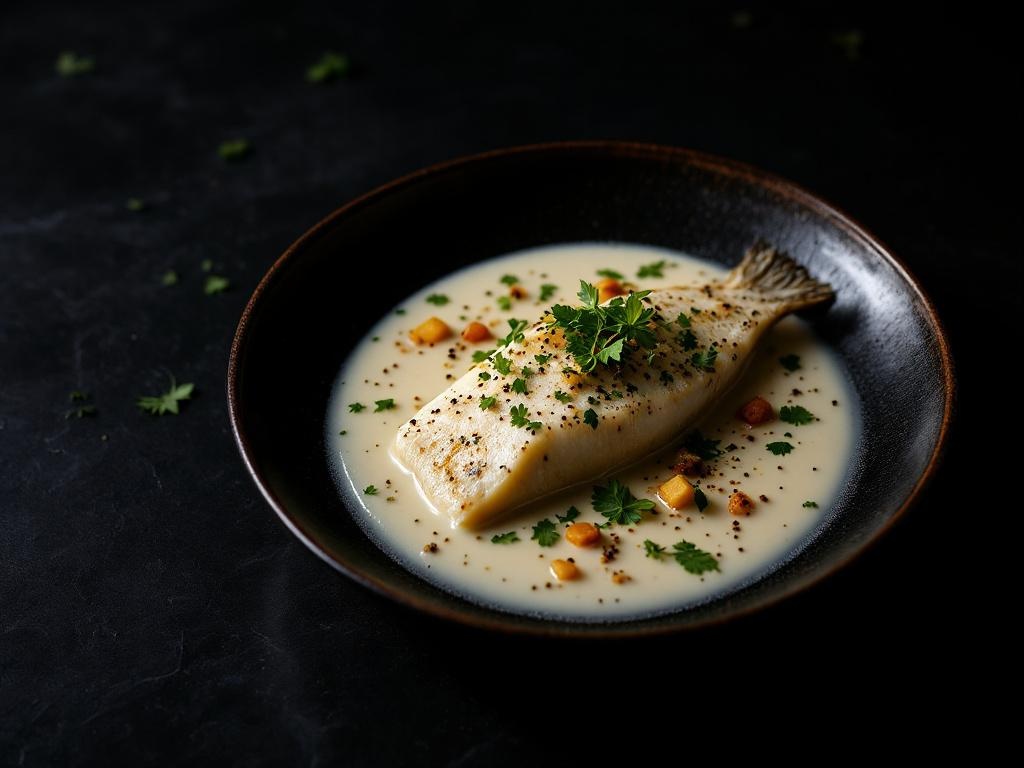
Kerala Fish Molee (Coconut Milk Poached Fish)
One of 60 entries · Provenance 1000 — Indian
Kerala, India — associated with the Saint Thomas Christian (Nasrani/Syrian Christian) community; Portuguese 'molho' influence on Kerala coastal cooking
Kerala fish molee is the most delicate fish preparation in South Indian cooking — a coconut milk-poached fish curry of extraordinary gentleness that reflects the influence of the Syrian Christian community (the Saint Thomas Christians or Nasrani) on Kerala's culinary identity. The molee (derived from the Portuguese 'molho', meaning sauce) is a preparation associated with Kerala's coastal Christians, whose cuisine uses fish, pork, and beef freely but with a spice restraint that distinguishes it from Hindu and Muslim Kerala cooking traditions. The spice philosophy of fish molee is the opposite of Chettinad: minimal, fresh, and designed to reveal the fish rather than transform it. The base is built from sliced onion, green chilli, ginger, and tomato cooked in coconut oil until soft but not caramelised. Turmeric and a small amount of black pepper are the primary dry spices — no chilli powder, no complex spice blend. Fresh coconut milk is then added in two stages: thin coconut milk (second press) first to cook the fish, then thick coconut milk (first press) added off heat at the end. The fish used is invariably fresh — Kerala's coastline and backwaters provide pearl spot (karimeen), king fish (neimeen), and shark — cooked in large, bone-in pieces. The cooking technique is gentle poaching in the coconut milk rather than frying or sautéing: the fish is lowered into the simmering coconut milk and poached until just cooked, relying on the coconut milk's rich fat to transmit heat gently and evenly. The result is a sauce that is ivory-white, slightly loose, and fragrant with fresh coconut and ginger — without the assertive spice heat that defines most Indian fish curries. It is served with appam (fermented rice hoppers), whose slightly sour, lacey texture provides the perfect contrast to the sweet, rich coconut broth.
Delicate, ivory coconut milk sweetness with green chilli warmth and ginger brightness — the most restrained and elegant fish preparation in South Indian cooking
visual: Watch the surface of the coconut milk — it should barely shimmer, never break into a rolling boil; the…
Add thick coconut milk only off heat or at the absolute lowest flame, stirring once; one moment of vigorous heat and the sauce splits into…