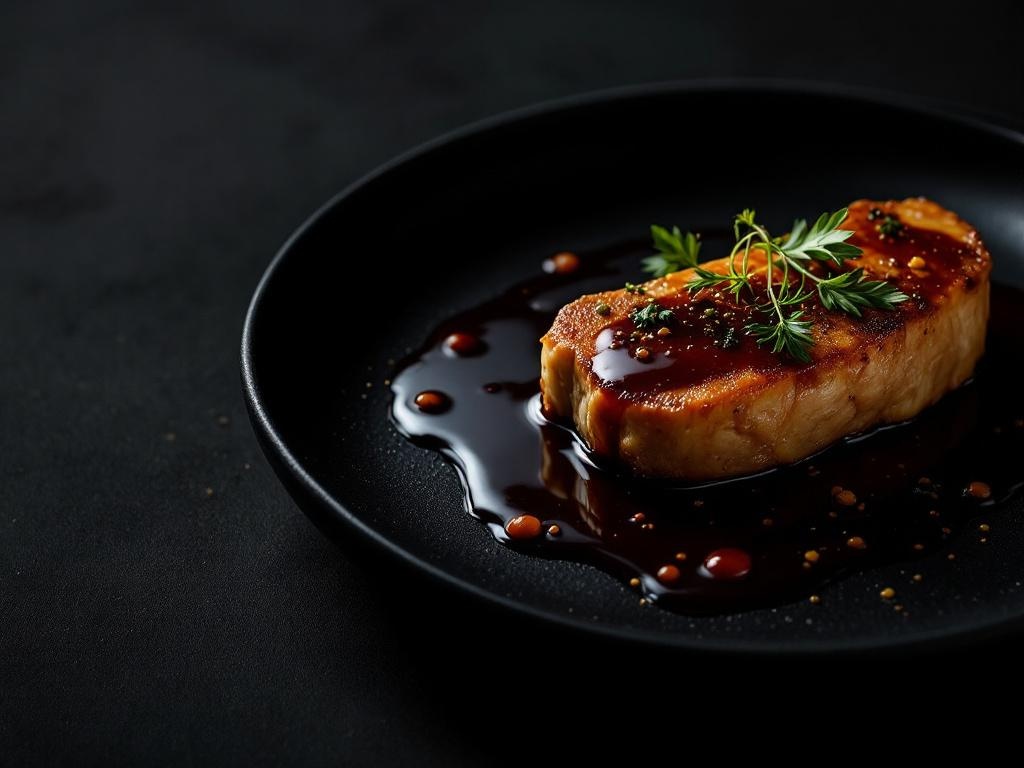
Pan Sauce (Deglazing — The Universal Restaurant Technique)
The pan sauce technique is the everyday expression of classical French sauce-making logic — documented in professional cooking manuals from the 18th century onwards but practised intuitively across all cooking traditions wherever meat is seared in a pan.
The pan sauce is perhaps the single most universally applicable technique in professional cooking: the art of deglazing a hot pan with liquid to dissolve the caramelised fond (the browned deposits left by searing meat, fish, or vegetables), then building that flavoured liquid into a sauce through reduction, enrichment, and finishing. It transforms the byproduct of cooking into the sauce itself — a concept of profound culinary economy that explains why restaurant kitchens produce extraordinary flavour from seemingly simple methods. The sequence is specific: a protein is seared in a heavy pan at high heat, removed, and rested. The pan, with its coating of fond and a small amount of fat, is returned to medium-high heat. Aromatics — shallots, garlic, herbs — are sweated briefly in the fond. A liquid is added: wine, spirit, stock, cider, or a combination. This hitting a hot pan causes violent sizzling and steam — the liquid physically lifts the fond from the pan surface. The liquid then reduces, concentrating flavour and developing a saucy consistency. Enrichment follows reduction: cold butter whisked in off the heat ('mounting with butter') creates gloss and body; cream added before the final reduction gives richness; herbs added at the last minute provide freshness. The result is a sauce that costs nothing extra, uses minimal ingredients, and is inseparable from the protein it accompanied. Mastering the pan sauce means mastering the sequence of heat, timing, reduction, and enrichment. It means understanding that the fond is flavour — not burned residue to be cleaned away — and that liquid quantity matters: too little and the sauce is over-reduced and bitter; too much and it never concentrates. One good pan sauce justifies owning a proper heavy-bottomed pan.
Concentrated, savoury, glossy — the direct expression of what was seared and what liquid accompanied it
Sear the protein well before removing — the fond is the entire basis of the sauce Deglaze with a liquid that matches the dish — wine for French preparations, stock for neutral, cider for pork Reduce the deglazing liquid until syrupy before adding stock Mount with cold butter off the heat for gloss and body Season only at the end — reduction concentrates salt dramatically
RECIPE: Yield: 200 ml | Prep: 2 min | Total: 8 min --- 1 shallot, finely minced 100 ml dry white wine, stock, or acidic liquid (vinegar, citrus juice, or combination) 200 ml braising liquid or cooking liquid from the main protein 30 g cold unsalted butter, cubed 5 ml fresh lemon juice or Champagne vinegar Salt and Tellicherry black pepper to taste Optional garnish: 5 g fresh tarragon or parsley, chopped --- 1. After searing or cooking the main protein, remove it from the pan and set aside; pour off excess fat, leaving 5 ml in the pan. 2. Add minced shallot to the hot pan over medium heat and sauté for 30 seconds until fragrant (do not colour). 3. Deglaze the pan with white wine or acidic liquid, scraping the fond with a wooden spoon; reduce until 30 ml liquid remains (2–3 minutes). 4. Add braising liquid or stock and return to a simmer; reduce by half (2 minutes). 5. Remove from heat and whisk in cold butter cube by cube until fully incorporated; do not allow the sauce to boil after butter is added. 6. Strain through a fine-mesh sieve if desired, then season with lemon juice, salt, and pepper. 7. Pour over the protein and serve immediately, garnished with fresh herbs if using. The four-step sequence: fond → deglaze → reduce → mount Red wine must be added early and reduced significantly to cook out raw alcohol and tannin A spoonful of demi-glace or a stock concentrate cube dramatically shortens the reduction time For a cream pan sauce, add 100ml cream after the wine reduction and reduce by half before mounting with butter Fresh herbs — tarragon, thyme, chives — added at the very end lift and brighten
Not searing the protein well enough — thin fond means thin flavour Adding too much liquid at once — dilutes the fond and produces a watery sauce Reducing over too high heat without watching — overshoots and becomes bitter or burnt Seasoning at the start — salt concentration increases dramatically during reduction Skipping the butter mount — the sauce lacks gloss and richness without it
Common Questions
Why does Pan Sauce (Deglazing — The Universal Restaurant Technique) taste the way it does?
Concentrated, savoury, glossy — the direct expression of what was seared and what liquid accompanied it
What are common mistakes when making Pan Sauce (Deglazing — The Universal Restaurant Technique)?
Not searing the protein well enough — thin fond means thin flavour Adding too much liquid at once — dilutes the fond and produces a watery sauce Reducing over too high heat without watching — overshoots and becomes bitter or burnt Seasoning at the start — salt concentration increases dramatically during reduction Skipping the butter mount — the sauce lacks gloss and richness without it