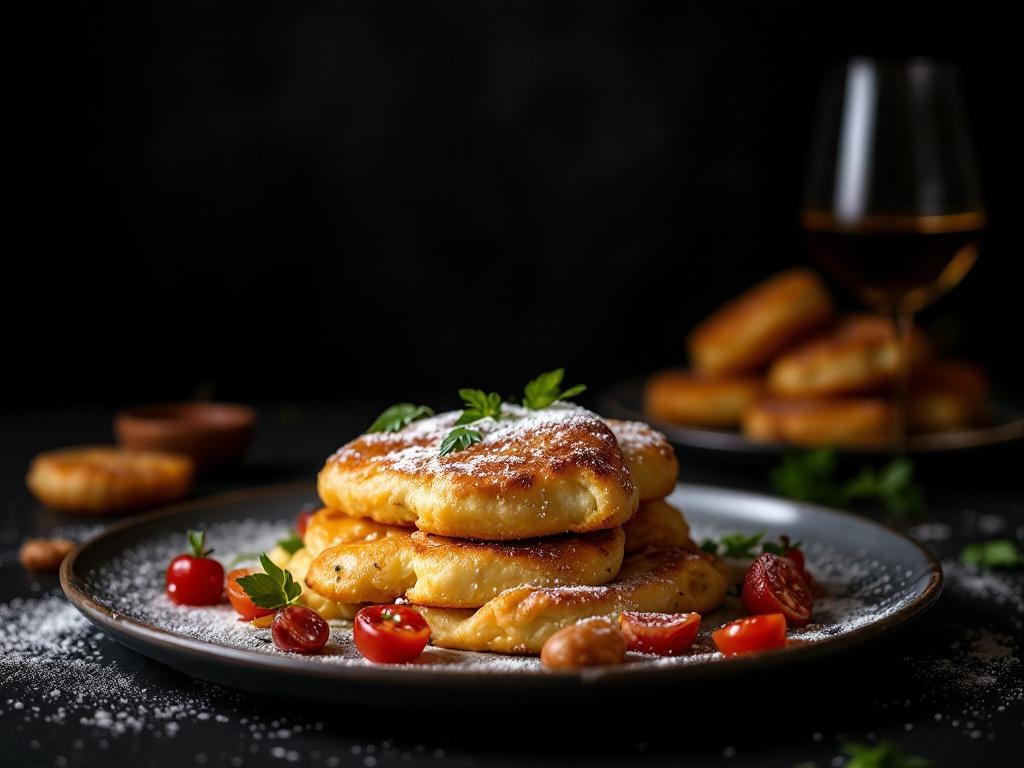
Sfinci di San Giuseppe (St Joseph's Day — Sicilian Tradition)
Sicily; St Joseph's Day (Festa di San Giuseppe) celebrations on March 19 feature elaborate food displays across Sicily; the tradition traces to the Middle Ages when the Sicilian people prayed to St Joseph during a famine and vowed to honour him with food if the rains came.
Sfinci di San Giuseppe — the cream-filled choux puffs of Sicily's St Joseph's Day celebration (March 19) — are one of the most delicious and culturally specific seasonal preparations in Italian pastry. St Joseph's Day in Sicily is celebrated with elaborate public displays of food ('St Joseph's tables') shared with the community, and sfinci are the centrepiece dessert. The preparation is a deep-fried choux dough enriched with orange zest and ricotta, formed into rough balls, fried until golden and puffed, then filled with sweetened ricotta cream and topped with candied orange peel and a glacé cherry. The interplay of the light, slightly crisp fried choux exterior and the dense, sweet ricotta cream is one of pastry's great textural pairings. Sfinci require confidence at the fryer — the oil temperature must be correct for the choux to puff.
Choux paste must be properly cooked on the stovetop before frying — raw choux doesn't puff properly Oil at 170°C for deep frying — the sfinci must rise slowly; too hot and the exterior sets before the interior expands Drop rough spoonfuls into the oil — do not try to make perfectly round shapes; rustic is traditional Fry a small test sfince first and adjust temperature before frying the batch Fill while warm — the ricotta cream fills more easily into a warm sfince; allow to cool only to handling temperature Candied orange peel and glacé cherry on top are the traditional garnish and they are not optional
RECIPE: Serves: 4 (makes 8 sfinci) | Prep: 40 min | Total: 120 min --- Pastry: 250ml water 100g unsalted butter 7g sea salt 5g caster sugar 125g all-purpose flour 1 large egg Neutral oil for frying Filling: 350g fresh ricotta, drained 30 minutes 80g honey, preferably Sicilian 60g candied orange peel, finely diced 40g dark chocolate, finely chopped 20g shelled pistachio nuts, roughly chopped 1/4 teaspoon ground cinnamon Twist of sea salt Topping: 60g icing sugar mixed with 1g ground cinnamon --- 1. Combine water, butter, salt, and sugar in heavy saucepan; bring to rolling boil, then remove from heat and stir in flour until dough forms ball. 2. Return to low heat and cook, stirring constantly, for 2 minutes to dry out dough; transfer to bowl, cool 5 minutes, then beat in egg until fully incorporated and dough is glossy. 3. Combine drained ricotta, honey, candied peel, chocolate, pistachio, cinnamon, and salt in separate bowl; mix gently with wooden spoon until just combined. 4. Heat 5cm oil in heavy pot to 175°C, checking with instant-read thermometer; line plate with paper towels. 5. Transfer warm choux dough to piping bag fitted with 12mm plain nozzle; pipe 6cm lengths directly into hot oil, using scissors or second spoon to cut dough cleanly. 6. Fry 3 minutes until golden and puffed, turning occasionally; remove with slotted spoon and drain on paper towels. 7. Cool sfinci slightly, 2 minutes, then use small sharp knife to slit side of each and pipe or spoon ricotta filling into cavity; dust generously with cinnamon-sugar mixture. 8. Serve warm or at room temperature; best eaten within 4 hours of preparation. The ricotta cream must be made from well-strained fresh sheep's milk ricotta — standard supermarket ricotta produces a liquid, disappointing filling For the most flavourful sfinci: add a teaspoon of orange blossom water to the choux paste and the ricotta cream — it gives a distinctly Sicilian aromatic quality Serve within 2 hours of filling — the fried exterior softens with time as the ricotta cream moistens it; serve fresh for the best textural contrast
Under-cooked choux on the stovetop — the paste must be dried out sufficiently before frying; under-dried paste produces dense sfinci High oil temperature — the exterior sets before the interior puffs; maintain 170°C precisely Filling cold sfinci — the cream doesn't distribute evenly in a cold, firm sfince No garnish — in the Sicilian tradition, the presentation of sfinci is lavish; sparse garnish is incorrect Piping bag for filling — use a spoon or a knife cut to fill sfinci; a piping bag overfills and makes them heavy
Common Questions
What are common mistakes when making Sfinci di San Giuseppe (St Joseph's Day — Sicilian Tradition)?
Under-cooked choux on the stovetop — the paste must be dried out sufficiently before frying; under-dried paste produces dense sfinci High oil temperature — the exterior sets before the interior puffs; maintain 170°C precisely Filling cold sfinci — the cream doesn't distribute evenly in a cold, firm sfince No garnish — in the Sicilian tradition, the presentation of sfinci is lavish; sparse garnish is incorrect Piping bag for filling — use a spoon or a knife cut to fill sfinci; a piping bag overfills and makes them heavy