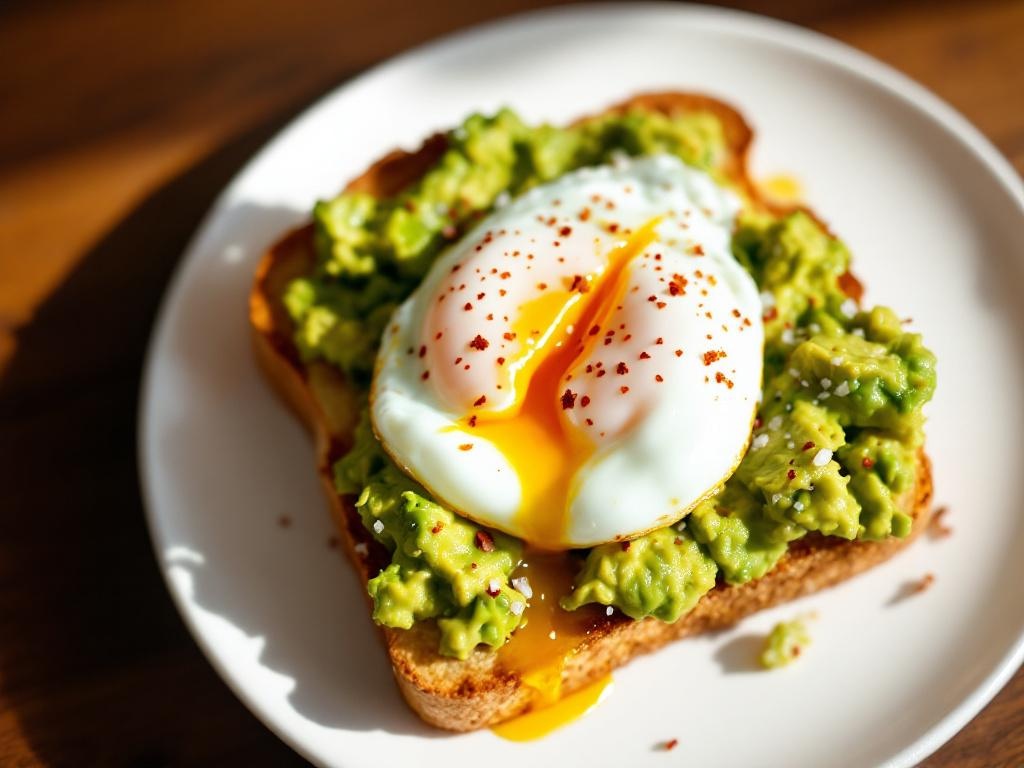
Avocado Toast (Brunch — Sourdough, Lemon, Chilli, Egg Variations)
Avocado toast became a genuine cultural phenomenon from around 2013 onward, so embedded in millennial food culture that it became a symbol — fairly or unfairly — of a generation's dining habits. The dish was popularised by Café Gitane in New York and by Australian café culture broadly, where it had been a menu staple since the mid-1990s. Chef Bill Granger of Sydney is often credited with the restaurant-format version. Its viral peak was 2013–2017 across Instagram, and it has remained a brunch staple since. The technique is simple but the quality differential between a well-executed and a poor avocado toast is significant. The bread must be genuinely toasted to a crisp — not just warmed. Sourdough is the canonical choice: its tang, open crumb, and sturdy crust hold up under the avocado without becoming soggy. The slice should be 1.5–2cm thick. Thin white sandwich bread cannot carry the dish. The avocado must be ripe — it should yield to gentle thumb pressure without feeling mushy. The smash should leave texture rather than producing a smooth paste. A fork pressed several times produces the correct chunky-smooth balance. Immediately after smashing, add lemon juice — both for flavour and to slow oxidisation. The salt must be flaky sea salt applied after assembly, not fine salt folded in during mashing — fine salt dissolves into the avocado and the visual and textural contrast of the flaky salt on top is part of the experience. The classic toppings are chilli flakes (or fresh sliced chilli), a final drizzle of extra-virgin olive oil, and optionally a poached egg. The egg is the most significant upgrade — a soft-poached egg with a running yolk adds protein, richness, and a sauce quality that transforms the dish.
One elsewhere in British Columbia · one not yet within reach.
- Elsewhere in British Columbia
- 1 · maldon sea salt
- Not yet within reach
- 1 · aleppo pepper
The Market List
The benchmark for each ingredient, and who stocks it near you. Tap a stockist to go straight to the product.
Within reach counts in town, delivered, shipped and the nearest city. A staple counts once it has a local seller. Charted from each shop's own pages; not yet vouched by a cook who shops here.
The larder of Comox →Each tap is counted, so the stockist sees the demand Provenance sends them.
The Method
Sensory Tests
What to Pour
Nothing from Washington holds against this yet.
Why each one works is part of membership — Enter · from $49 a year →
The whole pairing