PProvenance
Enter
Bengali Chingri Malai Curry (Prawn in Coconut Cream)
Indian · Bengal

Bengali Chingri Malai Curry (Prawn in Coconut Cream)

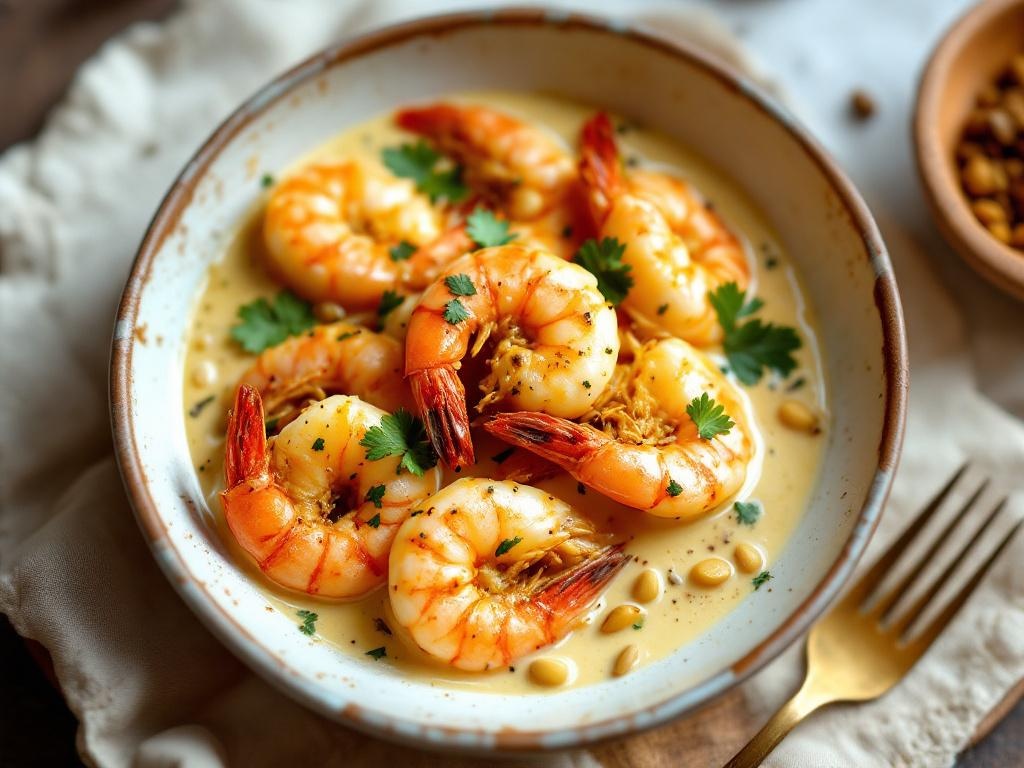
Chingri malai curry — tiger prawns cooked in a sauce of fresh coconut cream with whole spice — is Bengal's most refined and celebratory seafood preparation. The name is a gentle linguistic contradiction: 'malai' in Bengali refers to the cream of fresh coconut (malaier) rather than the dairy malai of North India — though the association with luxury and richness is identical. This is a dish served at weddings and festivities, its rich coconut cream sauce and premium prawn carrying the status of occasion food. The technique begins with the prawns — ideally large, fresh tiger prawns with heads on — being lightly sautéed in mustard oil with turmeric to firm the flesh. In authentic preparation, the prawn heads are retained or cooked separately to extract their flavour into the coconut sauce: prawn heads are the flavour foundation of the dish's sauce, contributing iodine-sweet prawn fat that integrates with the coconut cream. The spice philosophy of chingri malai curry is unusually restrained for Indian cooking: whole spices only — bay leaf, clove, cardamom, and cinnamon — plus a small amount of ginger. No dry chilli powder, no complex masala. The restraint is deliberate: the coconut cream and prawn sweetness must dominate; they cannot compete with a complex spice base. This is Bengali cooking's approach to luxury product — stand aside and let quality speak. Coconut cream is added in stages: coconut milk first to build the sauce body, then fresh cream of coconut at the end for richness. The finishing stage must be done at low heat — boiling coconut cream splits immediately, curdling the sauce. The sauce should be ivory-golden, glossy, and coat the prawns in a cream that is substantial but not dense.

‹Swipe for the next dish›
Serves4
Total40 min
Sourced1of 21 in BC
Cook
I

The Market List

The benchmark for each ingredient, and who stocks it near you. Tap a stockist to go straight to the product.

600g
large prawns (shrimps)
peeled and deveined, patted dry
Not yet stocked in British Columbia
60ml
vegetable oil or ghee
Not yet stocked in British Columbia
3
onions
300g, sliced
Your own market
4 cloves
garlic
minced
Your own market
15g
fresh ginger
minced
2
green chillies
minced
Not yet stocked in British Columbia
1
cinnamon stick
5cm
Not yet stocked in British Columbia
3
green cardamom pods
crushed
Not yet stocked in British Columbia
2
bay leaves
Not yet stocked in British Columbia
6g
ground coriander
Not yet stocked in British Columbia
3g
ground cumin
Your own market
2g
turmeric powder
Not yet stocked in British Columbia
1.5g
garam masala
Not yet stocked in British Columbia
1g
asafoetida (hing)
Not yet stocked in British Columbia
300ml
coconut cream (thick
20%+)
Your own market
100ml
coconut milk (thin
10%)
Your own market
100ml
fish stock or water
Your own market
8g
salt
Your own market
4g
jaggery (gur)
grated
Origin · IndiaNot yet stocked in British Columbia
10ml
fresh lemon juice
Not yet stocked in British Columbia
1g
black pepper
freshly ground
Your own market

Each tap is counted, so the stockist sees the demand Provenance sends them.

II

The Method

1
Heat 60ml oil or ghee in heavy-bottomed pan over medium heat; add sliced onions, cook until deep golden-brown, 12 minutes, stirring frequently to ensure even colour; add garlic and ginger, cook 3 minutes until raw smell dissipates.
2
Add minced green chillies, cinnamon stick, crushed cardamom, and bay leaves; cook 2 minutes until fragrant.
3
Stir in ground coriander, cumin, turmeric, garam masala, and asafoetida; cook 1 minute to bloom spices — mixture should be very aromatic.
From the canon — Turmeric (हल्दी, haldi — Curcuma longa) is the most universally used spice in Indian cooking: the yellow-orange rhizome whose primary active compound (curcum… Turmeric — Fresh vs Dried in Indian Cooking (हल्दी) →
4
Pour 300ml coconut cream slowly, stirring continuously to ensure even incorporation; simmer gently for 3 minutes without boiling — do not allow cream to break.
5
Add 100ml coconut milk and 100ml fish stock; bring to gentle simmer; season with salt and grated jaggery, stir until dissolved.
6
Gently slide prawns into simmering gravy; stir carefully to coat each prawn with sauce; simmer uncovered for 8 minutes until prawns just turn opaque and curl slightly — do not overcook as they will become tough; stir occasionally but gently.
7
Remove from heat; season with lemon juice and black pepper; adjust consistency — curry should be creamy and cling to prawns, not soupy; if too thick, add thin coconut milk; if too thin, continue simmering to reduce.
8
Transfer to serving vessel, maintain gentle warmth until service; serve with steamed basmati rice, allowing creamy sauce to soak into grains; garnish with fresh coriander leaves and sliced green chillies; chingri malai curry is best eaten immediately while prawns are tender and sauce is warm and silky.
IV

Sensory Tests

◇Sight. Prawn heads release their sweet brine into the coconut cream as it stays below a simmer — the sauce turns glossy, never grainy.
◇Where it lives or dies. Boiling the coconut cream splits it into grease and whey; the sauce becomes grainy and separated — the dish is lost.
VI

What to Pour

Pouring for British Columbia ·

The pairing
Aramasa No. 6 X-type Junmai Ginjo
Aramasa Shuzo · Yamagata
Not yet stocked in British Columbia
Sake
From British Columbia
2017 Sparkling Brut
Phantom Creek Estates · Black Sage Road
Phantom Creek Estates · Oliver →
Sparkling wine
Without alcohol
GT's Synergy Organic Kombucha — Gingerade
GT's Living Foods · Los Angeles
Not yet stocked in British Columbia
Non-alcoholic

Each tap is counted, so the stockist sees the demand Provenance sends them.

Why each one works is part of membership — Enter · from $49 a year →

The whole pairing
Pillar VII
Origin and lineage are part of membership.
Where the dish comes from and how it came to be — on every recipe.
Enter · from $49 a year