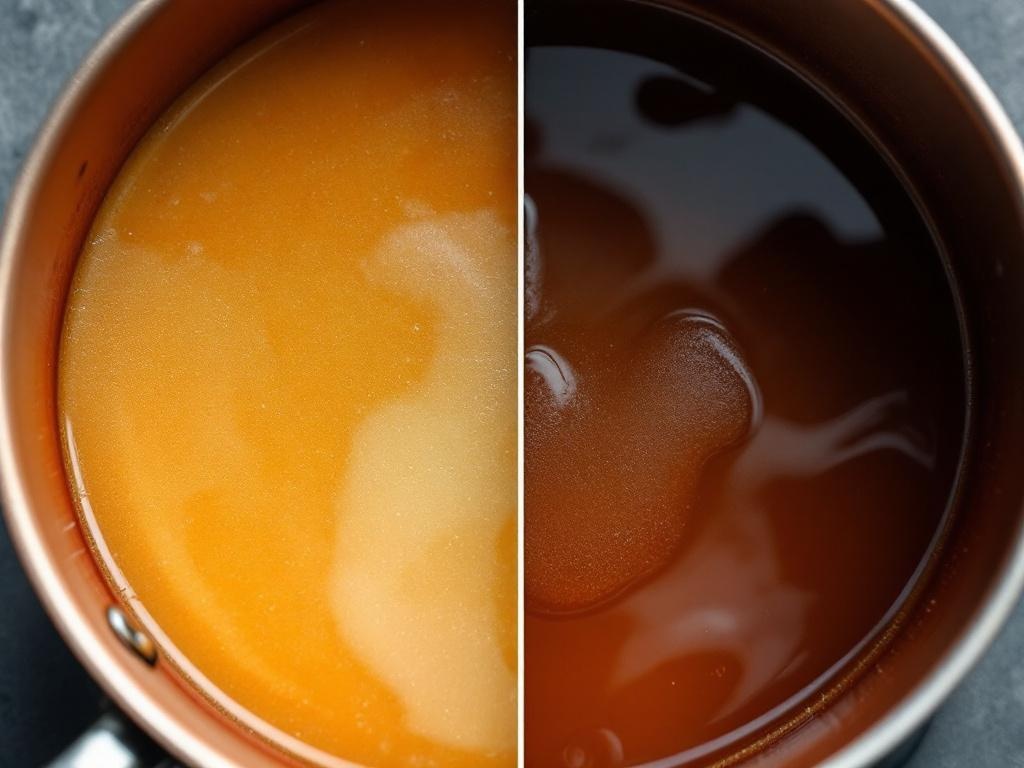
Caramel — Dry vs Wet Methods (Sugar Science)
Caramelisation is the pyrolytic degradation and polymerisation of sugars at elevated temperatures — a non-enzymatic browning reaction distinct from the Maillard reaction (which requires amino acids). Pure sucrose begins caramelising at approximately 160°C, passing through a series of colour and flavour stages as it decomposes into hundreds of volatile and non-volatile compounds including diacetyl (buttery), furans (caramel-sweet), and hydroxymethylfurfural (bitter, roasted). The dry method involves heating sugar directly in a pan without water. The sugar melts unevenly, requiring careful monitoring and gentle agitation or swirling to distribute heat evenly. The dry method progresses faster and is more difficult to control for beginners, but produces a deeper, more intense caramel at equivalent temperatures because there is no dilution from water and no slow evaporation phase. The wet method dissolves sugar in water (typically 30–40% water by weight of sugar) before cooking. The water must first evaporate before the sugar can concentrate and then caramelise — this extended evaporation phase provides additional time for temperature control. The solution passes through the thread, soft ball, firm ball, hard ball, soft crack, and hard crack stages (100°C through 155°C) before caramelisation begins. At hard crack (149–154°C), the sugar is anhydrous; at this point it enters caramelisation territory rapidly. Crystallisation is the principal risk of the wet method: any nucleation point (undissolved sugar, impurities, a grain of sugar on the pan side) can trigger rapid recrystallisation — 'seizing'. Prevention strategies include adding glucose syrup or corn syrup (which is non-crystallising), wiping pan sides with a wet pastry brush, adding a small amount of acid (cream of tartar, lemon juice), and avoiding stirring once the solution is on the heat. For sauces and salted caramel, cream and butter are added at the caramelisation stage — this interrupts the reaction and stabilises the caramel as an emulsified sauce.
The Market List
The benchmark for each ingredient, and who stocks it near you. Tap a stockist to go straight to the product.
The Method
Sensory Tests
What to Pour
Origin & Lineage
Sugar cookery documented in European and Middle Eastern cuisine from medieval times; formal sugar stage nomenclature developed in French patisserie tradition from the 17th century