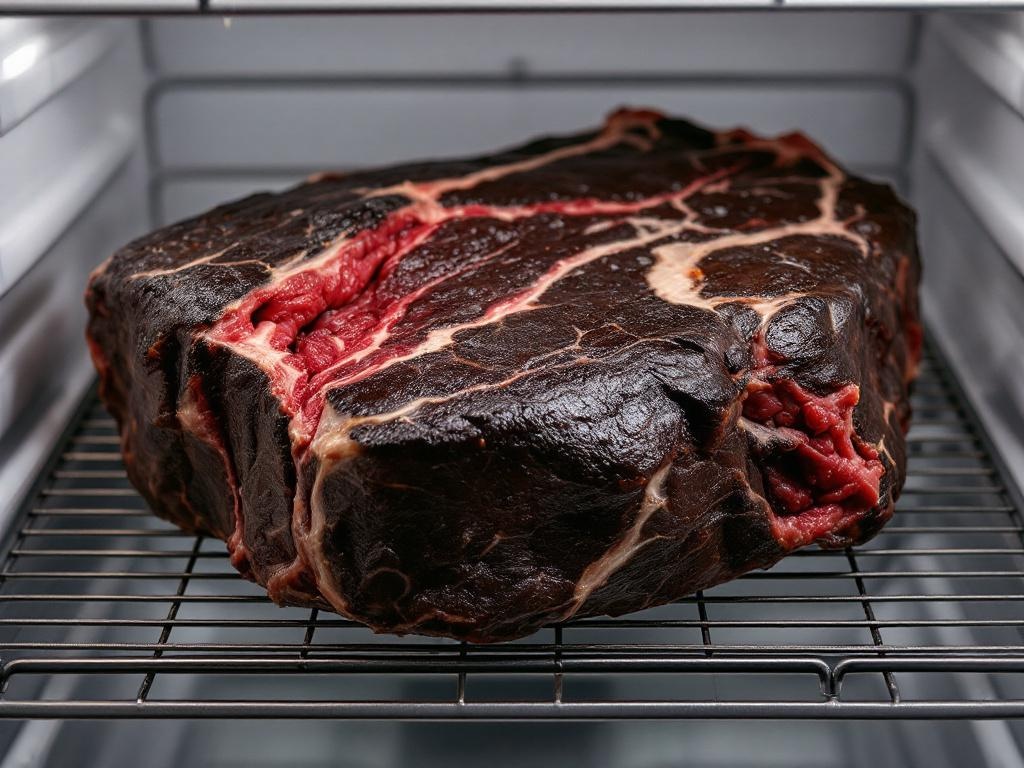
Dry-Aging at Home (Beef and Lamb — Controlled Humidity)
Dry-aging is a controlled enzymatic and dehydrative process that transforms fresh beef or lamb into intensely flavoured, tender cuts through two simultaneous mechanisms: moisture evaporation that concentrates flavour compounds, and autolysis — the action of endogenous proteolytic enzymes (primarily cathepsins and calpains) that break down myofibrillar proteins, weakening muscle fibre structure and producing amino acids and small peptides that contribute to the characteristic 'dry-aged' umami depth and nuttiness. The process is time-temperature-humidity dependent. In a dedicated dry-age environment, temperature should be maintained at 0–4°C — cold enough to inhibit pathogenic bacterial growth while allowing enzymatic activity to proceed. Relative humidity should sit between 75–85%: below 75% the exterior desiccates too rapidly, forming an excessively thick pellicle; above 85% conditions favour surface mould growth beyond the desirable white Penicillium species. Airflow is critical — a small fan circulating air uniformly prevents moisture pooling and promotes consistent pellicle formation. At home, dedicated dry-age bags (permeable membranes that allow moisture egress but block contamination) or UMAi Dry-style products are the most accessible solution, transforming an ordinary domestic refrigerator into a functional dry-age environment. Naked dry-aging on a wire rack directly in the refrigerator is possible but requires excellent hygiene and low-humidity fridge conditions. Typical timelines: 14–21 days produces noticeable tenderness improvement; 28–45 days develops strong flavour complexity and significant pellicle; 60–90+ days creates extreme intensity but requires considerable trimming loss (15–35% of original weight). The pellicle — the dark, dried exterior — is trimmed away before portioning, revealing the concentrated, crimson interior. Fat cap should be left intact during aging as it protects the muscle beneath.
The Market List
The benchmark for each ingredient, and who stocks it near you. Tap a stockist to go straight to the product.
The Method
Sensory Tests
What to Pour
Concentrates beefy and lamb umami with notes of nuttiness, funk, and caramelised fat — flavour intensity scales directly with aging duration
Origin & Lineage
Traditional ageing practice in European and American butchery; formalised and scientifically characterised during the 20th century in USDA research