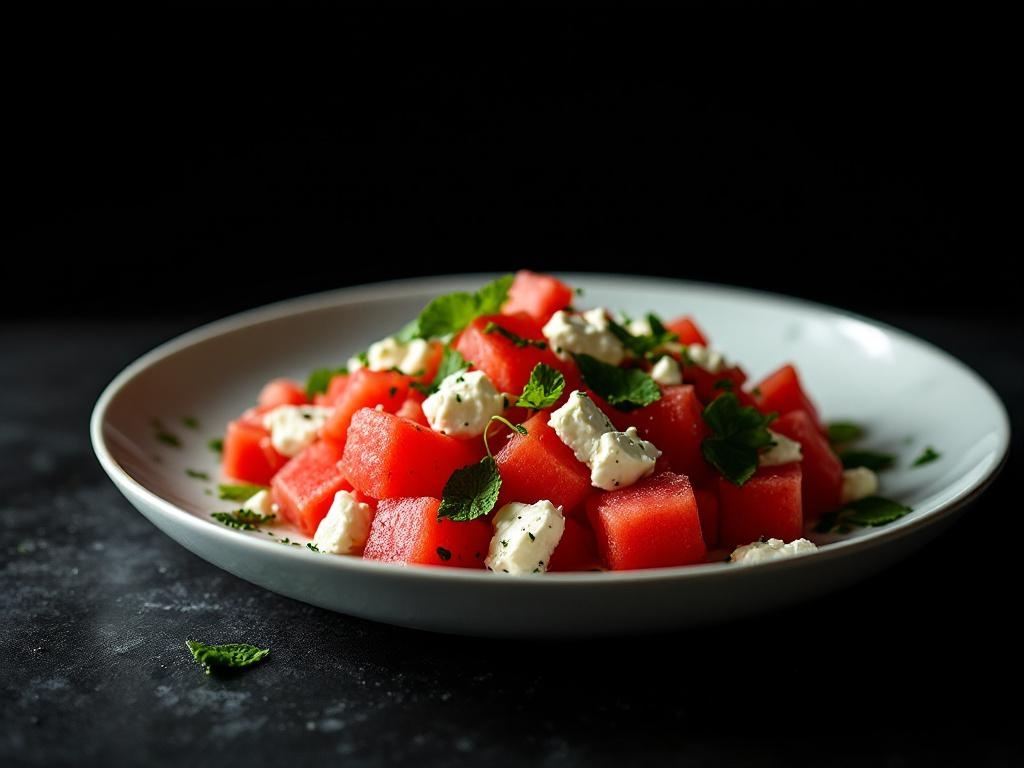
Feta and Watermelon Salad (Ottolenghi — Flavour Contrasts)
The combination of watermelon and feta became one of the defining viral salad formats of the 2010s and early 2020s, closely associated with Yotam Ottolenghi's influence on home cooking through his books Plenty and Jerusalem, though the combination predates his work and exists across Middle Eastern and Mediterranean culinary traditions. The genius of the pairing is its textbook flavour contrast: sweet and juicy watermelon against salty, crumbly feta, with fresh herbs and olive oil bridging between the two. The technique is deceptively simple, but the details determine whether the dish succeeds or reads as a forgettable fruit and cheese plate. The watermelon must be properly cold — cut from a chilled watermelon, not one at room temperature, which has a less crisp, less refreshing texture. It should be cut into large, irregular chunks or triangles rather than neat cubes; the irregular edges catch the dressing and create a better visual presentation. The feta selection matters: a firm Greek PDO feta brined in whey has a sharper, more complex flavour than Danish or supermarket feta, which tends toward creaminess and mild saltiness. The feta should be crumbled in large pieces, not finely grated, to maintain textural presence against the watermelon. Fresh mint is the classic herb element — it amplifies the coolness of the watermelon and cuts the dairy fat of the feta. A small amount of red onion, very thinly sliced and briefly soaked in cold water to mellow its sharpness, adds a savoury backbone. The dressing is olive oil and lime juice rather than lemon — lime interacts with watermelon more harmoniously. A pinch of flaky sea salt and a light crack of black pepper complete the dish. Chilli additions — dried Aleppo pepper or thinly sliced fresh red chilli — are a worthwhile upgrade.
The Market List
The benchmark for each ingredient, and who stocks it near you. Tap a stockist to go straight to the product.
Each tap is counted, so the stockist sees the demand Provenance sends them.
The Method
Sensory Tests
What to Pour
Sweet-cool watermelon, sharp-salty feta, mint freshness, lime acid, optional chilli heat
Origin & Lineage
Middle Eastern and Mediterranean tradition; popularised internationally by Yotam Ottolenghi; viral via food media and Instagram 2012–2020