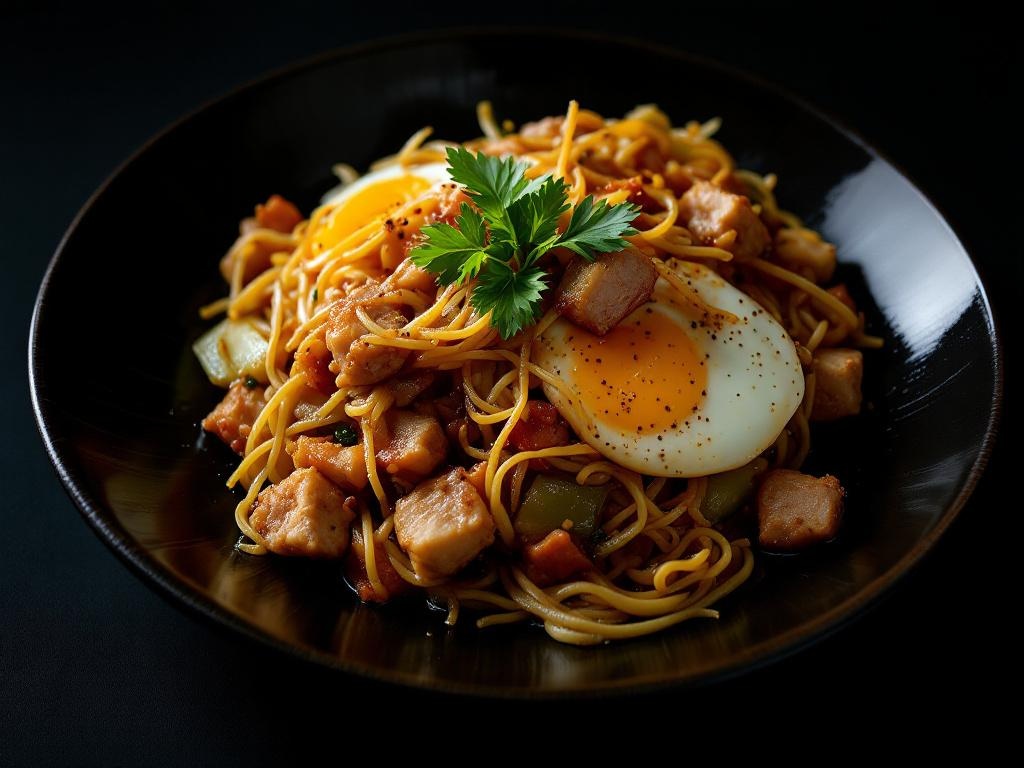
Goya champurū is Okinawa's most iconic dish — a stir-fry of bitter melon (goya), firm tofu, pork (spam, thinly sliced pork belly, or pork luncheon meat), and egg, seasoned with soy and dashi. The word champurū comes from the Okinawan dialect and means something like 'mixed together' or 'chanpuru,' reflecting a broader cultural tradition of mixing disparate elements into something unified — itself a metaphor for Okinawa's history as a crossroads culture absorbing influences from Japan, China, and Southeast Asia.
Goya (Momordica charantia) is the defining and most challenging ingredient. The bitter melon's bitterness — from compounds including momordicin and charantin — is its identity, not a flaw to be eliminated. The Okinawan approach to goya respects this bitterness while managing its intensity: the melon is halved, the seeds and white pith (which carry the most concentrated bitterness) are scooped out, the flesh is sliced thinly, then salted and allowed to weep before cooking. This removes some moisture and slightly reduces the sharpest bitterness without destroying the character that makes the vegetable interesting.
The stir-fry requires high heat and a specific sequencing. Tofu — pressed firm, torn or cut into large pieces, and pan-fried separately until golden — is the foundation that absorbs the pork fat and sauce without disintegrating. The pork renders its fat into the pan, which then flavours the goya as it cooks briefly at high heat. Egg, beaten and seasoned, goes in last and is stirred through to just-set, binding the other elements loosely.
Okinawa's food culture reflects the Ryukyu Kingdom's centuries of trade with China and Southeast Asia, and goya champurū is an edible expression of that crossroads identity — bitter, complex, and unlike anything else in the Japanese culinary canon.
‹Swipe for the next dish›
IThe Market List
The benchmark for each ingredient, and who stocks it near you. Tap a stockist to go straight to the product.
500 g
goya (bitter melon)
halved lengthwise, seeds scooped, sliced 5 mm crosswise
Not yet stocked in British Columbia
200 g
pork shoulder
cut into 1 cm × 4 cm strips
Your own market
100 g
firm tofu
drained, pressed 15 minutes, cut into 2 cm cubes
60 ml
vegetable oil
Your own market
20 g
bonito flakes (katsuobushi
thinly shaved)
Origin · United StatesNot yet stocked in British Columbia
8 g
fine sea salt
Your own market
4 g
Tellicherry black pepper
Your own market
Each tap is counted, so the stockist sees the demand Provenance sends them.
II
The Method
1
Blanch goya slices in boiling salted water 3 minutes to reduce bitterness; drain and squeeze gently.
2
Heat 30 ml oil in a carbon-steel wok or large cast-iron skillet over high heat until smoking.
3
Render pork strips 4–5 minutes until edges crisp; season with salt and pepper.
4
Add goya and tofu, toss 2 minutes until heated through.
5
Push mixture to wok perimeter; pour remaining 30 ml oil into center, crack eggs directly in, scramble until soft curds form, fold into vegetables.
6
Drizzle soy sauce around wok perimeter, toss constantly 1 minute.
7
Transfer to serving dish, top with bonito flakes, serve immediately.
IV
Sensory Tests
◇Where it lives or dies. Spam is a traditional and completely legitimate ingredient in Okinawan champurū — its salt content seasons the dish naturally and its firm texture holds up to stir-frying
A small amount of dashi added with the soy sauce amplifies umami and ties the ingredients together without adding liquid volume
For a richer result, use katsuobushi flakes (bonito flakes) as a garnish — they add umami and theatrical movement from the heat
Bitter melon pairs exceptionally well with cold Orion beer (Okinawa's local brew) — the hops complement and contrast the melon bitterness
The dish is a nutritional powerhouse: goya's charantin compounds are associated with blood sugar regulation, and Okinawa's longevity statistics are partly attributed to regular goya consumption
VI · What to Pour
Bitter, savoury, rich with pork fat — goya bitterness balanced by egg softness, tofu body, and umami soy-dashi seasoning
VII · Origin & Lineage
Okinawa, Japan — Ryukyu Kingdom food tradition with Chinese, Southeast Asian, and eventually American (post-WWII spam) influences; a defining expression of Okinawan cultural identity
Pillars V — VII
The full recipe pages are part of membership.
Cross-cuisine parallels, what to pour, and the dish's origin and lineage — on every recipe.
Enter · from $49 a year