PProvenance
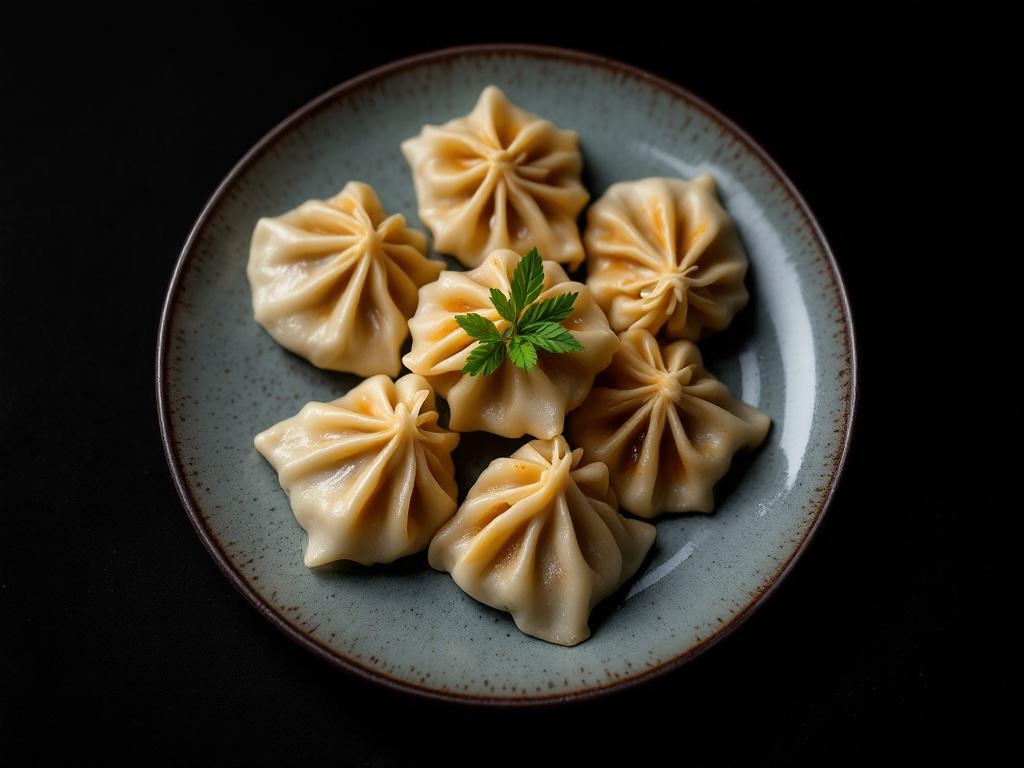
Gyōza (Pan-Fried Dumplings — Crisp Skirt Pleating Technique)
Japanese · Japan

Gyōza (Pan-Fried Dumplings — Crisp Skirt Pleating Technique)

Japanese gyōza are a post-WWII adaptation of Chinese jiǎozi, brought to Japan by soldiers and settlers returning from Manchuria in the 1940s. They have since evolved into a distinctly Japanese dish — thinner-skinned, smaller, with a garlic-heavy filling compared to many Chinese versions, and defined by the hane (wings or skirt) technique that creates a connected, lacy crisp crust across the entire bottom of the pan rather than individual crisp bases. The hane technique is what separates Japanese pan-fried gyōza from the rest of the world's pan-fried dumpling traditions. After the initial pan-frying creates colour on the bottom, a starch-water slurry (katakuriko — potato starch — dissolved in cold water) is added to the pan and the lid is immediately placed on. The steam from the slurry cooks the tops of the dumplings while the liquid reduces and the remaining starch binds the bases together into a single, unified, translucent sheet of crisp starch. When the gyōza are inverted onto a plate, they arrive as a connected flower-like arrangement, the hane visible as a golden-brown, paper-thin lattice. The filling is a specific balance of pork mince, nira (garlic chives), cabbage (salted, squeezed dry, and finely chopped), garlic, ginger, soy, sesame oil, and oyster sauce. The cabbage moisture must be fully expressed before combining with the meat — any residual water makes the filling loose and the skin wet, preventing adhesion. Pleating is the wrapper-sealing technique. The skin is placed in the palm, filling added, and one edge is folded up and pleated in a series of small folds against the flat back edge. A skilled gyōza maker creates seven to nine pleats per dumpling with a single-handed motion. The number and uniformity of pleats indicates craft level.

‹Swipe for the next dish›
Serves4
Total45 min
Sourced3of 16 in BC
Cook
I

The Market List

The benchmark for each ingredient, and who stocks it near you. Tap a stockist to go straight to the product.

200 g
gyōza wrapper
round, Japanese-style, room temperature
Not yet stocked in British Columbia
150 g
ground pork
70/30 blend, cold
Your own market
100 g
napa cabbage
finely chopped, salted and squeezed dry
Not yet stocked in British Columbia
25 g
scallions
finely chopped
Not yet stocked in British Columbia
10 g
ginger
fresh, minced
3 cloves
garlic
minced
Your own market
10 ml
sesame oil
toasted
Your own market
3 g
sea salt
Your own market
1 pinch
Tellicherry black pepper
Your own market
30 ml
neutral oil
vegetable or peanut, divided
Not yet stocked in British Columbia
60 ml
water
room temperature
Your own market
For dipping
15 ml
rice vinegar
seasoned
Your own market
5 ml
sesame oil
toasted
Your own market
1
small square nori
optional
Not yet stocked in British Columbia

Each tap is counted, so the stockist sees the demand Provenance sends them.

II

The Method

1
Combine cold ground pork, squeezed napa cabbage, scallions, ginger, garlic, soy sauce, sesame oil, sea salt, and Tellicherry black pepper in a bowl; mix gently with your fingers until just combined — do not overwork.
2
Place a gyōza wrapper on a clean work surface; wet the top edge with water using your finger; place 1 teaspoon filling in the center.
3
Fold the wrapper in half and pleat the top layer only: make 4–5 small, overlapping pleats along the curve, pressing each pleat firmly against the flat bottom edge to seal and create a standing, boat-shaped dumpling with a crisp skirt.
4
Heat 15 ml neutral oil in a large non-stick skillet over medium-high heat until shimmering; arrange 12 gyōza flat-side down in the pan, leaving space between each; cook undisturbed for 2–3 minutes until the bottom is golden and crispy.
5
Add 30 ml room-temperature water to the skillet, cover immediately with a lid, and reduce heat to medium; steam for 4–5 minutes until the water is absorbed and gyōza are translucent and cooked through.
6
Remove the lid, increase heat to medium-high, and cook undisturbed for 1 minute more to re-crisp the bottom.
7
Transfer gyōza to a serving plate; repeat with remaining 15 ml oil, water, and gyōza.
8
Combine soy sauce, rice vinegar, and sesame oil in a small dipping bowl; serve warm gyōza with the dipping sauce on the side.
IV

Sensory Tests

◇Sight. After initial browning, add starch-water slurry and immediately cover — steam rises, starch sizzles underneath, creating a connected lacy crust across the entire pan bottom.
◇Where it lives or dies. Add slurry after initial browning and immediately cover; add too early and starch boils the gyōza rather than frying into a crisp lattice.
VI

What to Pour

Garlic-chive pork filling in thin skin with a connected golden-crisp starch lattice base and clean soy-vinegar dipping acid

VII

Origin & Lineage

Japan (nationwide), with strongest regional identity in Utsunomiya (Tochigi) and Hamamatsu (Shizuoka), both cities with claims as 'gyōza capitals'; Manchurian Chinese origin adapted post-WWII