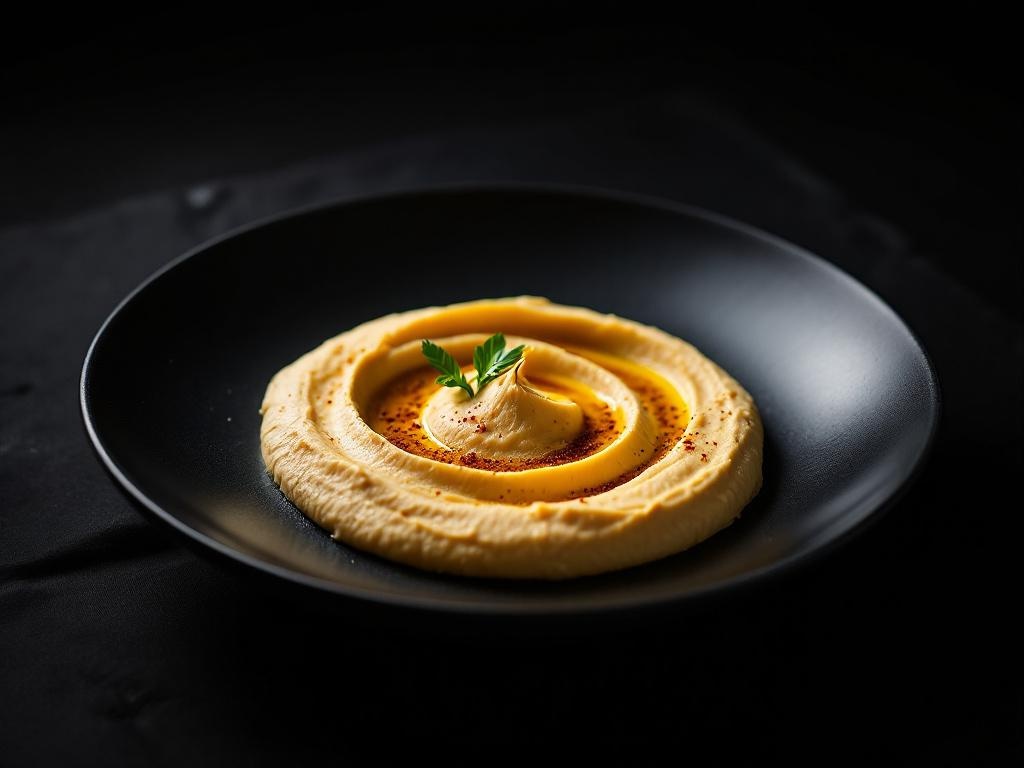
Hummus (chickpea and tahini dip) is among the most contested dishes in the Middle East — every country claims it. The definitive version starts from dried chickpeas cooked until completely soft (not canned), blended with excellent tahini (Soom or Har Bracha brands), fresh lemon juice, garlic, and ice water. The texture should be cloud-like and smooth; the tahini should be prominent. Served warm with olive oil, paprika, and either pine nuts or a drizzle of stewed chickpeas.
‹Swipe for the next dish›
IThe Market List
The benchmark for each ingredient, and who stocks it near you. Tap a stockist to go straight to the product.
400g
tinned chickpeas
drained and rinsed
Not yet stocked in British Columbia
100ml
tahini (hulled sesame paste)
Not yet stocked in British Columbia
60ml
fresh lemon juice
Not yet stocked in British Columbia
30ml
extra-virgin olive oil
Your own market
2 cloves
garlic
minced
Your own market
2g
fine sea salt
Your own market
0.5g
Aleppo pepper
Not yet stocked in British Columbia
II
The Method
1
Blend drained chickpeas with minced garlic in food processor until fine paste forms, 2 minutes.
2
Add tahini in three additions, pulsing to fully incorporate after each addition.
3
Drizzle in lemon juice slowly while pulsing until mixture becomes creamy, scraping down sides as needed.
4
With motor running, add ice water a teaspoon at a time until hummus reaches soft, spreadable consistency.
5
Season with fine sea salt, pulse once to combine.
6
Transfer to serving bowl, create shallow well in centre, drizzle with extra-virgin olive oil and dust with Aleppo pepper.
IV
Sensory Tests
◇Where it lives or dies. The moment where hummus lives or dies is the tahini-lemon emulsion before the chickpeas are added. Put the tahini, lemon juice, garlic, and a pinch of salt in the blender and blend for 1 minute. The mixture will lighten in colour and become thick and pale. This emulsification of the tahini is what gives great hummus its light, creamy consistency. Chickpeas added to un-emulsified tahini produce hummus that is dense and oily rather than light and creamy.
V
Cross-Cuisine Parallels
Greek skordalia (potato and garlic dip
the Greek version of a smooth, olive oil-based dip)
Turkish haydari (yoghurt and herb dip
the Turkish creamy dip tradition)
Indian dal (cooked lentil puree
the South Asian legume dip parallel).
VI
What to Pour
Warm pita bread and a glass of cold arak (anise spirit diluted with water and ice — it turns milky white) — the Levantine mezze tradition. Or freshly squeezed pomegranate juice for the non-alcoholic pairing.
VII
Origin & Lineage
Levant (Lebanon, Israel, Palestine, Syria, Jordan). Hummus bi tahina (chickpeas with tahini) is documented from 13th-century Arab cookbooks. The modern version is claimed by every Levantine country; the specific origin is genuinely contested and ultimately irrelevant — it is one of the ancient, foundational dishes of the Middle East.