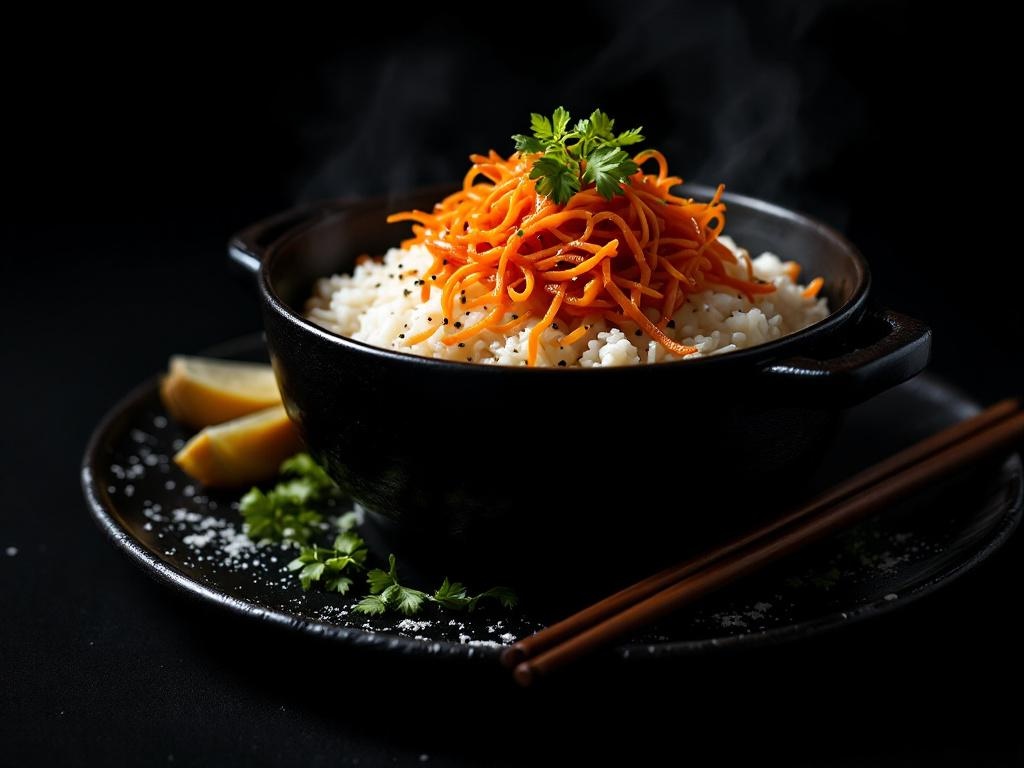
Kamameshi — literally 'pot rice' — is rice cooked and served in an individual iron pot (kama) with ingredients layered on top that steam into the rice as it cooks, infusing it with their juices and flavours. The dish has medieval origins as a way of cooking large communal meals, and became a refined individual portion format at Toraya restaurant in Asakusa, Tokyo in the late Meiji or Taisho period. Today it is strongly associated with ekiben (train station bento) culture and regional tourism, with each area claiming its own signature topping combination.
The technique is more demanding than it appears. The rice and liquid must be calibrated exactly to the volume of the pot, as there is no way to check or adjust without lifting the lid and losing steam. The broth used instead of plain water — a seasoned dashi-soy mixture — must account for the moisture that will be released by the toppings during cooking. Too much liquid produces mushy rice; too little leaves the bottom burning before the top has cooked.
The okoge — the lightly scorched crust that forms on the bottom of the iron pot — is considered a prize. Unlike a failed result in other rice cookery, a slight crust in kamameshi is intentional and desirable, adding a toasted, nutty note to the dish. After the rice is eaten, hot water or green tea is poured into the pot to loosen the crust for zōsui (rice porridge), making kamameshi a two-stage eating experience.
Regional topping variations include chicken and burdock root (the Tokyo standard), crab and seafood (coastal versions from Hokuriku), mushroom and bamboo (Kyoto kaiseki adaptations), and game birds or venison in mountain regions.
‹Swipe for the next dish›
IThe Market List
The benchmark for each ingredient, and who stocks it near you. Tap a stockist to go straight to the product.
300g
sushi rice (cooked and seasoned)
cooled to room temperature
Origin · United StatesNot yet stocked in British Columbia
150g
pork shoulder or chicken breast
thinly sliced
Your own market
100g
fresh mushroom (shiitake or oyster)
sliced
Your own market
80g
carrot
julienned
Your own market
50g
onion
sliced thin
Your own market
1
raw egg
beaten
Your own market
40ml
dashi (kombu and bonito stock)
Not yet stocked in British Columbia
10ml
mirin
hon-mirin
Not yet stocked in British Columbia
5ml
sake
Not yet stocked in British Columbia
1 tbsp
vegetable oil
Your own market
Scallion and nori
sliced, for garnish
Not yet stocked in British Columbia
Each tap is counted, so the stockist sees the demand Provenance sends them.
II
The Method
1
Heat a cast-iron kamameshi pot (or small iron pot) over medium heat until very hot; add vegetable oil and lightly coat the interior.
2
Add sushi rice in an even layer to coat the bottom and sides of the pot; press gently but do not compact; set aside.
3
Heat butter in a separate skillet over medium-high heat; add pork slices and sauté until just cooked through (2–3 minutes); add mushroom, carrot, and onion, cooking for an additional 2 minutes until vegetables are tender.
4
Whisk together dashi, soy sauce, mirin, and sake; pour into the skillet and bring to a simmer; cook for 1 minute to meld flavours.
5
Pour the pork and vegetable mixture with its broth evenly over the rice in the hot kamameshi pot; reduce heat to medium-low and cover with the lid; cook for 3–4 minutes until the broth is absorbed and a light crust forms on the bottom (the sound of rice crackling slightly indicates proper doneness).
6
Pour beaten egg over the rice and vegetables; replace the lid and cook for 1 minute until egg is just set and creamy (do not allow it to fully scramble).
7
Remove from heat and allow to rest, covered, for 2 minutes; remove lid and garnish with sliced scallion and nori; serve directly from the iron pot at table.
IV
Sensory Tests
◇Sound. Listen for the steam's hiss to stop and the pot's quiet settling — no more sound means the rice has absorbed all liquid and steam pressure has equalised.
◇Where it lives or dies. Do not lift the lid during cooking — the steam pressure must build and hold for the rice, or it collapses and cooks unevenly.
VI · What to Pour
Dashi-seasoned rice with regional toppings steamed into the grain, finished with a nutty scorched-crust base
VII · Origin & Lineage
Asakusa, Tokyo (formalised); origins in medieval Japan — communal iron-pot cooking tradition adapted into individual portions in the Meiji and Taisho eras
Pillars V — VII
The full recipe pages are part of membership.
Cross-cuisine parallels, what to pour, and the dish's origin and lineage — on every recipe.
Enter · from $49 a year