PProvenance
Enter
Cooking in
Oregon
Choose a town
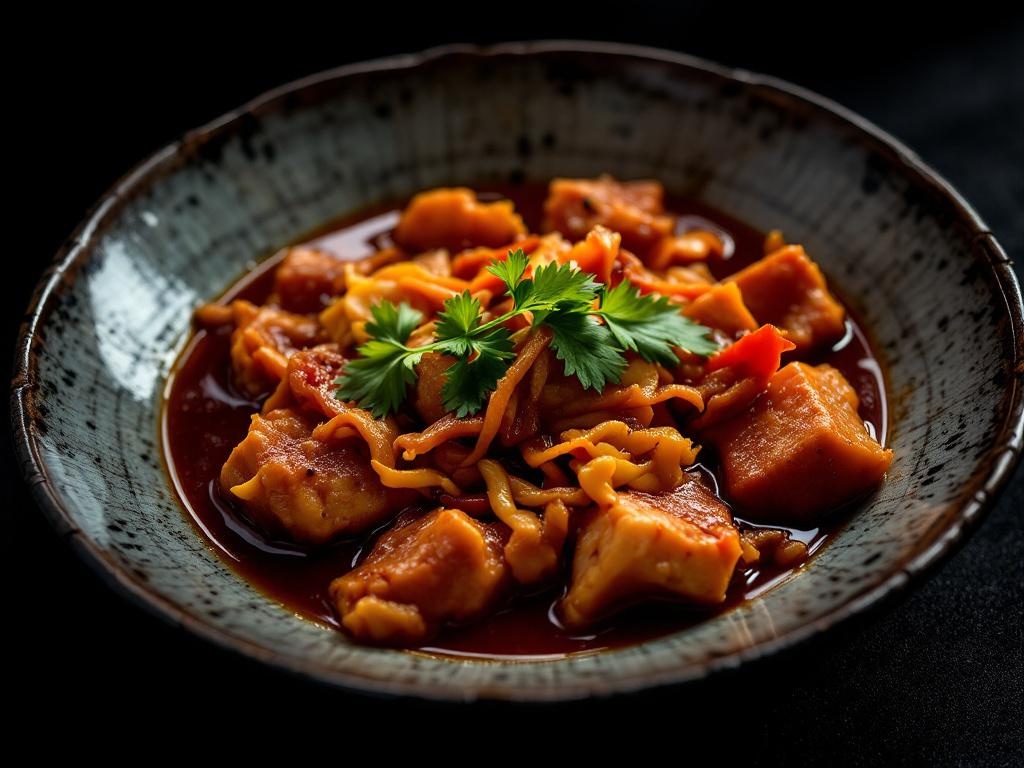
Kimchi Jjigae (Kimchi Stew)
Korean · Korea

Kimchi Jjigae (Kimchi Stew)

Kimchi jjigae — the stew made from aged kimchi — is the preparation that most Koreans consider the essential comfort food of their cuisine: deeply flavoured, slightly sour, spicy, and rich with pork, tofu, and the complex fermentation character of old kimchi. The key insight is that old, well-fermented kimchi — the kind that's been in the back of the refrigerator for months and is too sour to eat fresh — makes the best jjigae. The acidity from extended fermentation breaks down slightly during cooking, mellowing from sharp sourness to a complex, rounded tang that forms the backbone of the stew. Fresh kimchi makes a pale, underdeveloped jjigae; aged kimchi makes an extraordinary one. Pork belly or pork shoulder (fatty cuts that enrich the broth) and soft tofu are the standard additions; the dish is simmered until the kimchi is completely soft and the pork is yielding.

‹Swipe for the next dish›
Serves4
Total35 min
Sourced1 of 6 in OR
Cook
I

The Market List

The benchmark for each ingredient, and who stocks it near you. Tap a stockist to go straight to the product.

300 g
kimchi (napa cabbage)
chopped into bite-sized pieces, with brine reserved
Origin · KoreaNot yet stocked in Oregon
600 ml
anchovy or kombu dashi stock
Not yet stocked in Oregon
200 g
pork belly or shoulder
thinly sliced
Your own market
100 g
firm tofu
cubed
50 g
Korean radish (daikon)
cut into matchsticks
Origin · JapanNot yet stocked in Oregon
4
garlic cloves
minced
Your own market
2
green onion stalks
cut into 5cm lengths
Your own market
10 g
fresh ginger
minced
Origin · New ZealandNot yet stocked in Oregon
15 ml
gochugaru paste (or 10g gochugaru mixed with 5ml water)
Not yet stocked in Oregon
1 g
Tellicherry black pepper
Your own market
5 ml
sesame oil
Your own market
1 g
sea salt
Your own market
2
shiitake mushrooms
sliced
Your own market

Each tap is counted, so the stockist sees the demand Provenance sends them.

II

The Method

1
Heat sesame oil in heavy-bottomed pot over medium-high heat; add pork slices and cook for 3 minutes, stirring, until edges turn golden.
2
Add minced garlic and ginger, stir for 1 minute until fragrant.
3
Pour in dashi stock and reserved kimchi brine; bring to boil, then reduce to simmer.
4
Add chopped kimchi, daikon matchsticks, and mushroom slices; maintain simmer for 10 minutes to allow flavours to develop.
5
Add tofu cubes gently and gochugaru paste, stir carefully, and simmer for 5 minutes until tofu absorbs flavours.
6
Season with sea salt and Tellicherry pepper, add green onion pieces, and simmer for 1 minute.
7
Ladle into individual bowls and serve immediately, ensuring each bowl contains broth, vegetables, pork, and tofu.
III

Sensory Tests

◇Sight. Aged kimchi — minimum 3 weeks, ideally months old — smells pungent and complex, tastes sharp then rounded. Fresh kimchi smells bright and flat by comparison.
◇Where it lives or dies. Aged kimchi is structurally required; fresh kimchi produces a pale, underdeveloped jjigae. The fermentation character is the dish.
IV

What to Pour

Pouring for Oregon ·

The pairing
Kuro Kirishima Imo Jochu 25°
Kirishima Shuzo · Kagoshima Shochu
Not yet stocked in Oregon
Shochu
From Oregon
Cristom Mt. Jefferson Cuvée Pinot Noir
Cristom Vineyards — Van Duzer Corridor · Van Duzer Corridor
Not yet stocked in Oregon
Wine
Without alcohol
OFLORE Hibiscus Sparkling Fermented Lemonade
Limonades OFLORE
Not yet stocked in Oregon
Non-alcoholic

Why each one works is part of membership — Enter · from $49 a year →

The whole pairing
Pillar V
Origin and lineage are part of membership.
Where the dish comes from and how it came to be — on every recipe.
Enter · from $49 a year
Sourced through Provenance

The hands behind the plate.