PProvenance
Enter
Mayonnaise — Hand Method and Emulsion Science
French · Menorca

Mayonnaise — Hand Method and Emulsion Science

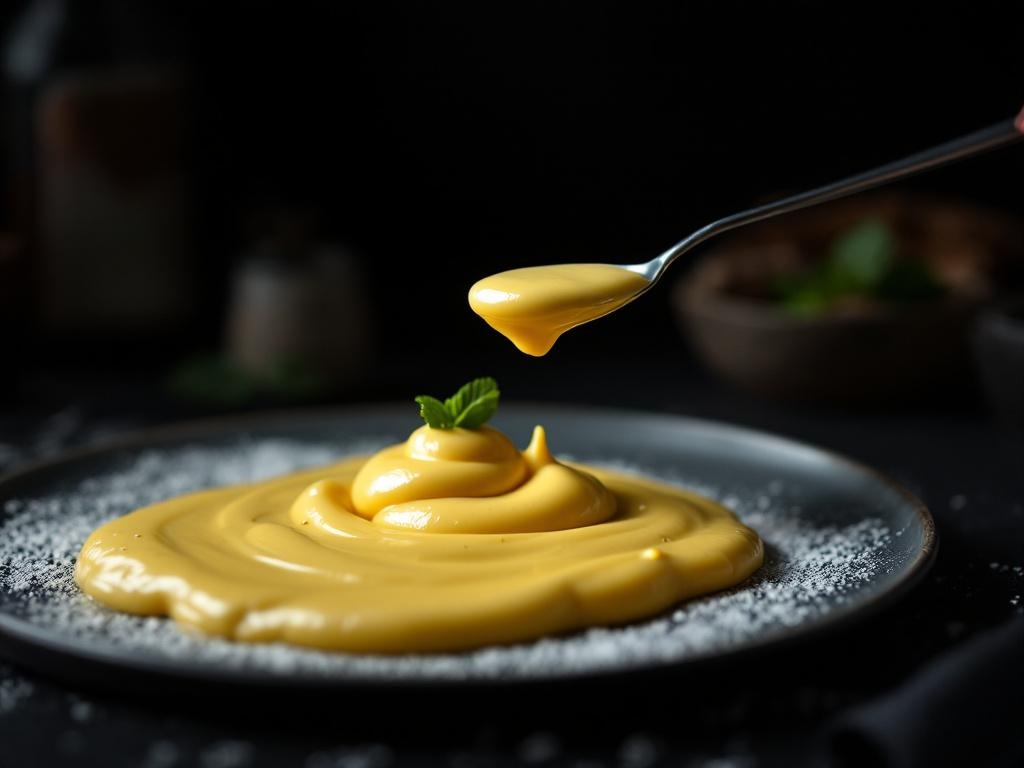
Mayonnaise is a stable oil-in-water emulsion in which fine droplets of oil are dispersed within a water phase composed of egg yolk, acid (lemon juice or vinegar), mustard, and salt. The emulsification is stabilised by lecithin and proteins in the egg yolk, which migrate to the oil-water interface and prevent coalescence of the oil droplets. Understanding the science enables consistent production and diagnosis of emulsion failures. Egg yolk contains approximately 30% dry weight as lecithin (primarily phosphatidylcholine) — the principal emulsifier. When egg yolk is beaten with acid and salt and oil is added slowly, the mechanical energy of beating breaks oil into increasingly fine droplets while the yolk emulsifiers coat each droplet's surface, preventing re-coalescence. The maximum oil-to-yolk ratio is approximately 200–250ml oil per large egg yolk — exceeding this exhausts the available emulsifier and the emulsion breaks. Acid serves two roles: flavouring and emulsion stability. Acidic pH causes egg yolk proteins to unfold partially, exposing more hydrophobic regions that preferentially migrate to the oil-water interface and improve emulsification effectiveness. Mustard contributes mucilage (a complex polysaccharide) that acts as an additional emulsifier and thickener, as well as flavour. The hand method — whisking by hand rather than using a blender — demonstrates emulsion science most clearly. Oil must be added in an extremely thin, slow stream at the beginning when the ratio of oil to emulsifier is high — even a small excess of oil at this critical stage can break the emulsion. Once the emulsion begins to thicken and stabilise (typically after the first 30–50ml of oil is incorporated), oil can be added in a thin stream with less precision. A room-temperature egg yolk and room-temperature oil emulsify more readily than cold ingredients. Broken mayonnaise can be rescued: start with a clean bowl, a fresh egg yolk, a small amount of acid, and slowly whisk the broken mixture into the new yolk — the emulsifier in the new yolk absorbs and stabilises the broken droplets.

‹Swipe for the next dish›
Serves300 ml
Total10 min
Sourced0of 7 in BC
Cook
I

The Market List

The benchmark for each ingredient, and who stocks it near you. Tap a stockist to go straight to the product.

2
egg yolks
room temperature (20°C), from pasteurised or very fresh eggs
Your own market
10 ml
white wine vinegar or lemon juice (room temperature)
Not yet stocked in British Columbia
5 g
Dijon mustard
Your own market
3 g
sea salt
Your own market
white pepper
pinch
Your own market
250 ml
neutral oil (grapeseed, light olive, or sunflower)
room temperature
Not yet stocked in British Columbia
15 ml
warm water (reserve for rescue)
Not yet stocked in British Columbia
II

The Method

1
Combine egg yolks, vinegar, mustard, salt, and white pepper in a medium bowl; whisk vigorously for 10 seconds until pale and foamy.
2
Begin adding oil one drop at a time (literally: drop from a spoon), whisking constantly and vigorously — this is critical for the first 30 ml; emulsion forms when oil droplets suspend in egg yolk lecithin matrix.
3
After 30 ml oil is incorporated and mixture is thick, add oil in a slow steady stream (2 mm diameter) while whisking continuously; whisk must never stop.
4
Halfway through oil addition (around 120 ml total), mixture will reach peak thickness and become difficult to whisk — this is normal and means emulsion is stable.
5
Continue adding remaining oil slowly; texture will loosen slightly as more oil is incorporated — you are now just whisking faster oil-to-egg ratio.
6
When all oil is incorporated, taste and adjust with additional vinegar, salt, or pepper; if consistency is too thick, whisk in warm water (5 ml at a time).
7
If emulsion breaks (looks curdled/separated), start fresh yolk in clean bowl, whisk with mustard and salt, then slowly whisk in broken mayo as if it were oil — re-emulsifies instantly.
8
KEY PRINCIPLE: Oil droplets suspend in yolk lecithin (an emulsifier); whisking provides energy for dispersion. Room-temperature ingredients and slow addition at start ensure stable emulsion that holds 80%+ oil.
9
MAYONNAISE — Hand Method and Emulsion Science
10
Yield: 250 ml | Prep: 10 min | Total: 10 min
11
1 egg yolk (room temperature — crucial)
12
5 ml Dijon mustard (acts as emulsifier)
13
10 ml white wine vinegar or lemon juice (acid stabilizes emulsion)
14
175 ml neutral oil (light olive, peanut, or sunflower — room temperature)
15
Sea salt and white pepper (to taste)
16
5 ml warm water (if emulsion threatens to break)
17
Whisk egg yolk with Dijon mustard and sea salt in medium bowl until pale and slightly thickened (1 minute); this activates lecithin in yolk.
18
Add half the vinegar or lemon juice; whisk to combine; acid helps stabilize emulsion by lowering pH.
19
Begin adding oil drop by drop (literally — 1 ml at a time) while whisking constantly and vigorously; oil droplets must be surrounded by lecithin-water mixture before more oil is added.
20
After approximately 60 ml oil is incorporated and sauce visibly thickens, oil can be added in thin, steady stream (3–5 ml at a time) while whisking; ratio shifts toward oil-continuous emulsion.
21
If emulsion breaks (becomes grainy or separates), immediately stop whisking; begin fresh with new yolk in clean bowl, whisk with mustard and acid, then slowly whisk broken mixture into fresh yolk (recovers 90% of broken batch).
22
Once all oil is incorporated, whisk in remaining vinegar, warm water if needed for consistency, and season with sea salt and white pepper.
23
EMULSION SCIENCE: Egg yolk contains 35% lecithin; each molecule has hydrophilic (water-loving) head and lipophilic (fat-loving) tail. Lecithin surrounds oil droplets, allowing up to 4× volume of oil to water. Break emulsion by whisking too fast, adding cold oil, or adding oil too quickly.
24
For foolproof blender mayonnaise, use an immersion blender with the egg yolk and acid in the bottom of a narrow jar — pour all the oil on top and plunge the blender, then raise slowly as it emulsifies
25
For aioli (Provençal garlic mayonnaise), begin with roasted garlic paste in the bowl before the yolk — the roasted garlic provides additional emulsification surface
26
For stable mayonnaise that holds on buffets or in warm environments, add 0.3% xanthan gum to the water phase — it dramatically increases viscosity and prevents weeping
27
A clean resting bowl, no oil residue, and a room-temperature yolk are the three most important preparation steps for a beginner learning hand mayonnaise
28
For a lighter result, replace 30% of the oil with a light flavoured broth or cold reduction — the result is a semi-emulsion with dramatically reduced fat content
From the canon — Reduction is the technique of simmering a liquid uncovered to evaporate water and concentrate flavour, body, colour, and viscosity. Reduction — Concentrating Flavour Through Evaporation →
IV

Sensory Tests

◇Sight. Watch for the sauce to lighten and thicken visibly as you whisk — it shifts from glossy yolk-yellow to pale cream; the moment it stops thickening or turns grainy, you've hit the emulsifier ceiling.
◇Where it lives or dies. Add oil drop by drop for the first 30ml — the yolk's lecithin can only coat so many droplets at once; once the emulsion takes hold and thickens noticeably, you can increase to a thin stream, but rush it at the start and the droplets coalesce faster than the emulsifier can stabilize them.
VI

What to Pour

The pairing
Charles Joguet Chinon Clos de la Dioterie
Domaine Charles Joguet · Chinon
Not yet stocked in British Columbia
Wine
From British Columbia
Fort Berens Riesling
Fort Berens Estate Winery · Lillooet
Not yet stocked in British Columbia
Wine
Without alcohol
GT's Synergy Organic Kombucha — Gingerade
Not yet stocked in British Columbia
Non-alcoholic

Why each one works is part of membership — Enter · from $49 a year →

The whole pairing
Pillar VII
Origin and lineage are part of membership.
Where the dish comes from and how it came to be — on every recipe.
Enter · from $49 a year