PProvenance
Enter
Miso Soup — Dashi, Ingredients, and Regional Variations
Japanese · Japan

Miso Soup — Dashi, Ingredients, and Regional Variations

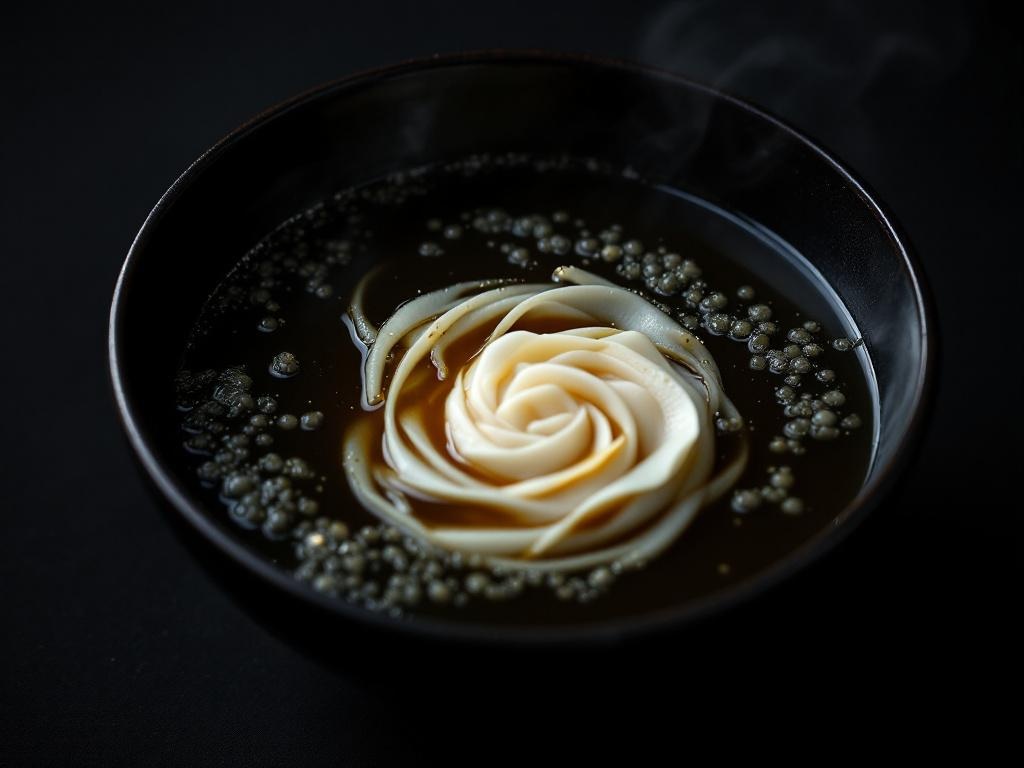
Miso soup (miso shiru) is Japan's daily soup — the cornerstone of the ichiju-sansai (one soup, three sides) meal structure, eaten morning, noon, and night across all social classes. At its most basic it requires only two components: dashi (the stock base) and miso (the seasoning paste) — but the selection of ingredients (mise) floating in the soup transforms it into an infinite expression of season, region, and personal taste. Technique matters enormously: miso must never be boiled after dissolving (heat destroys probiotic cultures and volatilises aromatic compounds); dissolve miso in a small amount of warm dashi before adding to the pot; add ingredients according to cooking time (root vegetables into cold dashi; tofu and soft vegetables just before miso addition); the ladle and whisk technique for dissolving miso directly in the pot (never stir the pot — the miso should cloud gently from the point of addition).

‹Swipe for the next dish›
Serves4
Total20 min
Sourced1of 8 in BC
Cook
I

The Market List

The benchmark for each ingredient, and who stocks it near you. Tap a stockist to go straight to the product.

1 litre
dashi
primary stock made from kombu and bonito flakes
Not yet stocked in British Columbia
80g
miso paste
white or red (awase blend preferred)
Not yet stocked in British Columbia
150g
silken tofu
cut into 1.5cm cubes
50g
wakame
dried seaweed
Not yet stocked in British Columbia
4
scallions
white and green separated, sliced 2cm
Not yet stocked in British Columbia
20g
daikon radish
peeled, grated
Not yet stocked in British Columbia
10ml
mirin
naturally brewed
Not yet stocked in British Columbia
Salt
fine sea salt
Your own market

Each tap is counted, so the stockist sees the demand Provenance sends them.

II

The Method

1
Bring dashi to gentle simmer in saucepan over medium heat; do not allow to boil vigorously as this damages delicate umami compounds.
2
Rehydrate wakame in separate bowl with 100ml cold water for 5 minutes; drain and divide among warmed miso soup bowls.
3
Dissolve miso paste in small ladle using 100ml hot dashi, working with wooden spoon to create smooth slurry without lumps.
4
Gently pour miso slurry into simmering dashi, stirring with wooden spoon to distribute; taste and adjust salinity if needed.
5
Add silken tofu cubes carefully; heat broth to 70°C (just below boiling point) for 2 minutes, as prolonged heating coagulates proteins and diminishes flavor.
6
Divide hot miso soup into warmed bowls; garnish with white scallion slices, grated daikon and mirin if desired.
7
Top each bowl with green scallion slices and serve immediately; miso soup should be consumed fresh within 2 minutes of serving for optimal temperature and flavor intensity.
IV

Sensory Tests

◇Where it lives or dies. The moment where miso soup lives or dies is the miso dissolution — the miso must be fully dispersed before serving, with no lumps settling on the base of the bowl. Use the ladle-strainer technique or dissolve the miso in a separate cup with a small amount of warm dashi before stirring it into the main pot. Serve in pre-warmed bowls — cold bowls cool the soup immediately and the miso flavour fades.
Pillar V
Cross-cuisine parallels are part of membership.
The dishes this one teaches you, across the cuisines — on every recipe.
Enter · from $49 a year
VI

What to Pour

The pairing
Kiku-Masamune Kimoto Junmai
Kiku-Masamune Sake Brewing · Nada
Not yet stocked in British Columbia
Sake
From British Columbia

Nothing from British Columbia holds against this yet.

Without alcohol

No pour without alcohol holds against this yet.

Why each one works is part of membership — Enter · from $49 a year →

The whole pairing
Pillar VII
Origin and lineage are part of membership.
Where the dish comes from and how it came to be — on every recipe.
Enter · from $49 a year