Japanese · Japan
Mochi
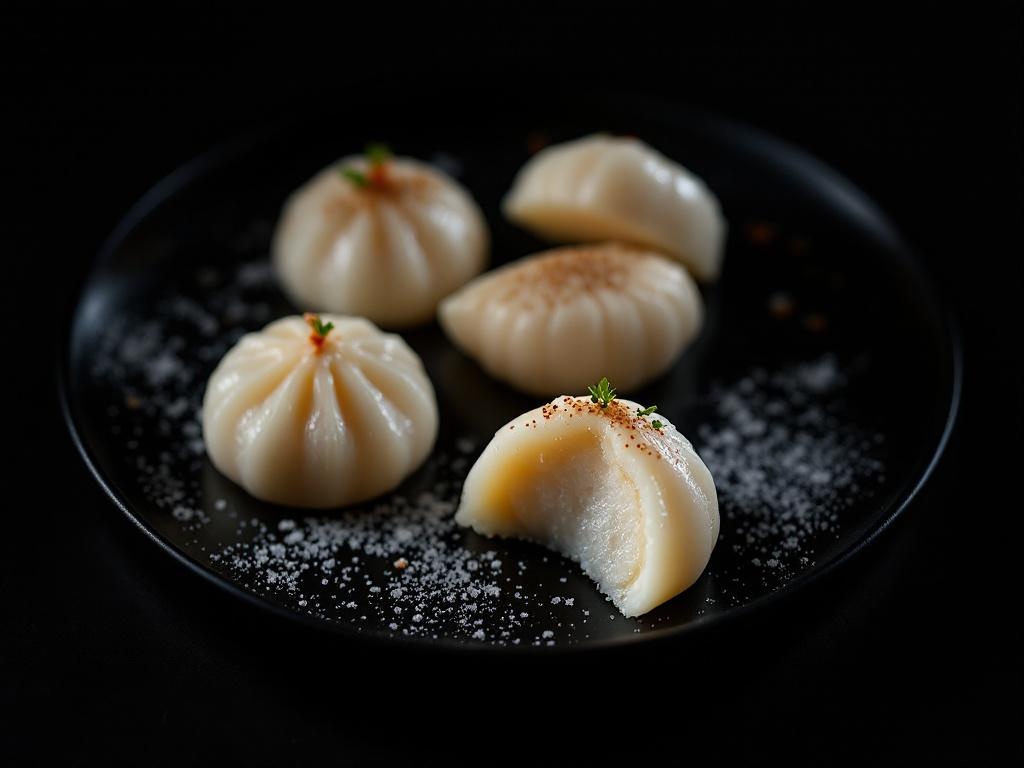
Mochi is made from glutinous rice (mochigome) pounded until the grain structure is destroyed and a smooth, elastic, translucent mass forms. The result is one of the most distinctive food textures on earth — simultaneously yielding and resilient, almost rubbery at first resistance, then giving completely. It is wrapped around sweet red bean paste (anko), dusted with kinako (roasted soybean flour), or grilled until the exterior blisters and chars.
‹Swipe for the next dish›
I
The Market List
The benchmark for each ingredient, and who stocks it near you. Tap a stockist to go straight to the product.
200 g
sweet mochigome rice flour (mochiko)
Origin · ThailandWismettac · Vancouver →
150 ml
water
Your own market
30 g
caster sugar
Your own market
2 g
sea salt
Your own market
40 g
cornstarch (for dusting)
Origin · ChinaWismettac · Vancouver →
60 g
anko (red bean paste) or desired filling
Not yet stocked in British Columbia
Each tap is counted, so the stockist sees the demand Provenance sends them.
II
The Method
1
Mix mochigome, water, sugar, and salt in a microwave-safe bowl; stir until smooth and lump-free.
2
Cover loosely and microwave on high for 2 minutes; stir vigorously, then microwave another 1 minute until thick and translucent.
3
Dust a clean work surface generously with cornstarch; transfer hot mochi dough onto it.
4
Dust top of dough with additional cornstarch; cool for 3–4 minutes until handleable but still warm.
5
Divide into 12 portions; flatten each into a 7 cm disc, place 5 g filling in centre, fold edges up, and seal by pressing and rolling into a ball.
6
Dust finished mochi with cornstarch to prevent sticking; serve at room temperature.
IV
Sensory Tests
◇Where it lives or dies. The moment where mochi lives or dies is the temperature during shaping — mochi must be shaped while still warm and pliable. As it cools, it becomes stiff and tears when stretched. Work quickly with generously starch-dusted hands, portioning 30-40g balls, pressing a well in the centre, placing the filling, and pinching closed. The pinch must be firm — a loose seal opens during handling.
Pillars V — VII
The full recipe pages are part of membership.
Cross-cuisine parallels, what to pour, and the dish's origin and lineage — on every recipe.
Enter · from $49 a year
Sourced through Provenance