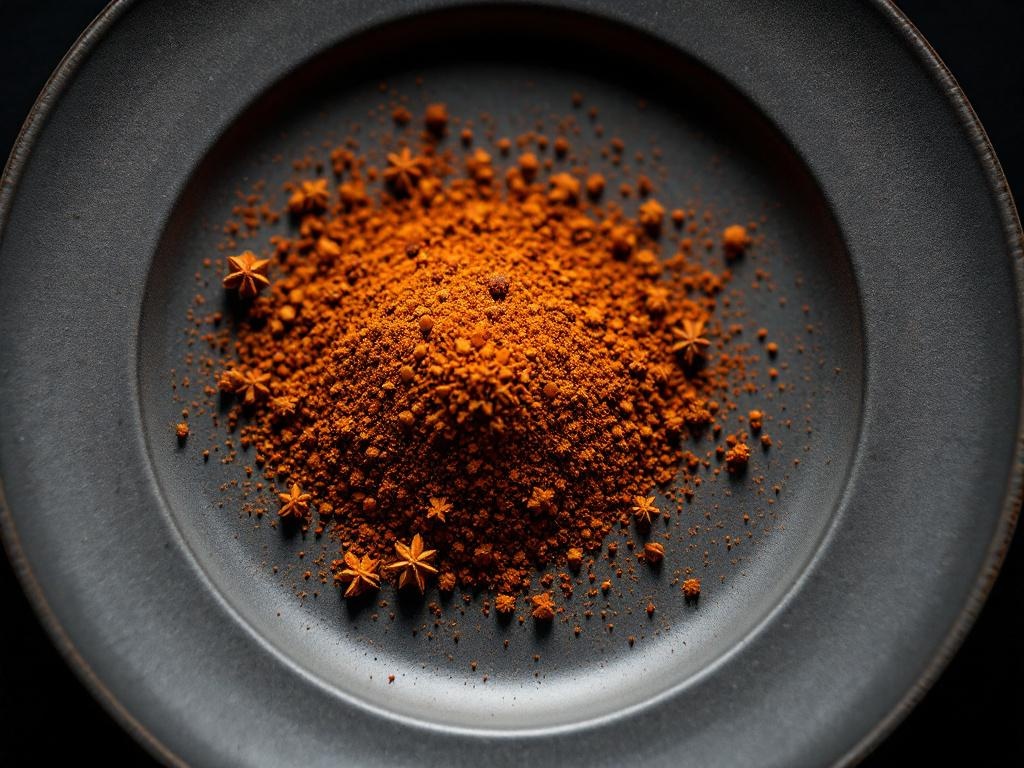
Ras el Hanout
Ras el Hanout translates from Arabic as 'head of the shop' — the spice merchant's best blend, his finest and most complex mixture, offered to customers who trusted his judgement above their own. The name encapsulates both the blend's character and the relationship between Moroccan cooks and their spice vendors: the blend is never standardised, always individual, always the best of what is available. A full ras el hanout can contain anywhere from 20 to 80 different spices — black pepper, cinnamon, cardamom, coriander, cumin, turmeric, ginger, mace, nutmeg, allspice, cloves, aniseed, dried rose petals, lavender, orris root, long pepper, grains of paradise, cubeb pepper, dried galangal, and sometimes even Spanish fly (cantharides, a beetle traditionally included for its reputed aphrodisiac properties). Most modern ras el hanout excludes the beetle. The complexity of ras el hanout is both the point and the challenge. When all the spices are in balance, the blend is warm, floral, slightly resinous, gently sweet, and deeply aromatic. When it is poorly composed or stale, it tastes of everything and nothing. Ras el hanout is used in tagines, couscous preparations, bastilla (the pastilla), and as a marinade for lamb. It is added at the beginning of cooking in most Moroccan dishes — the long slow cooking time mellows the high notes and allows the deeper spice character to develop.
The Market List
The benchmark for each ingredient, and who stocks it near you. Tap a stockist to go straight to the product.
Each tap is counted, so the stockist sees the demand Provenance sends them.
The Method
Sensory Tests
What to Pour
Warm, floral, resinous, spiced — complex and slowly revelatory
Origin & Lineage
Morocco — ancient Maghrebi spice trading tradition; associated with the great spice merchants of Marrakech and Fez