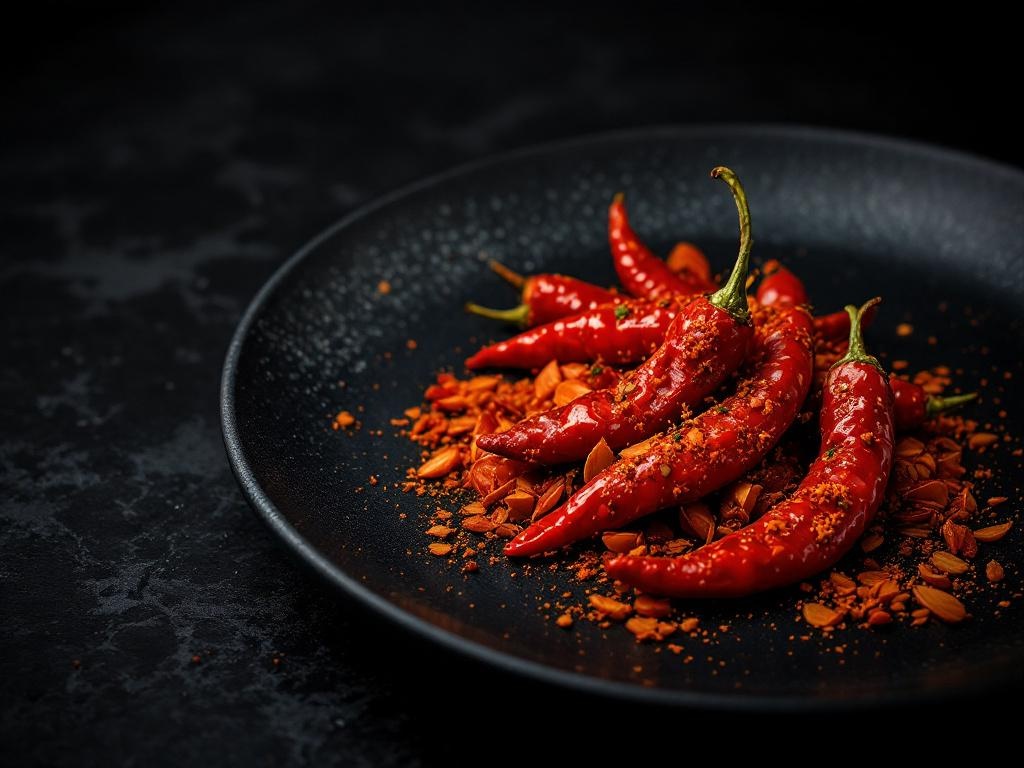
Harissa is North Africa's foundational chilli paste — a deeply seasoned combination of dried red chillies, garlic, cumin, coriander, caraway, and olive oil that is as central to Tunisian cooking as it is to Moroccan and Libyan cuisines. It is a universal flavouring: stirred into soups and couscous, spread on bread, spooned over eggs, used as a marinade for lamb, and deployed as a finishing condiment alongside tagines and grilled meats.
The base construction is consistent across the region: dried chillies (traditionally the Baklouti chilli from Tunisia) are soaked in hot water, drained, then pounded or blended with garlic, the aromatic spice trio of cumin, coriander, and caraway, salt, and olive oil. The result should be a thick, deeply coloured paste — not a liquid sauce — with intense heat, warmth from the spices, and a slight smokiness from the dried chillies. The caraway distinguishes North African harissa from any other chilli paste in the world.
The rose harissa version — harissa warda — is the Tunisian refinement that has become popular internationally: dried rose petals and sometimes rose water are added to the basic paste, creating a sauce with the same fundamental heat and spice but with a floral, perfumed quality that makes it extraordinary with lamb, roasted vegetables, and dairy. The rose is not decorative — it contributes a genuine aromatic dimension that softens the aggression of the chilli.
Commercial harissa (tubes and tins) varies enormously in quality — some are little more than tomato paste with chilli. The real thing, made from scratch with quality dried chillies, is a completely different preparation with a depth that no commercial version approaches.
‹Swipe for the next dish›
IThe Market List
The benchmark for each ingredient, and who stocks it near you. Tap a stockist to go straight to the product.
60g
dried red chillies (Aleppo
Guajillo, or North African varieties preferred), deseeded and roughly torn
Not yet stocked in British Columbia
25g
roasted unsalted almonds
Not yet stocked in British Columbia
3
garlic cloves
peeled
Your own market
8g
caraway seed
toasted
Not yet stocked in British Columbia
4g
ground coriander
Not yet stocked in British Columbia
2g
dried rose petals (culinary-grade
optional but traditional)
Not yet stocked in British Columbia
60ml
extra-virgin olive oil
Your own market
15ml
fresh lemon juice
Not yet stocked in British Columbia
1g
Tellicherry black pepper
Your own market
2g
paprika (sweet or hot
to preference)
Your own market
II
The Method
1
Toast dried chilli pieces in a dry skillet over low heat 2–3 minutes until fragrant; do not burn.
2
Soak toasted chillies in 100ml hot water for 10 minutes until softened; drain, reserving 30ml soaking liquid.
3
Toast caraway seed in the same skillet over low heat 2 minutes until fragrant; grind coarsely in a mortar.
4
Toast almonds in the skillet 3–4 minutes until light golden; cool slightly.
5
Combine softened chillies, toasted almonds, garlic, toasted caraway, ground coriander, rose petals if using, and reserved soaking liquid in a food processor; pulse until a coarse paste forms.
6
Transfer to a bowl; whisk together olive oil, lemon juice, paprika, salt, and black pepper.
7
Fold dressing into chilli paste until fully incorporated and smooth; taste and adjust salt, lemon juice, and heat to preference.
8
Store in a sealed jar, covered with a thin layer of olive oil, refrigerated, up to 2 weeks; bring to room temperature before serving with couscous, grilled meats, or bread.
IV
Sensory Tests
◇Sight. Dried chillies rehydrated in hot water release deep crimson colour and earthy heat; caraway's warm, slightly bitter note anchors the paste's regional identity.
◇Where it lives or dies. Omit caraway or use fresh chillies instead of dried — the paste loses North African character and becomes generic bright sauce, not harissa.
VI · What to Pour
Deep, hot, and warmly spiced with cumin and caraway — a North African chilli paste of remarkable complexity
VII · Origin & Lineage
Tunisian in origin, though used across North Africa and the Levant. Tunisia is the epicentre of harissa culture, where it is eaten daily and has protected status in UNESCO's Intangible Cultural Heritage.
Pillars V — VII
The full recipe pages are part of membership.
Cross-cuisine parallels, what to pour, and the dish's origin and lineage — on every recipe.
Enter · from $49 a year