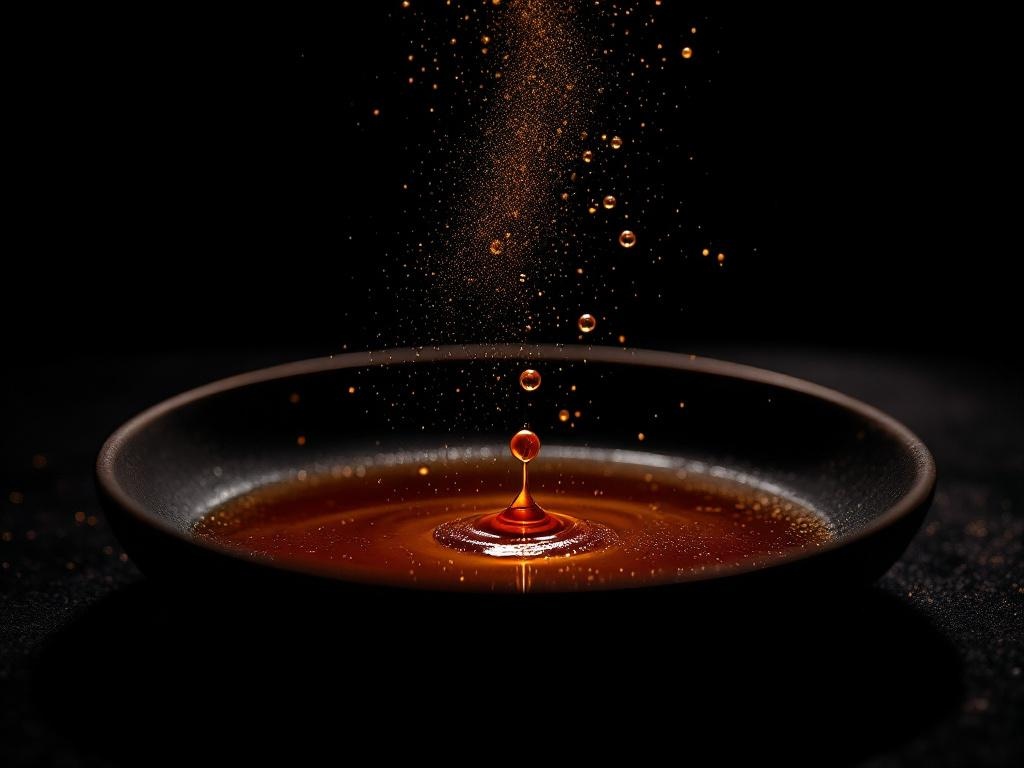
Reduction Sauce (Braising Liquid into Sauce — Concentration Point)
Reduction is not merely a technique for thickening — it is the primary mechanism by which cooking concentrates, intensifies, and transforms liquid into sauce. When a braising liquid, stock, or wine is reduced, water evaporates and every other compound — sugars, proteins, acids, aromatic molecules — becomes more concentrated. The result is not simply less liquid but a different substance: more intense, more complex, stickier, and more flavourful. The most common application in the restaurant kitchen is taking a braising liquid and reducing it to a sauce. After a long-cooked braise of beef cheeks, short ribs, or oxtail, the cooking liquid is strained, degreased, and returned to high heat. As it reduces, it transforms: at 50% reduction it has developed gloss; at 75% it coats a spoon; at 90% it becomes syrupy and sticky — approaching a glaze. At each stage, the flavour character changes. Finding the right concentration point for a given dish is a matter of judgement that experience alone teaches. Thickening mechanisms in reduction sauces include natural gelatin (from bones in stock), natural sugars, and sometimes starch additions (arrowroot slurry for a clear, glossy finish; cornstarch for a more opaque thickening). Pure reduction without thickeners, relying on collagen-rich stocks, produces the most elegant sauces — they coat naturally and cling rather than gloop. Degreasing is a critical step: fat must be removed before or during reduction, either by skimming the surface, using a fat separator, or refrigerating overnight so the solidified fat can be lifted off cleanly. Fat left in the reduction creates an oily, murky sauce rather than a glossy one. Once reduced and degreased, mounting with cold butter, adding aromatic herbs, or finishing with a splash of acid completes the sauce.
The Market List
The benchmark for each ingredient, and who stocks it near you. Tap a stockist to go straight to the product.
The Method
Sensory Tests
What to Pour
Why each one works is part of membership — Enter · from $49 a year →
The whole pairing