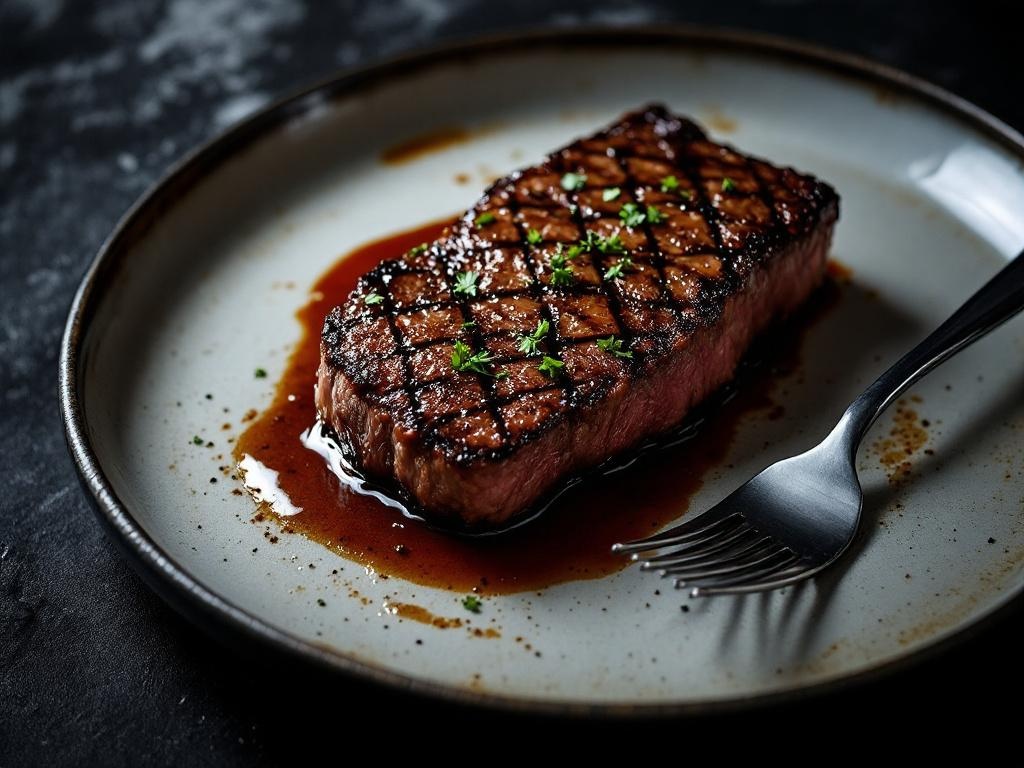
Reverse Sear Steak (Low Oven First then Hot Sear — Sous Vide Alternative)
The reverse sear method for cooking thick steaks went viral across YouTube and food media from around 2015, championed by food scientists including J. Kenji López-Alt at Serious Eats. The technique inverts the conventional approach — sear then rest — by cooking the steak low and slow in the oven first, then finishing with a high-heat sear. The result is a steak with edge-to-edge even doneness and a superior crust, addressing the grey band of overcooked meat that surrounds the centre in a conventionally seared steak. The physics are straightforward: in a conventional sear-first method, the hot exterior continues cooking the inner meat before the interior reaches serving temperature. The reverse sear avoids this by bringing the steak to temperature gently in a 120°C oven, then searing briefly and aggressively at the end. Because the steak is already at the correct internal temperature, the sear is only building crust — it is not cooking the interior — and the brief contact time means no grey band forms. The method requires a thick-cut steak — at least 3.5cm, ideally 5cm. A steak under 2.5cm thick will reach internal temperature too quickly in a low oven before a meaningful crust can form, making the reverse sear pointless. The steak is placed on a wire rack over a baking sheet and placed in the oven at 120°C until it reaches an internal temperature of 49°C for medium-rare (the final sear will add approximately 5°C). This takes 20–50 minutes depending on thickness. The steak then goes directly from the oven to a screaming-hot cast iron or stainless steel pan — no resting is needed at this stage because the low oven did not stress the muscle proteins. The sear takes 60–90 seconds per side, with continuous basting in butter, garlic, and thyme. Resting for 5 minutes after searing completes the process.
The Market List
The benchmark for each ingredient, and who stocks it near you. Tap a stockist to go straight to the product.
Each tap is counted, so the stockist sees the demand Provenance sends them.