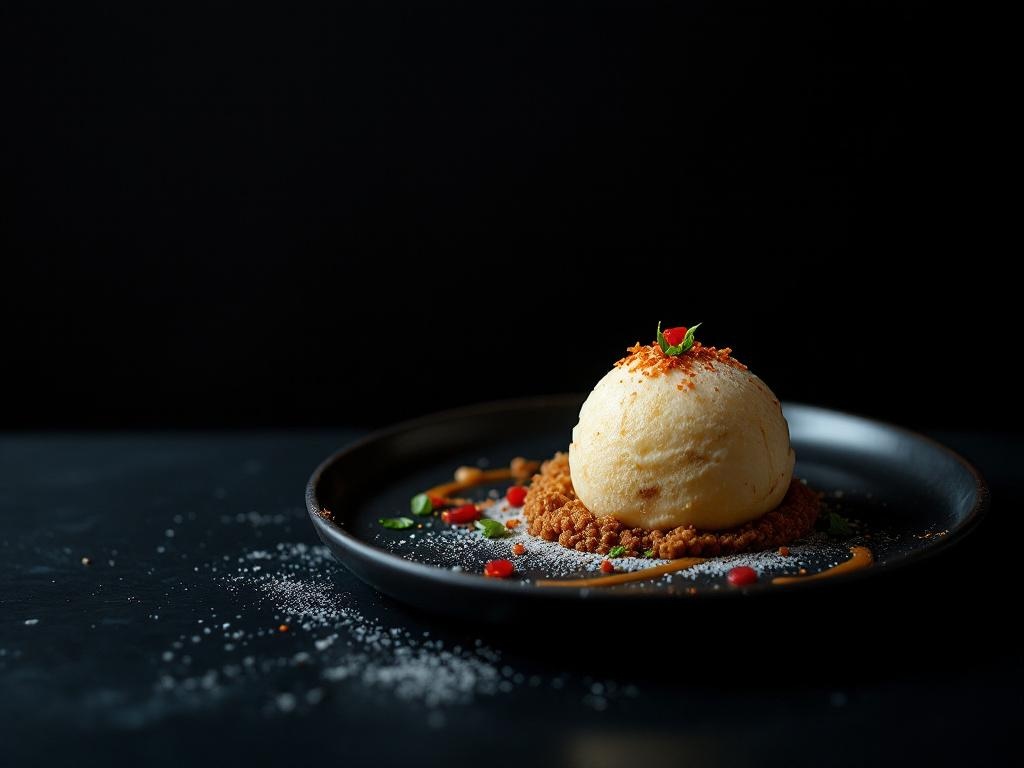
Rolled Ice Cream (Thai Street Food Origin — Freeze Plate Technique)
Rolled ice cream — known in Thailand as I-Tim Pad, meaning fried ice cream — originated on Thai streets in the late 2000s and became an international viral sensation when videos of the rolling and scraping process spread on social media from 2015 onward. The technique involves pouring a liquid ice cream base onto a freezing steel plate, mix-ins are chopped and folded in, and the resulting frozen layer is scraped into neat rolls using flat metal spatulas. The visual performance is a significant part of the product's appeal. The freeze plate must reach -20°C to -30°C for the base to freeze quickly enough to roll without cracking. Commercial roll ice cream plates achieve this through direct refrigeration; home versions using dry ice or a bowl of ice and salt cannot reach the correct temperature and produce inconsistent results. The base liquid is thinner than a standard ice cream base — typically whole milk, heavy cream, and sugar in a roughly 2:1:0.5 ratio — because it must freeze rapidly when spread thinly across the cold surface. The technique: a thin layer of base (roughly 3–4mm) is poured and distributed across the freeze plate. Mix-ins — fresh fruit, chocolate chips, biscuit pieces, flavoured syrups — are pressed into the liquid and chopped fine with a metal spatula. As the mixture freezes (30–60 seconds on a proper commercial plate), it is spread into a thin rectangle and then rolled tightly from one edge. The rolls are lifted and placed upright in a cup, then topped with whipped cream, fresh fruit, and sauces. The key to clean rolls is patience: the sheet must be fully frozen before rolling begins. Premature rolling produces cracks and collapses. The spatula angle — roughly 45 degrees — is critical for getting under the frozen sheet cleanly.
Four not yet within reach.
- Not yet within reach
- 4 · white chocolate, pistachios, freeze-dried strawberries, aleppo pepper (optional
The Market List
The benchmark for each ingredient, and who stocks it near you. Tap a stockist to go straight to the product.
Within reach counts in town, delivered, shipped and the nearest city. A staple counts once it has a local seller. Charted from each shop's own pages; not yet vouched by a cook who shops here.
The larder of Prince Rupert →The Method
Sensory Tests
What to Pour
Nothing from Western Australia holds against this yet.
Origin & Lineage
Thailand — I-Tim Pad; Bangkok street food origin circa late 2000s; global viral spread via social media 2015–2017