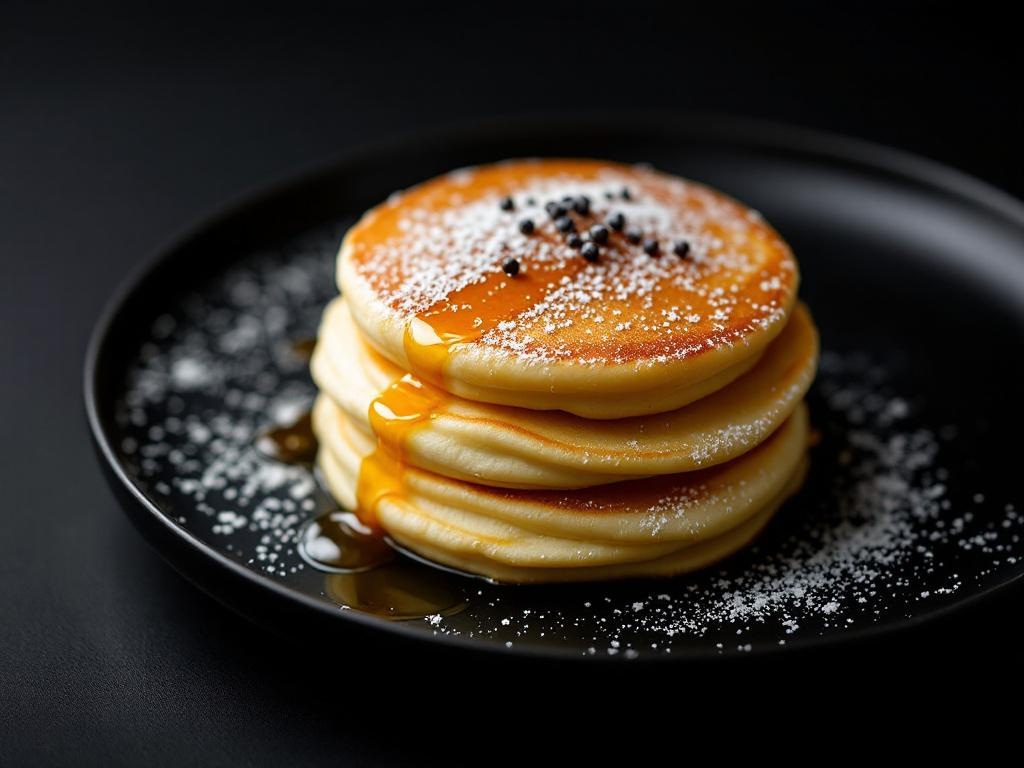
Soufflé Pancakes (Tokyo Café Style — Meringue Folding Technique)
Soufflé pancakes became a global social media phenomenon from around 2016, driven by videos from Tokyo cafés — particularly Gram Café and Pancakes and similar establishments — showing enormously tall, cloud-like pancakes served stacked and wobbling on a plate. The format belongs to a broader Japanese aesthetic of jiggly, light, airy foods, and represents a genuine technique evolution from the standard American pancake. The critical distinction from a conventional pancake is the meringue incorporation. The batter is made from egg yolks, milk, flour, and a small amount of baking powder; separately, the egg whites are whipped to medium-stiff peaks with sugar and cream of tartar. The whipped whites are folded into the batter in three stages — the first addition is stirred in without concern for deflation to lighten the batter, the second and third are folded gently with a large spatula using a figure-eight motion. The cooking method is as important as the batter. A nonstick pan is used at very low heat — lower than any standard pancake — with a lid. The low heat allows the pancakes to cook through gently without browning aggressively on the outside before the interior is set. A small round metal ring mould (approximately 7–8cm diameter) is optional but helps achieve the tall, straight-sided shape characteristic of the café version. The batter is spooned into the mould in two stages with a short pause to allow partial setting before adding more. A small tablespoon of water added to the pan and the lid replaced creates steam that further helps the structure set without burning. The pancakes require patience: each side cooks for 4–6 minutes at low heat. The visual test is a matte surface and visible puffing before flipping. The flavour is mild — these are vehicles for toppings: whipped cream, strawberries, maple syrup, or butter.
The Market List
The benchmark for each ingredient, and who stocks it near you. Tap a stockist to go straight to the product.