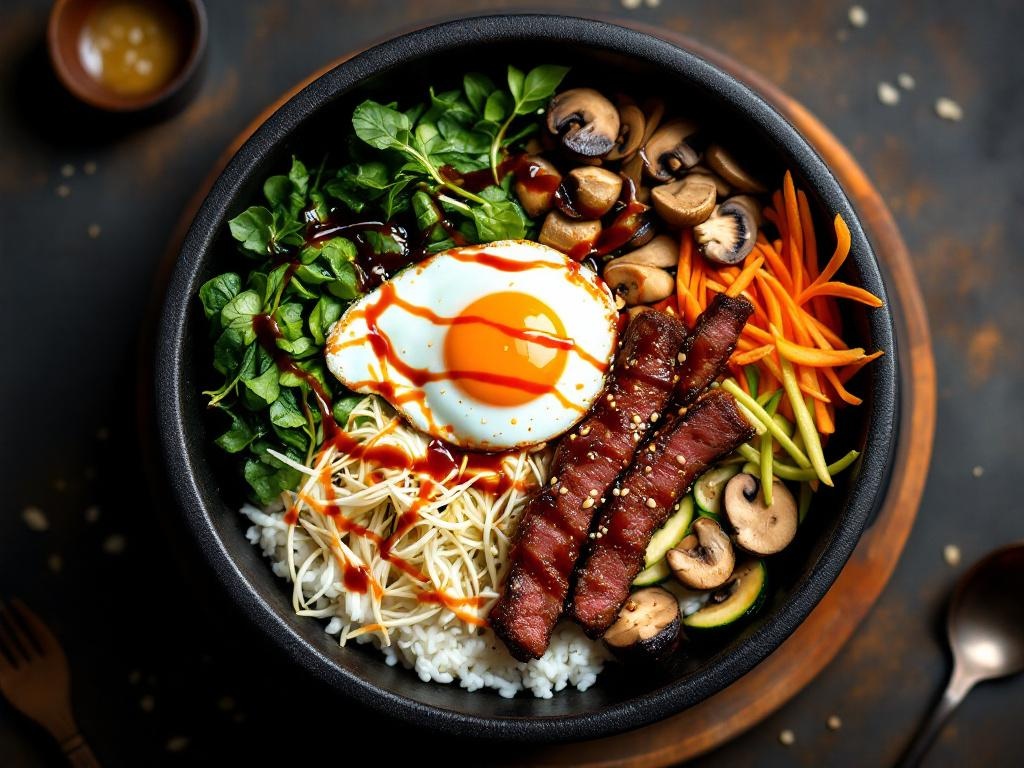
Bibimbap (Naturally Gluten-Free with Tamari)
Bibimbap — mixed rice — is one of Korea's greatest dishes and, with the substitution of tamari for regular soy sauce in the gochujang-based sauce, is fully gluten-free. The dish's genius is in its structure: individual components — steamed rice, separately cooked namul (seasoned vegetables), protein (beef, tofu, or egg), and gochujang sauce — assembled in a bowl and mixed by the eater at the table. Each component is cooked and seasoned independently, which means each retains its individual character until the moment of mixing, when the whole becomes greater than its parts. The dolsot version (in a hot stone pot) goes further: the rice pressed against the superheated pot develops a crust (nurungji) that adds crunch, smoke, and the unmistakable sound of sizzling. This crust-formation is one of the most distinctive textural pleasures in Korean cuisine.
One elsewhere in British Columbia · three not yet within reach.
- Elsewhere in British Columbia
- 1 · aleppo pepper
- Not yet within reach
- 3 · short-grain sushi rice or Korean short-grain rice, tamari (gluten-free soy sauce), sesame seeds
The Market List
The benchmark for each ingredient, and who stocks it near you. Tap a stockist to go straight to the product.
Within reach counts in town, delivered, shipped and the nearest city. A staple counts once it has a local seller. Charted from each shop's own pages; not yet vouched by a cook who shops here.
The larder of Fort St. John →Each tap is counted, so the stockist sees the demand Provenance sends them.
The Method
Sensory Tests
What to Pour
Each tap is counted, so the stockist sees the demand Provenance sends them.
Why each one works is part of membership — Enter · from $49 a year →
The whole pairing