PProvenance
Enter
Cooking in
Vernon · the Okanagan
Nearest city · Kelowna Change
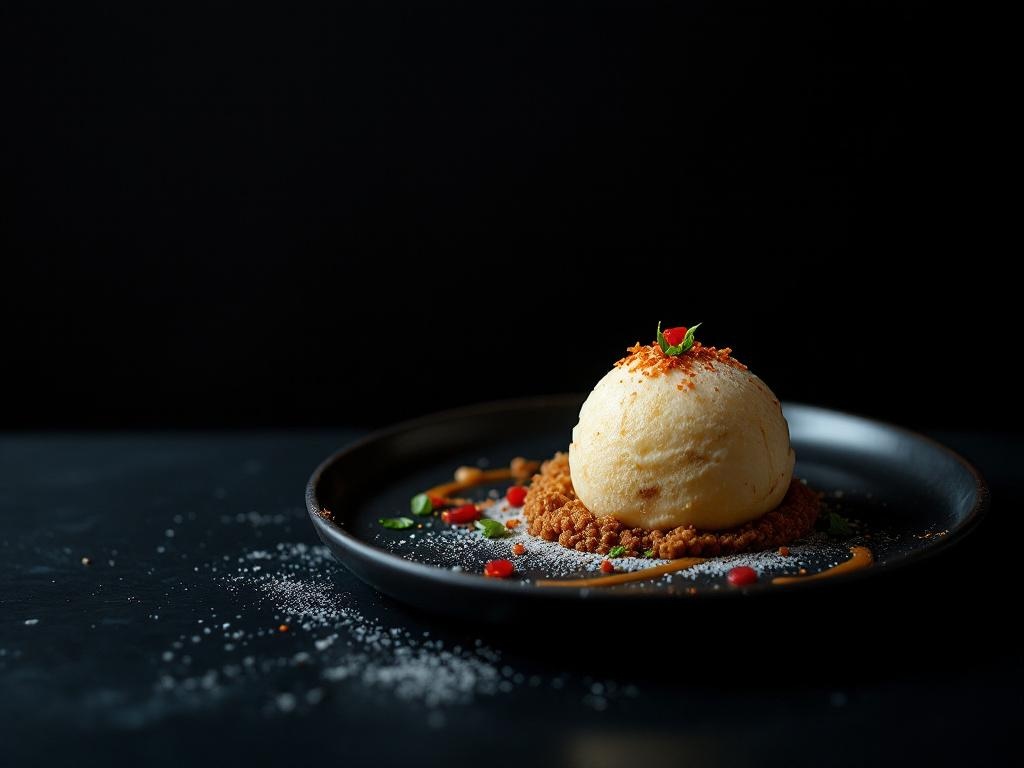
Rolled Ice Cream (Thai Street Food Origin — Freeze Plate Technique)
Thai · Thailand

Rolled Ice Cream (Thai Street Food Origin — Freeze Plate Technique)

Rolled ice cream — known in Thailand as I-Tim Pad, meaning fried ice cream — originated on Thai streets in the late 2000s and became an international viral sensation when videos of the rolling and scraping process spread on social media from 2015 onward. The technique involves pouring a liquid ice cream base onto a freezing steel plate, mix-ins are chopped and folded in, and the resulting frozen layer is scraped into neat rolls using flat metal spatulas. The visual performance is a significant part of the product's appeal. The freeze plate must reach -20°C to -30°C for the base to freeze quickly enough to roll without cracking. Commercial roll ice cream plates achieve this through direct refrigeration; home versions using dry ice or a bowl of ice and salt cannot reach the correct temperature and produce inconsistent results. The base liquid is thinner than a standard ice cream base — typically whole milk, heavy cream, and sugar in a roughly 2:1:0.5 ratio — because it must freeze rapidly when spread thinly across the cold surface. The technique: a thin layer of base (roughly 3–4mm) is poured and distributed across the freeze plate. Mix-ins — fresh fruit, chocolate chips, biscuit pieces, flavoured syrups — are pressed into the liquid and chopped fine with a metal spatula. As the mixture freezes (30–60 seconds on a proper commercial plate), it is spread into a thin rectangle and then rolled tightly from one edge. The rolls are lifted and placed upright in a cup, then topped with whipped cream, fresh fruit, and sauces. The key to clean rolls is patience: the sheet must be fully frozen before rolling begins. Premature rolling produces cracks and collapses. The spatula angle — roughly 45 degrees — is critical for getting under the frozen sheet cleanly.

‹Swipe for the next dish›
Serves2
Total45 min
Within reach0of 4 in Vernon

Two elsewhere in British Columbia · two not yet within reach.

How the 4 are reached
Elsewhere in British Columbia
2 · pistachios, aleppo pepper (optional
Not yet within reach
2 · white chocolate, freeze-dried strawberries
Cook
I

The Market List

The benchmark for each ingredient, and who stocks it near you. Tap a stockist to go straight to the product.

400 ml
sweetened condensed milk
chilled
Your own market
200 ml
heavy cream (35% butterfat)
chilled
Your own market
100 ml
whole milk
chilled
Your own market
15 ml
vanilla extract
Your own market
20 g
white chocolate
grated
Not yet within reach of Vernon · each reach is counted
10 g
freeze-dried strawberries
crushed
Origin · Fresh As, New ZealandNot yet within reach of Vernon · each reach is counted
5 g
Aleppo pepper (optional
for savory interpretation)
Neutral oil for metal freeze plate (10 ml)
Your own market

Within reach counts in town, delivered, shipped and the nearest city. A staple counts once it has a local seller. Charted from each shop's own pages; not yet vouched by a cook who shops here.

The larder of Vernon →

Each tap is counted, so the stockist sees the demand Provenance sends them.

II

The Method

1
Chill a metal freeze plate (or large stainless steel tray) at −18°C for minimum 60 minutes; verify temperature with ice cream thermometer.
2
Combine sweetened condensed milk, heavy cream, whole milk, and vanilla extract in a bowl; stir gently for 45 seconds to combine without incorporating excess air.
3
Remove freeze plate from freezer; coat lightly with 10 ml neutral oil, spreading evenly with paper towel.
4
Pour 100 ml custard mixture onto chilled plate in single pour; use two metal spreaders or dough scrapers held at 45° angles to continuously push, fold, and gather mixture toward center as it freezes (60–90 seconds total), creating rolled texture and preventing solid formation.
5
When mixture reaches soft-serve consistency and aggregates toward center (75 seconds), scatter white chocolate, pistachios, and strawberries across surface; perform 2–3 more fold-and-push cycles (20 seconds) to incorporate toppings.
6
Gather final roll using both spreaders; transfer to serving vessel (chilled bowl or cone) using quick, confident push motion; repeat with remaining 100 ml custard for second serving.
III

Sensory Tests

◇Sight. Watch the steel plate frost over completely — the frozen sheet turns opaque and pulls cleanly from the surface when you slide the spatula underneath at 45 degrees.
◇Where it lives or dies. The plate must reach -20°C or colder; home setups with dry ice or ice-and-salt cannot hit that threshold, so the base stays tacky and tears instead of rolling.
IV

What to Pour

Pouring for British Columbia · ·

The pairing
Hugel Riesling Vendange Tardive
Hugel et Fils · Alsace
Cut — the acidity (bright acidity) scrubs the fat between bites; the palate arrives clean at every pass.
Not yet stocked in British Columbia
Dessert wine
From British Columbia
2017 Sparkling Brut
Phantom Creek Estates · Black Sage Road
Cut — the bead ('fine, persistent mousse') scrubs the fat between bites; the palate arrives clean at every pass.
Phantom Creek Estates · Oliver →
Sparkling wine
Without alcohol
Earl Grey — The Jasmine Pearl Tea Co.
The Jasmine Pearl
Cut — the tannin ('black tea') scrubs the fat between bites; the palate arrives clean at every pass.
Not yet stocked in British Columbia
Tea

Each tap is counted, so the stockist sees the demand Provenance sends them.

The whole pairing
V

Origin & Lineage

Thailand — I-Tim Pad; Bangkok street food origin circa late 2000s; global viral spread via social media 2015–2017