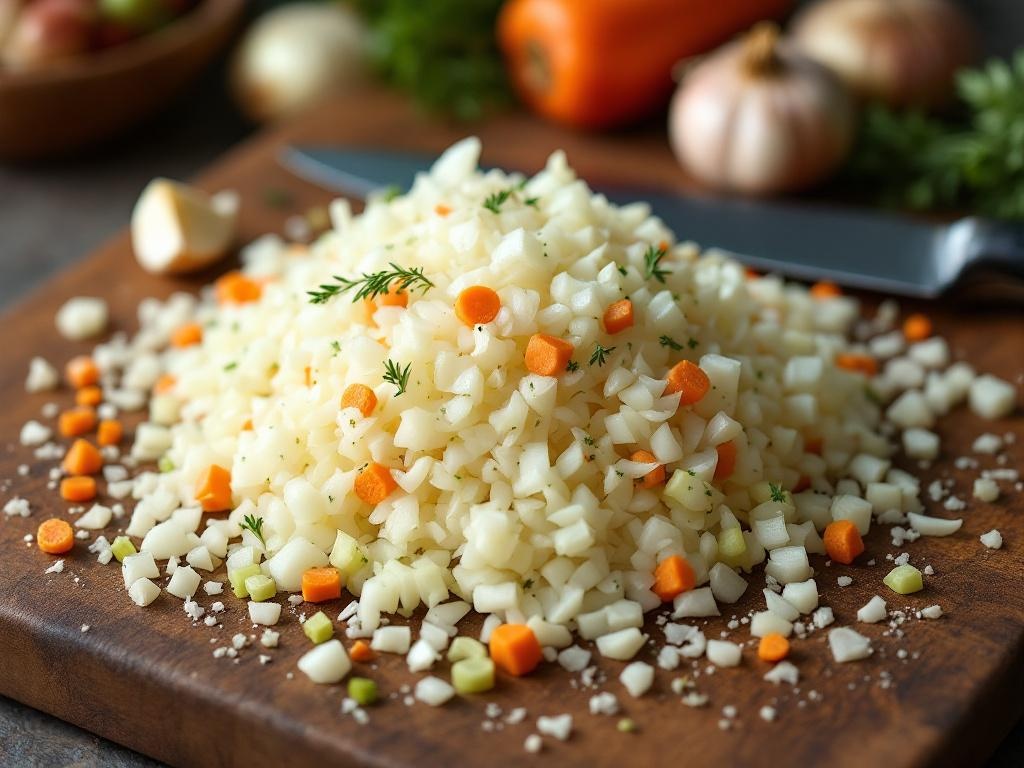
Battuto
Battuto is the Italian culinary term for the raw, finely chopped base of aromatics — typically onion, celery, carrot, and garlic — that is cooked in fat at the beginning of a dish to form its flavour foundation. Once cooked, it becomes soffritto; battuto is the raw preparation stage, the mise en place of the Italian kitchen. The word derives from 'battere' — to beat — and the classical battuto was made with a mezzaluna (a curved, two-handled knife used in a rocking motion) on a wooden board, chopping the ingredients so fine they almost become a paste. This fine-chopped texture is crucial: it allows the aromatics to dissolve into the fat and the dish, rather than remaining as identifiable pieces. The composition changes by region and purpose. A battuto for a Bolognese ragù is heavier on onion with a little carrot and celery. A battuto for a fish dish might exclude carrot (which can fight with seafood) and add fennel frond. A battuto for a legume soup might include a strip of pancetta or guanciale finely chopped into the mix — the fat from the cured meat becomes part of the cooking medium. The battuto also varies by fat: northern Italian battuto is cooked in butter, central Italian in olive oil and lard, southern Italian in olive oil only. Each produces a different aromatic result. Understanding the battuto is understanding how Italian cooking builds complexity from simple, well-executed beginnings.
The Market List
The benchmark for each ingredient, and who stocks it near you. Tap a stockist to go straight to the product.
The Method
Sensory Tests
What to Pour
Why each one works is part of membership — Enter · from $49 a year →
The whole pairing