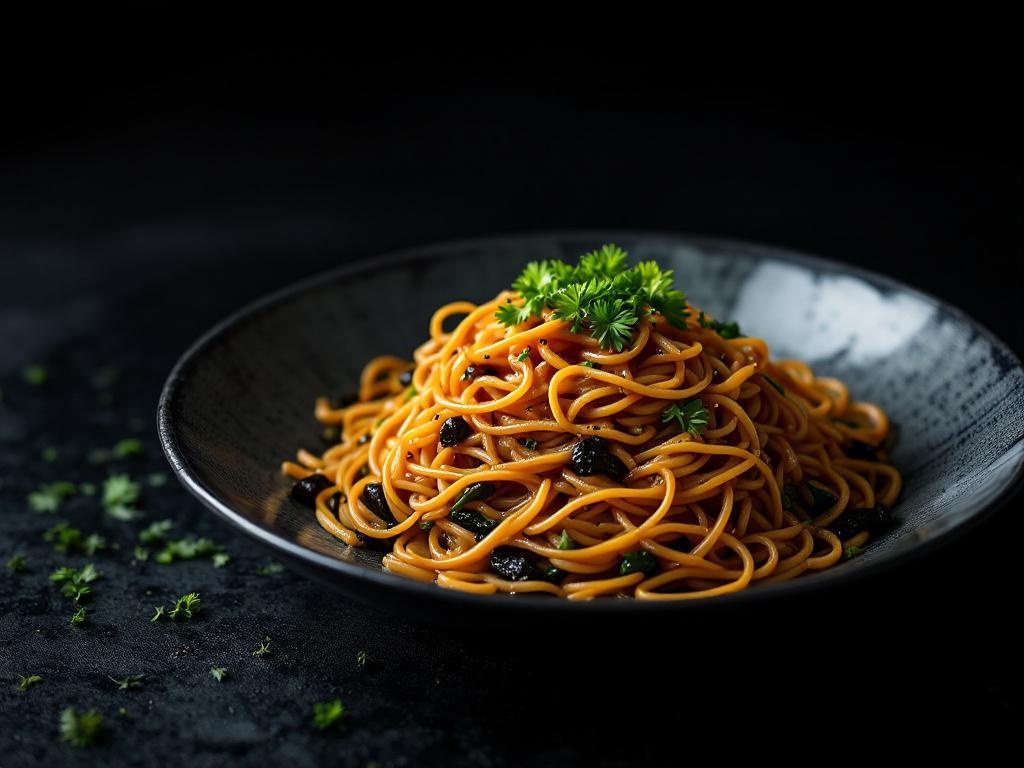
Japchae (잡채) is the Korean celebration noodle dish — glass noodles (당면, dangmyeon, made from sweet potato starch) stir-fried with julienned vegetables, beef, mushrooms, and spinach, each ingredient prepared and cooked separately before combining. The defining quality of great japchae is textural contrast: each component retains its individual character — the glass noodles chewy and glossy; the spinach silky; the carrot with slight bite; the shiitake mushrooms tender; the beef savoury — rather than a homogeneous stir-fry where everything mingles. The separate-preparation technique is tedious but where the dish lives or dies.
Each tap is counted, so the stockist sees the demand Provenance sends them.
II
The Method
1
Bring salted water to boil; add glass noodles and cook 5 minutes until tender; drain, toss with 5 ml sesame oil, and set aside.
2
Combine beef with 10 ml soy sauce, 1 minced garlic clove, and white pepper; let sit 5 minutes.
3
Heat 10 ml oil in wok over high; stir-fry beef 2–3 minutes until cooked through; transfer to bowl.
4
Blanch spinach in salted boiling water 1 minute; drain, squeeze dry, toss with 2 ml sesame oil and 2 g salt.
5
Heat 5 ml oil in wok; sauté carrot and mushroom until tender-crisp, 3 minutes; season with salt.
6
In small bowl, whisk remaining soy sauce, 10 ml sesame oil, rice vinegar, sugar, and remaining garlic; toss with noodles and all vegetables.
7
Transfer to serving platter; top with cooked beef, spinach nest, egg yolk, and green onions; serve with sauce bowl.
III
Sensory Tests
◇Where it lives or dies. The moment where japchae lives or dies is the noodle finishing — when the dangmyeon come out of the boiling water, they must be tossed with sesame oil and soy within 30 seconds. The hot noodles absorb the sesame oil immediately, creating a glossy, slippery surface that prevents sticking. Cold noodles that have stuck together cannot be easily separated without breaking.
IV · Cross-Cuisine Parallels
Parallels Chinese chao fan (fried noodles with multiple vegetables and proteins) and Filipino pancit canton — all multi-component noodle dishes requiring separate preparation of ingredients — but japchae's sweet potato glass noodle and sesame-soy dressing are distinctly Korean
Pillar IV
Cross-cuisine parallels are part of membership.
The dishes this one teaches you, across the cuisines — on every recipe.
Japchae as a court dish appears in 17th-century records; the modern version with sweet potato starch noodles (dangmyeon) dates to the 20th century when that noodle type became widely available
Pillar VI
Origin and lineage are part of membership.
Where the dish comes from and how it came to be — on every recipe.