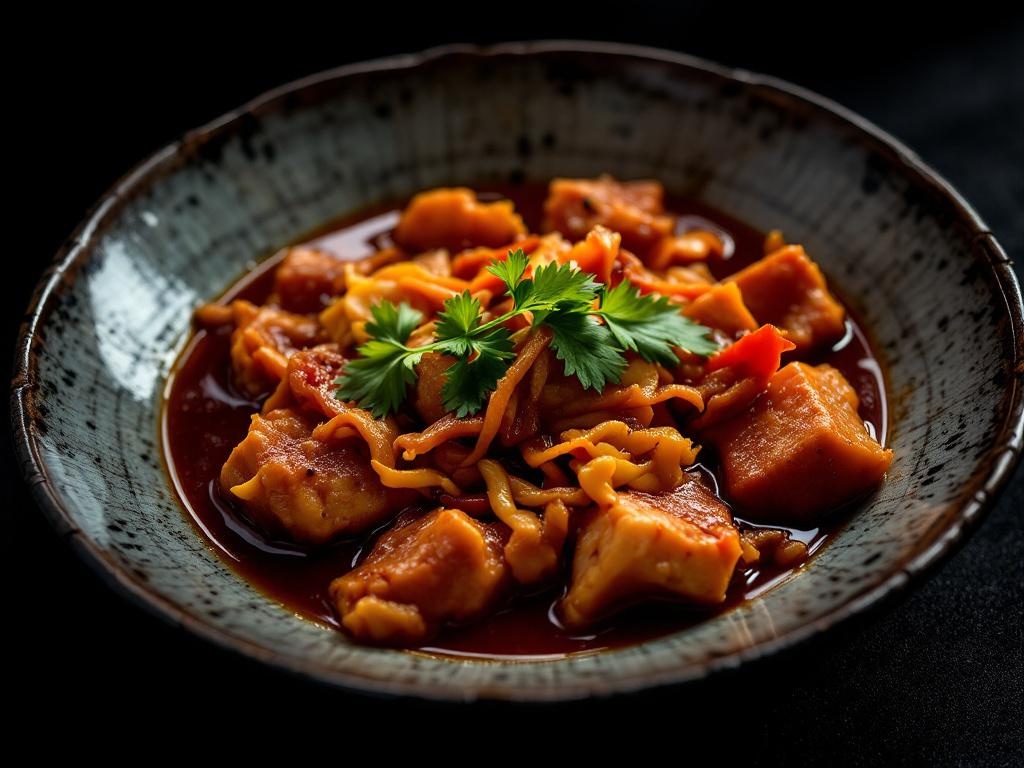
Kimchi Jjigae (Kimchi Stew)
Kimchi jjigae — the stew made from aged kimchi — is the preparation that most Koreans consider the essential comfort food of their cuisine: deeply flavoured, slightly sour, spicy, and rich with pork, tofu, and the complex fermentation character of old kimchi. The key insight is that old, well-fermented kimchi — the kind that's been in the back of the refrigerator for months and is too sour to eat fresh — makes the best jjigae. The acidity from extended fermentation breaks down slightly during cooking, mellowing from sharp sourness to a complex, rounded tang that forms the backbone of the stew. Fresh kimchi makes a pale, underdeveloped jjigae; aged kimchi makes an extraordinary one. Pork belly or pork shoulder (fatty cuts that enrich the broth) and soft tofu are the standard additions; the dish is simmered until the kimchi is completely soft and the pork is yielding.
Ten in town · two not yet within reach.
- In town
- 10 · kimchi (napa cabbage), pork belly or shoulder, firm tofu, korean radish (daikon), garlic cloves, fresh ginger, tellicherry black pepper, sesame oil, sea salt, shiitake mushrooms
- Not yet within reach
- 2 · anchovy or kombu dashi stock, gochugaru paste (or 10g gochugaru mixed with 5ml water)
The Market List
The benchmark for each ingredient, and who stocks it near you. Tap a stockist to go straight to the product.
Within reach counts in town, delivered, shipped and the nearest city. A staple counts once it has a local seller. Charted from each shop's own pages; not yet vouched by a cook who shops here.
The larder of Langley →Each tap is counted, so the stockist sees the demand Provenance sends them.
The Method
Sensory Tests
What to Pour
Each tap is counted, so the stockist sees the demand Provenance sends them.
Why each one works is part of membership — Enter · from $49 a year →
The whole pairing