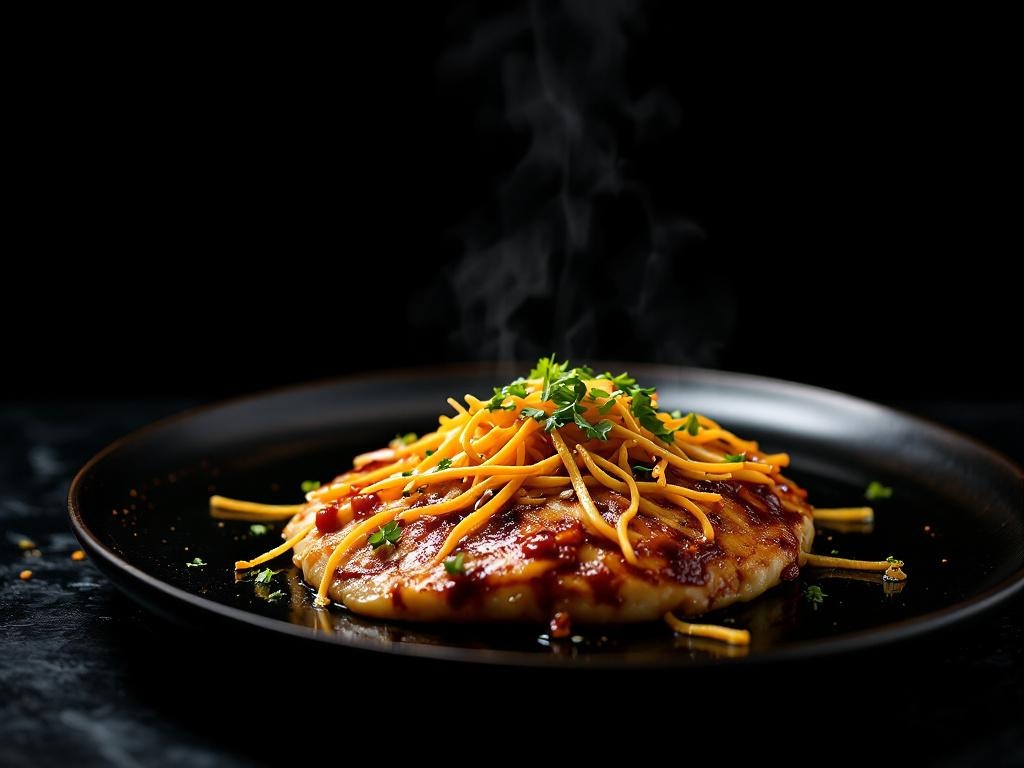
Okonomiyaki — Osaka Style and Variations
Okonomiyaki (literally 'cook what you like/want') is Japan's most beloved savoury pancake tradition, with Osaka (specifically the Kansai style) and Hiroshima as the two primary distinct regional traditions — different enough in philosophy and technique to represent separate dishes sharing a name. Osaka-style okonomiyaki mixes all ingredients into the batter before cooking: shredded cabbage (the majority of the volume), thinly sliced pork belly, eggs, nagaimo (mountain yam — the critical ingredient that gives the batter its characteristic airiness), flour, and dashi, mixed together and cooked on a flat iron griddle (teppan). The cooked surface should be crisp and caramelised, the interior moist and yielding. Finished with aonori (dried seaweed), katsuobushi (which waves from the heat), okonomiyaki sauce (a thick, sweet-savory sauce similar to Worcestershire), and Japanese mayonnaise. The nagaimo is non-negotiable in authentic Osaka style — its mucilaginous quality binds the batter and creates the specific texture impossible to replicate with plain flour. Hiroshima style (covered separately) is layered rather than mixed — noodles are an additional layer in the Hiroshima version. The mixing technique is important: do not overwork the batter once the cabbage is added, as overworking develops gluten and toughens the result. Monjayaki (Tokyo's street-food cousin) uses a much looser, wetter batter that is cooked directly on the griddle surface without forming a cake.
The Market List
The benchmark for each ingredient, and who stocks it near you. Tap a stockist to go straight to the product.
Each tap is counted, so the stockist sees the demand Provenance sends them.
The Method
Sensory Tests
What to Pour
Nothing from British Columbia holds against this yet.
No pour without alcohol holds against this yet.
Why each one works is part of membership — Enter · from $49 a year →
The whole pairing