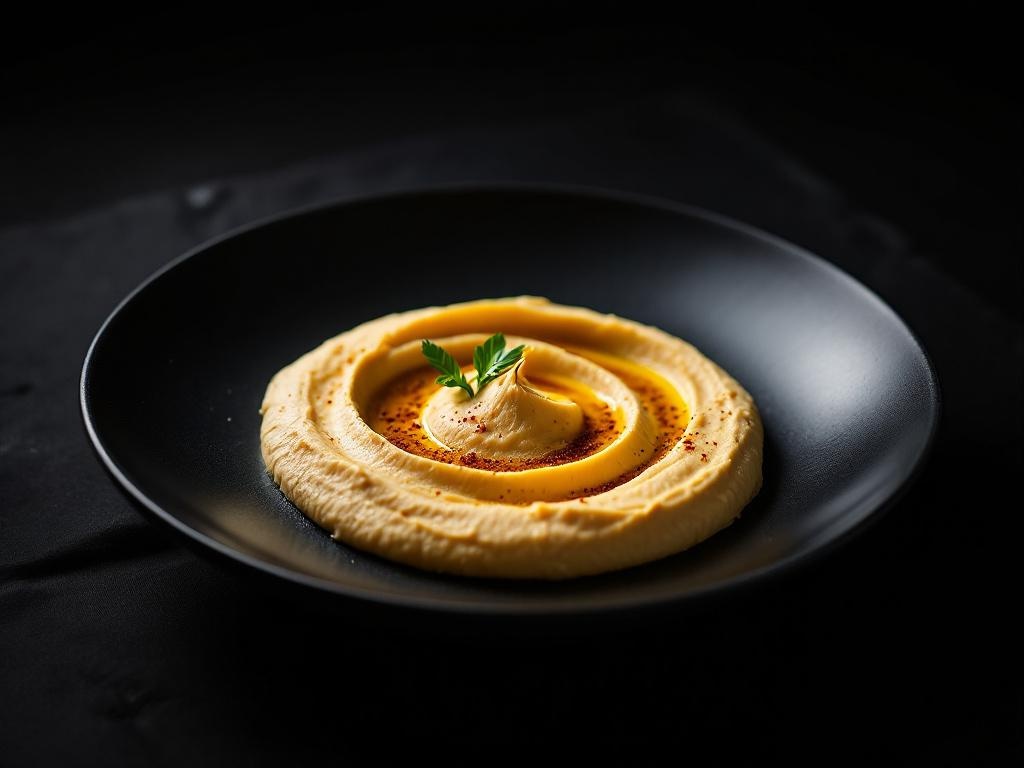
Hummus: Technique for the Best Version
Hummus — chickpea purée with tahini, lemon, and garlic — is one of the most ubiquitous dishes in the world and one of the most consistently poorly made outside its origin region. The version served in most Western restaurants and available in supermarkets bears the same relationship to correctly made hummus as instant coffee bears to espresso. The technique is not difficult but requires non-negotiable elements: dried chickpeas cooked from scratch (canned chickpeas produce fundamentally different results), cold water added during blending (produces the characteristic smooth, light texture), and abundant tahini.
One elsewhere in British Columbia · one not yet within reach.
- Elsewhere in British Columbia
- 1 · aleppo pepper
- Not yet within reach
- 1 · tahini (hulled sesame paste)
The Market List
The benchmark for each ingredient, and who stocks it near you. Tap a stockist to go straight to the product.
Within reach counts in town, delivered, shipped and the nearest city. A staple counts once it has a local seller. Charted from each shop's own pages; not yet vouched by a cook who shops here.
The larder of Quesnel →Each tap is counted, so the stockist sees the demand Provenance sends them.
The Method
Sensory Tests
What to Pour
Hummus is one of the most complete single dishes in the Middle Eastern tradition: protein (chickpea), fat (tahini), acid (lemon), and the cold water technique producing an emulsion that carries all these compounds simultaneously. As Segnit would observe, the pairing of chickpea with tahini is one of the great legume-nut combinations — the chickpea's glutamate-rich amino acids find a chemical complement in sesame's fat-soluble aromatic compounds, producing an umami depth neither achieves alone.
The whole pairing