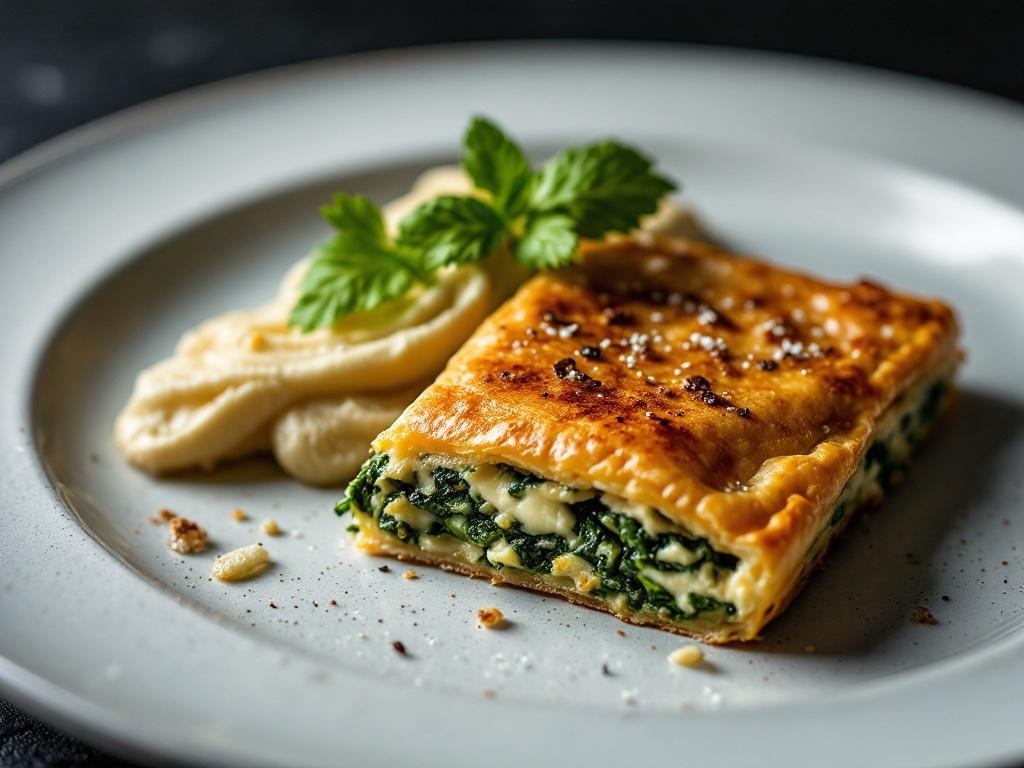
Spanakopita
One of 10 entries · Provenance 1000 — Greek and Levantine
Greece, Balkan region, and the Ottoman Empire. Phyllo-based pies (pita in Greek) are the great preparation tradition of Greek and Balkan cooking. The spanakopita specifically is documented in Greek cookbooks from the 18th century, though phyllo pies with herbs and cheese are far older.
Spanakopita (spinach and feta pie) is crispy phyllo pastry filled with spinach, feta, eggs, and herbs, baked until the pastry shatters and the filling is set. The filling must be completely dry — any residual moisture from the spinach turns the pastry soggy. The phyllo must be brushed generously with butter or olive oil between each layer. Served as a main course cut in rectangles or as individual triangular hand pies (tiropites).
- Turkish börek (phyllo filled with cheese or meat — the same Ottoman phyllo tradition); Middle Eastern fatayer (folded pastries filled with spinach and sumac — the Levantine phyllo pastry parallel); Moroccan pastilla (phyllo filled with pigeon and almond — the North African phyllo pie tradition).
Served with a simple tomato salad and a glass of cold retsina (pine-resin-flavoured Greek white wine — an acquired taste but the traditional pairing) or a cold Mythos lager.