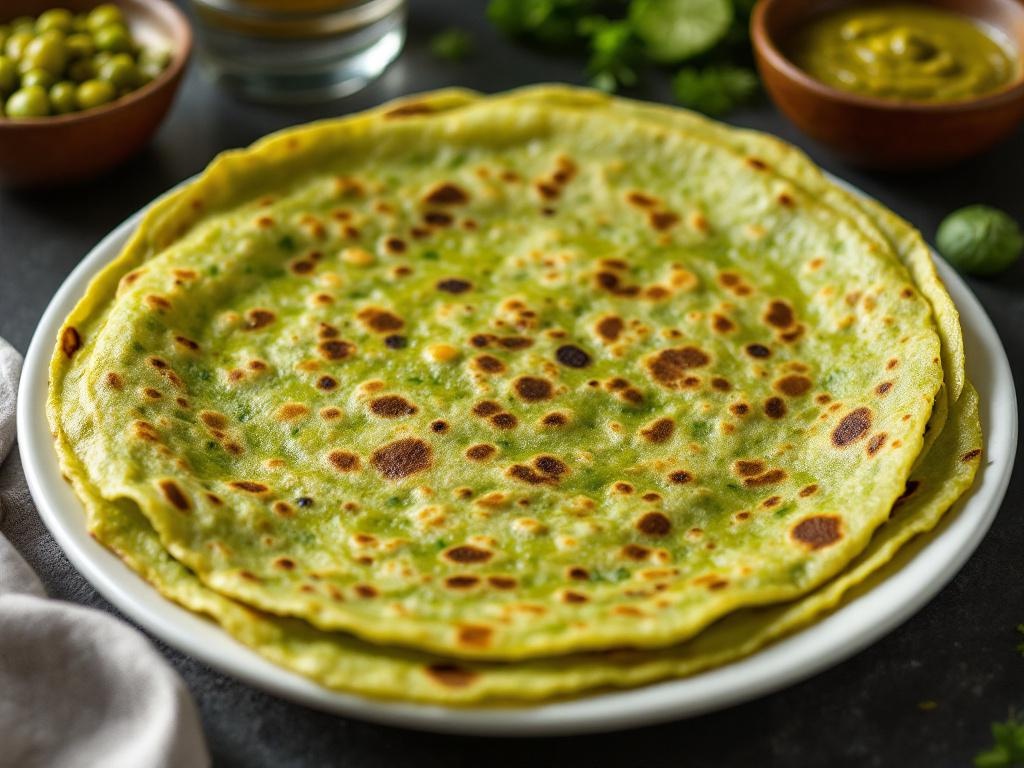
Andhra Pradesh, India — particularly popular in Krishna and Guntur districts
Pesarattu is Andhra Pradesh's breakfast crepe — a thin, crisp pancake made entirely from whole green moong dal (mung beans), ground to a batter without any fermentation. This makes it unique among South Indian flatbreads: it requires no soaking time beyond the overnight soak of the mung beans, and the batter needs no fermentation at all. The result is ready in hours, not days. Whole green moong is soaked overnight, then ground with green chillies, ginger, and cumin into a pourable batter. Unlike dosa batter, which must be silky smooth, pesarattu batter can retain a little texture from the mung skins — this produces a slightly more rustic, nutty crepe. Some cooks add a handful of raw rice to the grind for extra crispness. The batter is poured onto a hot griddle (tawa), spread thin, and cooked on one side only — the protein in the mung dal sets quickly, and the crepe is sturdy enough to fold without flipping. The top surface remains slightly moist and the bottom develops a satisfying crisp. Pesarattu is typically served with upma — a savory semolina preparation — stuffed inside the crepe for MLA Pesarattu, a beloved Andhra preparation named after the politicians who supposedly popularised it at the state assembly canteen. The most common accompaniment is ginger chutney and allam (ginger) pachadi. Nutritionally, mung beans are among the most protein-rich legumes, making pesarattu a genuinely complete breakfast in one dish.
Crisp, mildly spiced, nutty from green mung — earthy and direct
visual: Water droplet evaporates instantly on the griddle; batter spreads thin and even in concentric circles without resistance.
Batter spreads thin and even in concentric circles without resistance — too thick pours like cake batter and yields chewy crepe instead of crisp.